
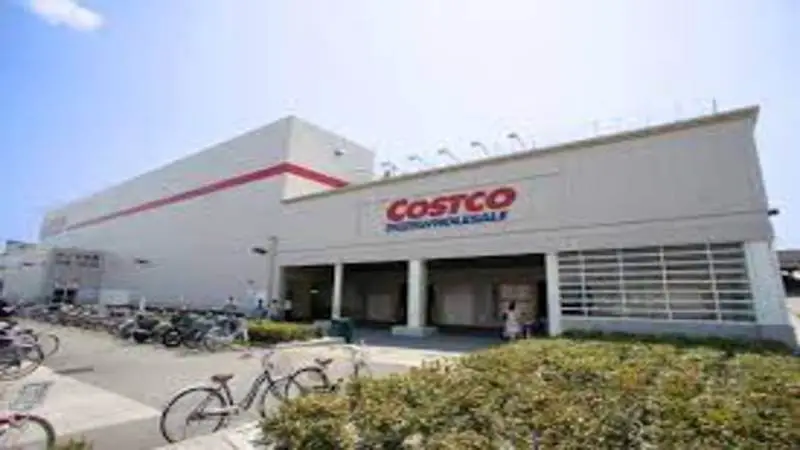
Costco Wholesale Corporation is not your typical retailer. With over 890 warehouses spanning the globe and annual revenues north of $250 billion, it has cemented its position as the third-largest retailer on the planet. The company operates on a membership-based model that most people thought was crazy when it launched in 1983. Turns out, charging people a fee just to walk through the door and buy things works spectacularly well when you deliver real, undeniable value. Today, more than 130 million cardholders worldwide seem to agree. Let’s break down the Costco mission statement and vision statement to understand what drives this warehouse giant — and whether those guiding words actually hold up in 2026.
Costco Mission Statement
“To continually provide our members with quality goods and services at the lowest possible prices.”
Seventeen words. That’s all Costco needs to spell out its entire reason for existing. And honestly, that restraint says as much about the company as the statement itself. There is no corporate jargon here, no buzzword salad about “synergies” or “disruption.” It is a plain-English promise: quality goods, lowest prices, delivered consistently. If you want to understand what a mission statement should actually do, this is a strong example.
Start with the word “continually.” That’s doing heavy lifting. It is not a one-time pledge. Costco is telling you — and its own employees — that this is a daily, ongoing commitment. Every buying decision, every supplier negotiation, every operational choice gets filtered through that word. It creates internal accountability in a way that vague mission statements simply cannot.
Then there is “members.” Not “customers.” Not “shoppers.” Members. This single word reflects Costco’s entire business architecture. You pay an annual fee — $65 for a basic Gold Star membership or $130 for an Executive membership that kicks back a 2% annual reward — and in return, Costco treats you like an insider. The membership model does something brilliant: it aligns incentives. Costco does not need to gouge you on markups because a huge chunk of its profit comes from membership fees. That frees the company to keep margins razor-thin on actual merchandise, often capping markups at 14-15%. Compare that to a traditional grocery store operating on 25-30% margins and you start to see why people drive 30 minutes past three other stores to get to a Costco.
“Quality goods and services” is the part that separates Costco from pure discount competitors. This is not about selling cheap stuff cheaply. Walk into a Costco and you will find high-end electronics, premium wines, organic produce, and designer brands sitting alongside bulk toilet paper and 50-pound bags of rice. The Kirkland Signature private label — Costco’s in-house brand — has become a case study in how to do private label right. Kirkland products are often manufactured by the same companies that produce name-brand equivalents but sold at significantly lower prices. The brand generates tens of billions in annual revenue on its own, and many members specifically seek it out. Kirkland Signature vodka, olive oil, and laundry detergent have near-cult followings. That doesn’t happen if “quality” is just a word on a wall somewhere.
And “lowest possible prices” is where the operational model kicks in. Costco keeps prices down through a combination of strategies that are deceptively simple but brutally hard to execute. The company stocks fewer than 4,000 SKUs at any given time. A typical supermarket carries over 30,000. By limiting selection, Costco can buy massive quantities of each item, negotiate better deals with suppliers, and reduce the complexity of inventory management. Fewer products also means less shelf space wasted, faster turnover, and lower labor costs per unit sold. It is a masterclass in the power of saying “no” to most products so you can say a definitive “yes” to the ones you carry.
The warehouse format itself reinforces the mission. Concrete floors, steel shelving, products displayed on pallets — Costco deliberately avoids spending money on aesthetics. Those savings get passed directly to you. The $1.50 hot dog and soda combo, unchanged in price since 1985, has become the ultimate symbol of this philosophy. When a former CEO reportedly told the current leadership, “If you raise the price of the hot dog, I will kill you,” it was only half a joke. That hot dog is a statement of intent.
Costco Vision Statement
“To be a place where efficient buying and operating practices give members access to unmatched savings.”
If the mission statement tells you what Costco does today, the vision statement is supposed to tell you where the company wants to go. This one paints a picture of operational excellence as the vehicle for delivering value. It is aspirational in a grounded, Costco kind of way — no lofty talk about changing the world, just a commitment to being the most efficient operation in retail.
“Efficient buying and operating practices” is the engine under the hood. Costco’s buying team is legendary in the retail industry. They negotiate relentlessly, sometimes pulling major brands from shelves entirely if the supplier won’t meet their price targets. In 2009, Costco yanked Coca-Cola products when the beverage giant tried to raise prices. Coca-Cola eventually came back to the table. That kind of leverage comes from moving enormous volume through a relatively small number of warehouses, and it is a direct manifestation of this vision.
The operational side is equally disciplined. Costco’s supply chain is lean by design. Products move from manufacturer to warehouse to member cart with minimal steps in between. Cross-docking — where goods are transferred directly from inbound to outbound trucks with little or no storage time — keeps costs down and freshness up. The company invests in technology where it matters for efficiency but does not chase every shiny new retail trend. You will not find elaborate digital displays or AI-powered shopping carts in a Costco warehouse. What you will find is a system that has been optimized, year after year, to eliminate waste at every stage.
“Unmatched savings” is a bold claim, and Costco mostly delivers on it. Independent price comparisons consistently show Costco beating competitors on per-unit pricing for the products it carries. The bulk-buying format means you are purchasing larger quantities, yes, but the per-unit economics genuinely favor the member. This is where Costco differentiates from competitors like Walmart, which competes on everyday low prices across a much broader assortment, or Amazon, which competes on convenience and selection. Costco’s bet is that for the items it chooses to carry, nobody will beat its price. And for most of those items, nobody does.
The vision also implicitly addresses the treasure hunt shopping experience, even if it does not name it directly. Because Costco rotates a portion of its merchandise regularly and brings in limited-time deals on everything from designer handbags to kayaks to fine jewelry, there is always a reason to visit. You come in for paper towels and leave with a 65-inch TV and a cashmere sweater. That unpredictability — the thrill of not knowing what you will find — is an operating practice in itself. It drives foot traffic, creates urgency, and keeps the shopping experience from feeling like a chore.
What is notably absent from the vision statement is any mention of digital commerce or global expansion, two areas where Costco has been investing significantly. The company has been growing its e-commerce platform and expanding into new international markets, but the vision statement remains rooted in the physical warehouse experience. Whether that is a deliberate strategic choice or simply a statement that has not been updated to reflect modern realities is worth questioning.
Analysis of Costco’s Mission and Vision Statements
Strengths
The most obvious strength is clarity. Both statements are written in plain language that any employee, from a warehouse floor worker to a senior buyer, can understand and act on. There is no ambiguity about what Costco is trying to achieve. This matters more than most people realize. When your mission is clear, decision-making gets faster. Should we add this product? Does it meet our quality standard and can we offer it at the lowest possible price? If no, move on. That simplicity at the strategic level cascades into operational efficiency at every level of the organization.
Another strength is authenticity. Costco’s statements are not aspirational fiction — they describe what the company actually does, every single day. Too many corporations craft mission statements that sound impressive in a boardroom but have zero connection to how the business actually operates. Costco’s mission and vision are essentially a description of its business model written as a promise. That alignment between words and actions builds trust with members, employees, and investors alike.
The employee dimension deserves special mention here, even though neither statement explicitly references it. Costco has long been recognized as one of the best large employers in the United States. Starting wages significantly exceed the industry average, healthcare benefits are available to part-time workers, and employee turnover is remarkably low for the retail sector. This is not separate from the mission — it is a direct consequence of it. Costco understands that well-compensated, experienced employees are more efficient, provide better service, and reduce the hidden costs of constant hiring and training. The mission says “continually provide” and you cannot do that with a revolving door of undertrained staff. Companies like Target have followed suit in recent years, raising wages and improving benefits, but Costco was doing it before it was fashionable.
The membership model itself is a structural strength that the mission statement reflects. By saying “members” instead of “customers,” Costco acknowledges a relationship that goes beyond a single transaction. Members have a financial stake in the relationship — they have paid to be there — which creates loyalty that competitors without membership models struggle to replicate. Sam’s Club, owned by Walmart, operates a similar model but has never achieved the same level of member devotion. Costco’s membership renewal rate hovers around 93% in the U.S. and Canada. That number is not an accident; it is proof that the mission is being delivered.
Weaknesses
The most significant weakness is the narrow scope of both statements. Costco in 2026 is not just a warehouse where you buy bulk groceries and oversized bottles of ketchup. The company operates pharmacies, optical departments, tire centers, travel services, and a growing e-commerce business. It sells gasoline at some of the lowest prices in any market it enters. None of this is reflected in the mission or vision. “Quality goods and services” technically covers it, but the language feels like it belongs to a company that only sells physical products in a physical warehouse.
The absence of any mention of sustainability or social responsibility is increasingly conspicuous. In 2026, consumers — especially younger ones — expect major corporations to articulate their environmental and social commitments. Costco has made genuine strides in areas like reducing packaging waste, sourcing sustainable seafood, and investing in renewable energy. But you would never know it from reading these statements. For a company with Costco’s influence on global supply chains, this is a missed opportunity to signal values that matter to its evolving membership base.
The vision statement, while solid, lacks forward-looking ambition. Compare it to Amazon‘s vision of being Earth’s most customer-centric company. Whether or not Amazon fully lives up to that, it creates a north star that pulls the organization forward into new territories and innovations. Costco’s vision essentially says, “We want to keep doing what we are already doing, but really well.” For a mature company that dominates its niche, stability has value. But it does not inspire the kind of bold thinking that might be needed as retail continues to shift toward digital-first experiences.
There is also no mention of community, belonging, or the experiential aspect of shopping at Costco. Anyone who has been to a Costco on a Saturday knows it is a social experience — families spend hours browsing, sampling food, and loading up carts. The treasure hunt element creates genuine excitement. That emotional connection is a massive competitive advantage, and it lives entirely outside the formal mission and vision. Costco’s culture does the heavy lifting that its written statements do not.
Finally, the lack of any reference to global ambition is worth noting. Costco operates in over a dozen countries and has significant growth opportunities in Asia and Europe. A vision statement that acknowledged this global trajectory would better reflect where the company is actually headed and could serve as a rallying point for international teams who might feel disconnected from a statement that reads as purely domestic in its orientation.
At the end of the day, Costco’s mission and vision statements do what they need to do — they describe a company that is laser-focused on delivering value through operational efficiency and disciplined buying. The statements are honest, clear, and deeply embedded in how the company actually operates. Their weaknesses are mostly sins of omission rather than commission. Costco has never been a company that talks more than it delivers, and its mission and vision statements reflect that same understated, results-first mentality. In a retail landscape full of companies making grand promises they cannot keep, there is something refreshing about a mission that simply says: we will get you quality stuff at the best price, and we will keep doing it. The $1.50 hot dog would agree.