
Forever 21 Mission Statement Analysis (2026)
Forever 21 occupies one of the most precarious positions in American retail. Founded in 1984 by Do Won Chang and Jin Sook Chang as a single storefront in Los Angeles, the company grew into a global fast fashion empire before collapsing under the weight of overexpansion, shifting consumer behavior, and relentless competition from ultra-fast fashion platforms. Having filed for bankruptcy twice—first in 2019 and again in 2024—Forever 21 now stands as a cautionary tale about what happens when a retailer’s strategic direction fails to keep pace with the market it helped create.
Examining Forever 21’s mission and vision statements reveals a company whose foundational rhetoric has struggled to align with operational reality. For readers unfamiliar with the distinction between these two strategic pillars, this guide on the difference between mission and vision statements provides essential context. What follows is a thorough analysis of how Forever 21 articulates its purpose, where those articulations succeed and fail, and what the company’s trajectory tells us about the future of mall-based fast fashion retail.
Forever 21 Mission Statement
“Forever 21’s mission is to provide customers with an extraordinary shopping experience by offering the latest fashion trends and styles at a great value.”
This mission statement attempts to capture three core propositions: the shopping experience itself, trend responsiveness, and value pricing. On its surface, the statement reads as a conventional retail mission—it identifies a customer-facing promise and ties it to the mechanics of how the company operates. However, the degree to which Forever 21 has been able to deliver on each of these pillars has eroded significantly over the past several years, making this mission statement as much an aspiration as a description of current capability.
Strengths of the Mission Statement
Clear value proposition architecture. The mission statement does not attempt to be everything to everyone. It identifies three specific commitments—experience, trend currency, and affordability—and links them in a logical chain. The “extraordinary shopping experience” serves as the umbrella promise, while trend access and value pricing function as the mechanisms through which that experience is delivered. This structure gives employees and stakeholders a reasonably clear understanding of the company’s priorities.
Appropriate emphasis on price-value dynamics. For a brand that built its identity on making runway-inspired fashion accessible to budget-conscious consumers, the phrase “at a great value” is not merely decorative. It reflects the genuine competitive territory Forever 21 occupies. Unlike aspirational luxury brands that avoid mentioning price in their strategic language, Forever 21 correctly acknowledges that affordability is central to its identity. This transparency is a strength, particularly when communicating with a core demographic of younger consumers who are highly price-sensitive.
Customer-centric framing. The statement opens and closes with the customer. The phrase “provide customers with” establishes the company as a service entity rather than a product-centric one. This orientation, while common in retail mission statements, remains appropriate for a brand that depends on repeat foot traffic and impulse purchasing behavior. The mission correctly positions the customer as the beneficiary of the company’s operations rather than centering the language on internal ambitions or shareholder returns.
Weaknesses of the Mission Statement
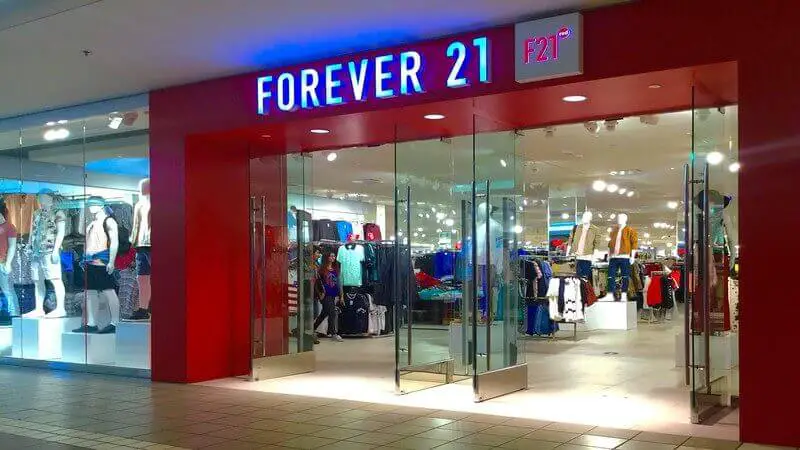
The “extraordinary experience” claim has become untenable. This is the single most problematic element of the mission statement. Forever 21 stores, particularly in the years leading up to both bankruptcy filings, became synonymous with cluttered layouts, disorganized merchandise, and an overall decline in store presentation. Industry observers and consumer reviews consistently cited the in-store experience as a deterrent rather than an attraction. Claiming to deliver an “extraordinary shopping experience” when the physical retail environment actively undermines that promise creates a credibility gap that no amount of strategic language can bridge.
No acknowledgment of digital channels. The mission statement reads as though it was written for a purely brick-and-mortar retailer. In an era where e-commerce represents a growing share of fast fashion sales—and where competitors like Shein have built entire empires without a single physical store—the absence of any reference to online, mobile, or omnichannel shopping is a significant oversight. A mission statement that fails to account for how a majority of its target demographic actually discovers and purchases fashion is strategically incomplete.
Generic language that fails to differentiate. Remove the company name from this mission statement and it could belong to virtually any value-oriented fashion retailer. There is nothing in the language that speaks to Forever 21’s specific identity, heritage, or competitive positioning. Compare this to how Zara articulates its mission—with explicit attention to speed-to-market and design responsiveness—and the lack of specificity in Forever 21’s statement becomes conspicuous. A mission statement that could be claimed by any competitor is, by definition, not serving its differentiating function.
No mention of sustainability or ethical considerations. The fast fashion industry is under intense scrutiny for its environmental and labor practices. While Forever 21 is not obligated to make sustainability the centerpiece of its mission, the complete absence of any acknowledgment of responsible practices is notable. Younger consumers—Forever 21’s primary demographic—increasingly factor sustainability into purchasing decisions. A mission statement that ignores this dimension risks appearing tone-deaf to the values of its own customer base.
Forever 21 Vision Statement
“To be a global leader in fast fashion, inspiring customers to express their individuality through affordable and trendy clothing.”
The vision statement extends the mission by introducing two additional concepts: global leadership ambition and individual self-expression. Where the mission focuses on what the company does, the vision attempts to articulate what it aspires to become and the broader impact it hopes to have on its customers’ lives. The inclusion of self-expression as a thematic anchor is an attempt to elevate the brand beyond transactional retail and into the territory of identity and lifestyle.
Strengths of the Vision Statement
Emotional resonance through self-expression. The phrase “inspiring customers to express their individuality” introduces an emotional dimension that the mission statement lacks. Fashion, at its core, is a medium for personal expression, and Forever 21’s vision statement correctly identifies this as the deeper value the company provides. This language transforms the brand from a commodity retailer into a facilitator of identity, which—when executed well—can generate genuine brand loyalty among younger consumers who view clothing as an extension of self.
Logical continuity with the mission. The vision statement does not contradict or stray from the mission. The emphasis on “affordable and trendy clothing” directly mirrors the mission’s commitment to value and trend responsiveness. This alignment between mission and vision is more important than many companies realize; when the two statements pull in different directions, the resulting confusion undermines both. Forever 21 avoids this trap by maintaining consistent thematic language across both statements.
Aspirational without being fantastical. The ambition to be “a global leader in fast fashion” is forward-looking without being disconnected from the company’s history. Forever 21 did, at its peak, operate over 800 stores across multiple continents. The vision of global leadership is rooted in actual precedent rather than pure aspiration, which lends it a degree of credibility that more extravagant vision statements often lack.
Weaknesses of the Vision Statement
The “global leader” claim is factually indefensible. This is the most glaring problem with the vision statement. Forever 21 is not a global leader in fast fashion. It has not been one for several years. The company’s international footprint has contracted dramatically, with store closures spanning Asia, Europe, and Latin America. Competitors including Zara, H&M, and the online-native platforms Shein and Temu have surpassed Forever 21 in revenue, market share, customer acquisition, and brand relevance. A vision statement that claims leadership in a category where the company is demonstrably losing ground does not inspire confidence—it invites skepticism.
No roadmap for achieving the stated vision. Effective vision statements, while aspirational, should contain enough specificity to suggest a path forward. Forever 21’s vision offers no indication of how global leadership will be achieved or maintained. It does not reference innovation, technology, partnerships, or any other strategic lever. The statement reads as a wish rather than a direction, which limits its utility as an internal guiding document.
The “individuality” promise conflicts with the fast fashion model. There is an inherent tension between encouraging customers to “express their individuality” and operating a business model built on mass-producing trend-driven clothing at the lowest possible cost. Fast fashion, by design, creates homogeneity rather than individuality. When millions of consumers purchase the same items from the same supply chain, the result is conformity, not self-expression. This contradiction is not unique to Forever 21—it pervades the entire fast fashion sector—but embedding it in the vision statement invites scrutiny the company may prefer to avoid.
Failure to address the brand’s existential challenges. A vision statement written in the shadow of two bankruptcies should, at minimum, acknowledge the need for transformation. Forever 21’s vision reads as though nothing has changed since the company’s peak years. There is no reference to reinvention, digital transformation, or strategic repositioning. For a brand in survival mode, this degree of complacency in the vision statement is concerning.
Bankruptcy and Restructuring: A Pattern of Strategic Failure
Forever 21’s first bankruptcy filing in September 2019 was, at the time, one of the most high-profile retail collapses in recent memory. The company had expanded aggressively throughout the 2010s, opening massive flagship stores in premium mall locations while the broader retail industry was already shifting toward e-commerce and experiential retail. The 2019 filing resulted in the closure of approximately 350 stores worldwide and the exit from 40 countries.
The company emerged from that first bankruptcy in 2020 under new ownership by a consortium comprising Authentic Brands Group (ABG), Simon Property Group, and Brookfield Asset Management. The involvement of two major mall operators in the acquisition was telling—it suggested that Forever 21’s value was as much about occupying retail square footage as it was about the brand’s intrinsic strength. Simon and Brookfield had a vested interest in keeping anchor tenants in their properties, and acquiring Forever 21 was, in part, a defensive play to prevent further mall vacancy.
The post-2020 restructuring failed to address the fundamental issues that had driven the first bankruptcy. Store counts were reduced but the remaining locations continued to struggle with declining foot traffic, stale merchandising, and an inability to compete on price with online-native competitors. The digital experience remained underwhelming. Marketing efforts failed to recapture the cultural relevance the brand had enjoyed in the early 2010s.
By 2024, Forever 21 filed for Chapter 11 bankruptcy protection for the second time. This second filing was arguably more damaging than the first, as it signaled that the problems were structural rather than cyclical. The company’s debt load, declining revenue, and inability to articulate a compelling path forward all contributed to a filing that many industry analysts viewed as a precursor to potential liquidation or a dramatic reduction in the brand’s physical retail presence.
The relationship between these serial bankruptcies and the company’s mission and vision statements is instructive. A mission built around an “extraordinary shopping experience” and a vision centered on “global leadership” bear no relationship to the operational reality of a company that has twice sought court protection from its creditors. This disconnect between strategic rhetoric and business performance is not merely an academic concern—it undermines the credibility of the statements themselves and, by extension, the leadership team’s ability to chart a viable course forward.
The Shein and Temu Problem: When Your Competitors Outrun Your Model
No analysis of Forever 21’s strategic position would be complete without examining the existential threat posed by Shein and Temu. These platforms have fundamentally altered the competitive landscape for budget fashion retail, and their rise corresponds almost perfectly with Forever 21’s decline.
Shein, in particular, represents a direct assault on Forever 21’s value proposition. The Chinese-founded company operates a demand-driven production model that uses real-time data to identify trends, produce small batches, and scale production based on actual consumer response. This approach allows Shein to offer thousands of new styles daily at price points that consistently undercut traditional fast fashion retailers. Where Forever 21 might offer a trend-inspired top for twelve dollars, Shein offers a comparable item for four or five dollars, often with faster shipping and a more engaging mobile shopping experience.
The irony is that Shein briefly explored acquiring a stake in Forever 21 through a partnership with Sparc Group (the ABG and Simon Property Group joint venture that controlled the brand). This arrangement, which would have seen Shein gain access to Forever 21’s physical retail locations while Forever 21 benefited from Shein’s supply chain and digital capabilities, ultimately did not materialize in a way that meaningfully altered Forever 21’s trajectory. The failed partnership underscored a difficult truth: Forever 21’s physical retail infrastructure, once its greatest asset, had become a liability that even the world’s most successful fast fashion platform could not easily monetize.
Temu, the international marketplace operated by PDD Holdings, compounds the pressure from a different angle. Rather than competing on trend responsiveness, Temu competes on sheer price aggression, offering clothing and accessories at prices that defy conventional retail economics. While questions persist about Temu’s long-term sustainability and the quality of its offerings, the platform has captured significant market share among the same price-sensitive young consumers who once formed Forever 21’s core demographic.
Forever 21’s mission statement promises “the latest fashion trends and styles at a great value.” When competitors deliver those same trends at a fraction of the price, with greater variety and superior digital convenience, the mission statement becomes an indictment rather than an aspiration. The company has not articulated how it intends to compete against platforms that have structurally lower costs, faster production cycles, and more sophisticated data infrastructure. Until the mission and vision statements address this competitive reality, they will remain disconnected from the market conditions in which the company operates.
The Decline of Mall-Based Fast Fashion Retail
Forever 21’s struggles cannot be fully understood without examining the broader decline of mall-based retail in the United States. The company’s business model was built on high-traffic mall locations where impulse-driven foot traffic could be converted into high-volume, low-margin sales. This model depended on several conditions that have deteriorated simultaneously: consistent mall foot traffic, a consumer preference for in-store browsing over online shopping, and lease economics that allowed retailers to occupy large spaces at sustainable costs.
Each of these conditions has shifted against Forever 21. Mall foot traffic in the United States has been declining since the mid-2010s, accelerated by the pandemic and never fully recovering. Consumer preference has migrated decisively toward digital channels, particularly among the Gen Z demographic that constitutes Forever 21’s target market. And the economics of large-format retail leases have become increasingly punitive for brands that cannot generate sufficient revenue per square foot to justify the occupancy cost.
Forever 21’s approach to physical retail compounded these structural headwinds. The company was known for operating some of the largest fast fashion stores in the industry, with flagship locations spanning 30,000 to 90,000 square feet. These massive footprints were designed to overwhelm customers with variety—a strategy that worked when foot traffic was abundant but became ruinously expensive when traffic declined. The cost of staffing, maintaining, and stocking these enormous stores consumed margins that were already thin.
Other fast fashion retailers have adapted to the changing retail landscape with varying degrees of success. Zara has invested heavily in integrating its physical stores with its digital platform, using stores as fulfillment centers and showrooms rather than standalone sales venues. Uniqlo has differentiated through product quality and proprietary fabric technology, reducing its dependence on trend chasing. Forever 21 has not demonstrated a comparable strategic pivot, and its mission and vision statements offer no indication that such a pivot is forthcoming.
The mall dependency also raises questions about the composition of Forever 21’s ownership group. Simon Property Group and Brookfield Asset Management are mall operators with a strategic interest in maintaining tenant occupancy. This ownership structure creates a potential conflict of interest: the optimal strategy for Forever 21 as a brand might involve closing unprofitable stores and shifting investment toward digital channels, but such a strategy would increase vacancy in the malls operated by its owners. The extent to which this dynamic has influenced Forever 21’s strategic direction is difficult to quantify, but the misalignment of incentives is worth noting.
Fast Fashion Under Scrutiny: Environmental and Ethical Headwinds
The fast fashion industry as a whole faces mounting criticism for its environmental impact and labor practices. The Ellen MacArthur Foundation has estimated that the fashion industry produces approximately 10 percent of global carbon emissions, with fast fashion’s emphasis on disposable clothing being a significant contributor. Legislative efforts in the European Union and individual U.S. states have begun targeting the industry’s waste, water consumption, and supply chain transparency.
Forever 21 has been notably absent from the sustainability conversation. While competitors such as H&M and Zara have launched recycling programs, sustainable product lines, and supply chain transparency initiatives—however imperfect these efforts may be—Forever 21 has made minimal public commitments to environmental or social responsibility. The company’s mission statement makes no reference to sustainability, and its vision statement’s emphasis on “affordable and trendy clothing” implicitly prioritizes the very production dynamics that environmentalists criticize.
This silence on sustainability is particularly problematic given Forever 21’s target demographic. Research consistently shows that Gen Z consumers express higher levels of concern about environmental and ethical issues than previous generations. While the degree to which these stated concerns translate into actual purchasing behavior is debated, the reputational risk of being perceived as indifferent to sustainability is real. Brands that fail to address these concerns—even at a rhetorical level—risk alienating the consumers they most need to attract.
The absence of sustainability language in Forever 21’s mission and vision statements is not simply a communications gap. It reflects a deeper strategic void. A company that has not integrated environmental considerations into its foundational strategic documents is unlikely to have integrated them into its supply chain, product development, or operational decision-making. For investors, partners, and consumers evaluating Forever 21’s long-term viability, this absence speaks volumes.
What Forever 21 Could Learn from Competitors
The fast fashion landscape is not uniformly bleak. Several of Forever 21’s competitors have demonstrated that it is possible to adapt to changing market conditions while maintaining brand relevance and financial viability. Examining these competitors through the lens of their strategic articulation—how they define their mission and vision—offers instructive contrasts.
Zara’s parent company Inditex has built its strategic identity around speed and responsiveness. Zara’s ability to move from design to store shelf in as little as two weeks is not merely an operational capability—it is embedded in the company’s strategic language and organizational culture. This alignment between what the company says and what it does gives Zara’s strategic statements a credibility that Forever 21’s lack.
Uniqlo has taken a different path entirely, positioning itself not as a fast fashion retailer but as a provider of essential, high-quality basics enhanced by proprietary technology such as HeatTech and AIRism. Uniqlo’s strategic language emphasizes innovation and quality rather than trend chasing, which insulates the brand from the volatility inherent in trend-dependent business models.
Both of these competitors demonstrate a principle that Forever 21 has failed to grasp: effective mission and vision statements must be rooted in genuine competitive advantages, not aspirational claims that the company cannot substantiate. A comprehensive list of leading companies and their mission and vision statements further illustrates how the most successful organizations align their strategic rhetoric with their operational capabilities.
Final Assessment
Forever 21’s mission and vision statements are artifacts of a different era. They reflect the company as it was—or as it wished to be—rather than the company as it is. The mission’s promise of an “extraordinary shopping experience” rings hollow in the context of store closures and declining presentation standards. The vision’s aspiration to “global leadership” in fast fashion is contradicted by every meaningful competitive metric. Neither statement addresses the existential challenges that have driven the company through two bankruptcies and left its future uncertain.
The most fundamental problem with these statements is not their language but their disconnection from reality. A mission statement is supposed to articulate what a company does and why it matters. A vision statement is supposed to describe a future state that motivates and guides strategic decision-making. When both statements describe a reality that does not exist and a future that the company has no credible path to achieving, they fail at their most basic function.
Forever 21 needs more than new strategic language—it needs a fundamentally different strategic direction. But new language would be a necessary starting point. A revised mission statement should honestly acknowledge the competitive environment, articulate a specific value proposition that differentiates Forever 21 from both traditional competitors and online-native platforms, and address the digital and sustainability dimensions that the current statement ignores. A revised vision statement should replace the unsubstantiated claim of global leadership with a focused, achievable aspiration that reflects the company’s actual capabilities and market position.
The fast fashion industry will continue to evolve, driven by technological innovation, changing consumer preferences, and increasing regulatory pressure. Companies that survive and thrive in this environment will be those that articulate clear, credible, and differentiated strategic positions. Forever 21’s current mission and vision statements do none of these things. Until the company addresses this foundational gap, its strategic rhetoric will continue to undermine rather than support its prospects for recovery.
Whether Forever 21 can reinvent itself remains an open question. The brand still carries recognition and nostalgic value among consumers who grew up shopping in its stores. But recognition without relevance is a wasting asset, and the clock is running. The next chapter of Forever 21’s story will be determined not by the words in its mission and vision statements, but by whether the company can finally align its strategic aspirations with the operational discipline and market awareness needed to survive in an industry that has moved decisively past it.