
Loma Linda University Mission Statement Analysis (2026)
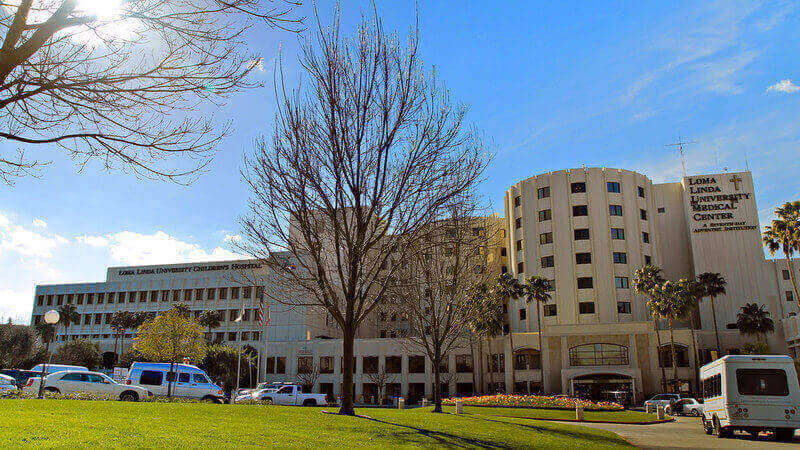
Loma Linda University Health occupies a singular position in American healthcare and higher education. Founded in 1905 as a Seventh-day Adventist institution in Southern California, it has grown into an academic medical center operating six hospitals, more than 1,000 faculty physicians, eight professional schools, and a research enterprise backed by tens of millions in annual awards. It is also located in one of the world’s five recognized Blue Zones, regions where residents routinely live past 100. Few organizations in the United States can claim a heritage that so directly intertwines religious conviction, longevity science, and clinical innovation under a single institutional umbrella.
That heritage makes Loma Linda’s mission and vision statements particularly worthy of scrutiny. In an era when many health systems publish sprawling purpose statements loaded with corporate jargon, Loma Linda has chosen a different path. Both its mission and its vision are strikingly concise. Whether that brevity is a strategic advantage or a structural limitation is the central question of this analysis.
Loma Linda University Health Mission Statement
“To continue the teaching and healing ministry of Jesus Christ.”
At just eleven words, Loma Linda’s mission statement is one of the shortest among major academic medical centers in the United States. It does not mention research, community health, clinical outcomes, workforce development, or any of the operational categories that typically populate healthcare mission statements. It does not reference the institution by name. Instead, it roots every function of a complex, multi-billion-dollar organization in a single theological claim: that its work is a direct continuation of the ministry described in the New Testament.
Strengths
The mission statement’s greatest strength is its clarity of identity. There is no ambiguity about what Loma Linda believes it exists to do. The word “continue” is doing significant rhetorical work here. It positions the institution not as an organization that was inspired by a historical figure, but as one that is actively perpetuating an ongoing ministry. This creates an unbroken line of purpose stretching from first-century Palestine to twenty-first-century Inland Empire hospitals. For an institution that has maintained its Seventh-day Adventist affiliation for more than 120 years, that continuity is not merely a branding exercise. It is a statement of institutional theology.
The phrase “teaching and healing” is also a deliberate structural choice. It captures both halves of Loma Linda’s identity, the university and the health system, in two words. Many academic medical centers struggle to unify their educational and clinical missions under a single statement. Loma Linda sidesteps that problem entirely by framing both functions as expressions of the same ministry. This gives the institution rhetorical cohesion that organizations like Kaiser Permanente or Mayo Clinic achieve through considerably longer statements.
The brevity itself is a strength. In an industry where mission statements frequently run to 50 or 100 words, Loma Linda’s eleven-word declaration is easy to memorize, easy to repeat, and difficult to dilute. It functions almost as a creed. For internal culture, this matters enormously. Employees, students, faculty, and administrators can hold the entire mission in their heads at all times. That kind of internalization is rare and valuable.
Weaknesses
The same brevity that gives the mission statement its rhetorical power also creates its most significant vulnerability: the statement is functionally exclusionary in its language. “The ministry of Jesus Christ” is an explicitly Christian framing. It communicates nothing to prospective patients, students, or employees who do not identify with the Christian tradition. Loma Linda’s own website notes that its student body represents more than 80 countries and every major religion. The mission statement does not acknowledge or address that diversity. Whether an institution should subordinate its founding religious identity to the realities of a diverse student body is a legitimate philosophical debate, but it is worth noting the tension.
The statement also omits any reference to research, which is a significant component of Loma Linda’s operations. The institution houses major research programs in proton therapy, behavioral health, genomics, and population health. It has received hundreds of millions in research funding over its history. The Adventist Health Studies, conducted out of Loma Linda for decades, are among the most cited longitudinal health studies in the world. None of this is captured or even implied by the mission statement. “Teaching and healing” covers education and patient care, but it leaves the institution’s third pillar, discovery, entirely unaddressed.
Finally, the statement provides no measurable outcome. It does not describe what success looks like. “Continue” is an inherently open-ended verb. Unlike mission statements that reference “the needs of those we serve” or “the communities we reach,” Loma Linda’s statement offers no external benchmark against which performance can be evaluated. This makes the statement spiritually resonant but operationally vague.
Loma Linda University Health Vision Statement
“Transforming lives through education, healthcare, and research.”
The vision statement is even shorter than the mission statement, at just eight words. It drops the explicitly religious language of the mission and replaces it with a secular, outcomes-oriented declaration. Where the mission statement tells you why Loma Linda exists, the vision statement tells you what it intends to accomplish. The two statements are designed to be read together, and they function as a complementary pair.
Strengths
The vision statement corrects the mission statement’s most glaring omission by explicitly including research. “Education, healthcare, and research” is a complete enumeration of the three functions that define an academic medical center. This is the standard tripartite model used by virtually every major teaching hospital in the United States, and Loma Linda is right to codify it at the vision level.
“Transforming” is a strong verb choice. It is more ambitious than “improving” or “supporting” and implies fundamental, lasting change rather than incremental adjustment. For an institution located in a Blue Zone, one whose affiliated research programs have literally redefined how the world understands human longevity, the claim of transformation is not empty rhetoric. Loma Linda’s proton therapy center, its infant heart transplant pioneering work, and its population-level Adventist Health Studies have each, in their own domain, transformed how medicine is practiced and understood.
The vision statement is also notably inclusive in its language. By dropping the Christological framing of the mission statement, the vision speaks to a broader audience. A prospective medical student who does not identify as Christian can still see herself in a vision of “transforming lives through education, healthcare, and research.” This dual-statement architecture, where the mission carries the religious identity and the vision carries the operational aspiration, is a sophisticated structural solution to the challenge of being both faith-based and globally relevant.
Weaknesses
The vision statement’s primary weakness is its genericness. “Transforming lives through education, healthcare, and research” could be the vision statement of any academic medical center in the country. It could belong to Johns Hopkins, Duke, or the University of Michigan. There is nothing in the statement that identifies it as belonging to Loma Linda specifically. The institution’s distinctive attributes, its Adventist heritage, its Blue Zone location, its whole-person care philosophy, its global mission work, are entirely absent.
This is a missed opportunity. Loma Linda’s motto, “To Make Man Whole,” has been associated with the institution for decades and captures something that the vision statement does not: the idea that health is not merely the absence of disease but the integration of physical, mental, spiritual, and relational well-being. The concept of wholeness is central to Loma Linda’s identity and clinical philosophy. Its absence from the vision statement is conspicuous.
The statement also lacks any geographic or community dimension. Loma Linda serves as a critical safety-net provider for the Inland Empire, one of the most medically underserved regions in California. Its global mission programs deploy healthcare professionals to dozens of countries. Neither the local nor the global scope of the institution’s work is reflected in the vision. For an organization that prides itself on serving “underserved populations everywhere,” as its own website states, this is a notable gap.
Like the mission statement, the vision offers no timeline, no measurable target, and no definition of what “transforming” means in practice. Transformation is a powerful word, but without specificity, it risks becoming decoration.
Faith-Based Healthcare and Education
Loma Linda’s identity as a faith-based institution is not incidental to its operations. It is foundational. The Seventh-day Adventist Church operates the largest integrated network of Protestant healthcare and education institutions in the world. Loma Linda sits at the apex of that network in the United States. Its medical center, schools of medicine, nursing, public health, dentistry, pharmacy, behavioral health, allied health professions, and religion are all organized under the theological premise stated in the mission: that healthcare and education are forms of ministry.
This is not an abstraction. Faith-based identity at Loma Linda manifests in concrete operational decisions. The institution observes the Sabbath from Friday sunset to Saturday sunset, which affects clinical scheduling, academic calendars, and campus life. Vegetarian and plant-forward dining is the default across campus food services, reflecting Adventist dietary principles. Chapel attendance, while not mandatory for all programs, is a visible and regular part of campus culture. Students across all schools engage in Mission-Focused Learning, a structured program that sends them to underserved communities domestically and internationally.
The mission statement’s explicit Christological language both enables and constrains this identity. It enables internal cohesion by giving every department, from surgery to social work to the School of Religion, a shared theological rationale. It constrains external communication by signaling a particular religious worldview that not all stakeholders share. The institution has navigated this tension for more than a century with considerable success, but the tension itself is permanent. It cannot be resolved by a mission statement; it can only be managed.
Among leading organizations with well-known mission and vision statements, few carry the weight of a specific denominational affiliation as directly as Loma Linda does. Most faith-based health systems, including those with Catholic or Methodist roots, have moved toward more ecumenical or values-based language in their public-facing statements. Loma Linda’s decision to retain an explicitly Christian mission statement is a deliberate choice that reflects the centrality of Adventist theology to every level of the organization.
Blue Zone Longevity Research
Loma Linda is one of only five recognized Blue Zones in the world, alongside Okinawa (Japan), Sardinia (Italy), Nicoya Peninsula (Costa Rica), and Ikaria (Greece). The designation, popularized by researcher Dan Buettner and published in National Geographic, identifies communities where residents live measurably longer than global averages. In Loma Linda’s case, the longevity advantage is concentrated among Seventh-day Adventists whose lifestyle practices, including plant-based diets, regular physical activity, Sabbath rest, strong community ties, and abstinence from smoking and alcohol, correlate with extended lifespan.
The Adventist Health Studies, conducted by researchers at Loma Linda University’s School of Public Health, have been tracking the health outcomes of Adventist populations since 1958. The first study (AHS-1) followed more than 22,000 California Adventists. The second (AHS-2), launched in 2002, enrolled more than 96,000 Adventists across the United States and Canada. These studies have produced some of the most influential findings in nutritional epidemiology, including evidence that vegetarian diets are associated with lower rates of heart disease, diabetes, and certain cancers.
Neither the mission statement nor the vision statement references this research tradition, which is arguably Loma Linda’s most globally recognized scholarly contribution. The vision statement’s inclusion of “research” as a category is necessary but insufficient. It does not convey the distinctive nature of Loma Linda’s research identity, which is inseparable from the Adventist lifestyle and the Blue Zone phenomenon. An institution that has spent nearly seven decades studying why its own community lives longer than almost anyone else on the planet has a research story that no other academic medical center can tell. That story deserves a more prominent place in the institution’s aspirational framing.
The Blue Zone connection also reinforces a broader point about Loma Linda’s whole-person care philosophy. The longevity research demonstrates that health outcomes are not determined solely by clinical interventions but by the integration of diet, rest, community, purpose, and spiritual practice. This is precisely the model that Loma Linda’s values framework, built around the acronym PRISM (Physical, Relational, Intellectual, Spiritual, and Mental), seeks to institutionalize. The values do the work that the mission and vision statements leave undone: they describe what whole-person care actually looks like in practice.
Medical Innovation and Clinical Legacy
Loma Linda’s contributions to medical innovation extend well beyond epidemiological research. The institution’s clinical legacy includes several milestones that have shaped modern medicine. In 1984, Dr. Leonard Bailey performed the first infant heart xenotransplant, transplanting a baboon heart into a newborn known as “Baby Fae.” While the patient survived only 20 days, the procedure catalyzed a global reassessment of neonatal cardiac transplantation and directly led to advances in infant heart transplant protocols that have since saved thousands of lives.
Loma Linda was also among the first institutions in the United States to adopt proton beam therapy for cancer treatment. The James M. Slater Proton Treatment and Research Center, which opened in 1990, was the first hospital-based proton therapy center in the world. Proton therapy allows radiation oncologists to target tumors with greater precision than conventional radiation, reducing damage to surrounding healthy tissue. This is particularly valuable in pediatric oncology and for tumors located near critical structures such as the brain, spine, and eyes. The center has treated tens of thousands of patients and has trained a generation of radiation oncologists in proton therapy techniques.
The institution’s Dennis and Carol Troesh Medical Campus, which includes a new hospital tower, represents the largest construction project in the history of San Bernardino County. The facility was designed to meet California’s seismic safety requirements while expanding the institution’s capacity for trauma care, surgical services, and graduate medical education. Loma Linda University Medical Center holds a Level I trauma designation and serves as the primary trauma center for a vast geographic area spanning the Inland Empire and beyond.
These innovations are relevant to the mission and vision analysis because they illustrate the gap between what Loma Linda does and what its statements describe. An institution that pioneered infant heart transplantation and hospital-based proton therapy is operating at the frontier of medical science. The mission statement’s language of “teaching and healing ministry” does not capture the scale of that ambition. The vision statement’s “transforming lives through research” comes closer but still lacks the specificity that would distinguish Loma Linda’s particular brand of transformation from that of any other research university.
Seventh-day Adventist Heritage and Institutional Identity
Understanding Loma Linda’s mission and vision statements requires understanding the Seventh-day Adventist Church’s distinctive relationship with healthcare. The Adventist health message, which emerged in the mid-nineteenth century, teaches that care of the body is a spiritual obligation. This theological position led the denomination to build a global network of hospitals, clinics, and health-focused educational institutions that is now the second-largest non-governmental healthcare provider in the world, after the Catholic Church.
Within this network, Loma Linda holds a special status. The institution’s founding is directly tied to Ellen G. White, one of the co-founders of the Seventh-day Adventist Church, who identified the Loma Linda property as a site for a healthcare and educational institution in 1905. White’s health writings, which emphasized vegetarianism, hydrotherapy, fresh air, exercise, and temperance, were remarkably progressive for their era and anticipated many of the lifestyle recommendations that modern epidemiology has since validated. Loma Linda’s institutional DNA is built on this foundation.
The mission statement’s phrase “continue the teaching and healing ministry of Jesus Christ” is therefore not simply a generic Christian sentiment. Within the Adventist tradition, it carries a specific theological weight. The Adventist understanding of Christ’s ministry includes the restoration of the whole person, body, mind, and spirit, in preparation for the Second Coming. This eschatological dimension gives the word “continue” a meaning that extends beyond institutional continuity. It positions Loma Linda’s work as part of an ongoing cosmic narrative.
This heritage is also reflected in the institution’s organizational values, which were formalized as seven principles: Compassion, Excellence, Humility, Integrity, Justice, Teamwork, and Wholeness. The value of Wholeness, defined as “actively living the Physical, Relational, Intellectual, Spiritual, and Mental (PRISM) principles within a loving relationship with God and shown through service to others,” is the most distinctly Adventist of the seven. It operationalizes the motto “To Make Man Whole” in language that connects personal health practices to institutional mission.
The values framework does what neither the mission nor the vision statement does on its own: it translates abstract purpose into observable behavior. Each value is accompanied by specific behavioral attributes. Compassion requires listening “with kindness and concern.” Justice requires calling out “actions that are in conflict with our values” and working “toward quality healthcare access for all.” Teamwork requires recognizing “the unique strengths of all team members.” These behavioral descriptors provide the operational specificity that the eleven-word mission and eight-word vision inherently lack.
In this sense, Loma Linda’s mission and vision statements should not be evaluated in isolation. They are the top layer of a three-tier framework: mission (theological purpose), vision (aspirational direction), and values (operational behavior). The statements are deliberately spare because the values carry the operational detail. Whether this architecture is optimal depends on how one weighs brevity against completeness. The statements are memorable but incomplete. The values are comprehensive but less likely to be memorized. Together, they form a coherent identity framework, but only if all three layers are communicated consistently.
Final Assessment
Loma Linda University Health’s mission and vision statements represent a deliberate strategic choice: maximum brevity in service of maximum clarity. The mission statement, “To continue the teaching and healing ministry of Jesus Christ,” is an uncompromising declaration of religious identity. It does not hedge, qualify, or dilute. For an institution that has maintained its Adventist affiliation since 1905, this consistency is itself a form of institutional integrity. The statement works as an internal compass, providing every member of the organization with an unambiguous answer to the question, “Why do we exist?”
The vision statement, “Transforming lives through education, healthcare, and research,” broadens the aperture. It speaks to outcomes rather than origins, to aspiration rather than identity. It includes the full tripartite mandate of an academic medical center and uses language accessible to audiences beyond the Adventist community. The two statements together create a productive tension between particularity and universality, between a specific religious tradition and a broadly shared humanitarian goal.
The weaknesses of both statements stem from the same source as their strengths: their extreme compression. The mission statement omits research. The vision statement omits everything that makes Loma Linda distinctive, its Adventist heritage, its Blue Zone significance, its whole-person care philosophy, its global mission work. Neither statement provides measurable outcomes or geographic specificity. For an institution that serves as a critical safety-net provider in one of California’s most underserved regions, the absence of any community-oriented language is a genuine gap.
The institution’s values framework and its motto, “To Make Man Whole,” compensate for many of these omissions. The PRISM model of wholeness, the seven formalized values with behavioral attributes, and the robust Mission-Focused Learning programs all provide the operational texture that the statements themselves lack. But values frameworks are internal documents. They are not what prospective patients read when deciding where to seek care, and they are not what prospective students encounter when researching where to apply. The mission and vision statements are the public face of institutional purpose, and they bear that weight alone.
Compared to peer institutions, Loma Linda’s statements are distinctive in their theological directness but generic in their operational framing. Mayo Clinic’s mission statement references “the needs of every patient” and commits to “an integrated system of education and research.” Kaiser Permanente’s mission speaks to “high-quality, affordable health care services.” Both organizations use their statements to communicate something specific about how they operate, not just why they exist. Loma Linda’s mission tells you why with theological precision but tells you how with almost no detail.
This is not necessarily a flaw. There is a legitimate school of thought that says mission statements should be short enough to fit on a business card and clear enough that every employee can recite them from memory. By that standard, Loma Linda’s statements are exceptional. They are memorable, internally consistent, and philosophically coherent. They reflect an institution that knows exactly what it is and has no interest in pretending to be something else.
The question is whether knowing what you are is sufficient, or whether a mission and vision should also articulate what you intend to become. Loma Linda’s statements describe a perpetual present: continue the ministry, transform lives. They do not describe a future state. For an institution that has already pioneered infant heart transplants, built the world’s first hospital-based proton therapy center, and produced some of the most important longevity research in human history, the absence of forward-looking ambition in the official statements is perhaps the most significant missed opportunity. The institution’s actions consistently outpace what its statements promise, and while that is a better problem to have than the reverse, it is still a problem worth solving.