
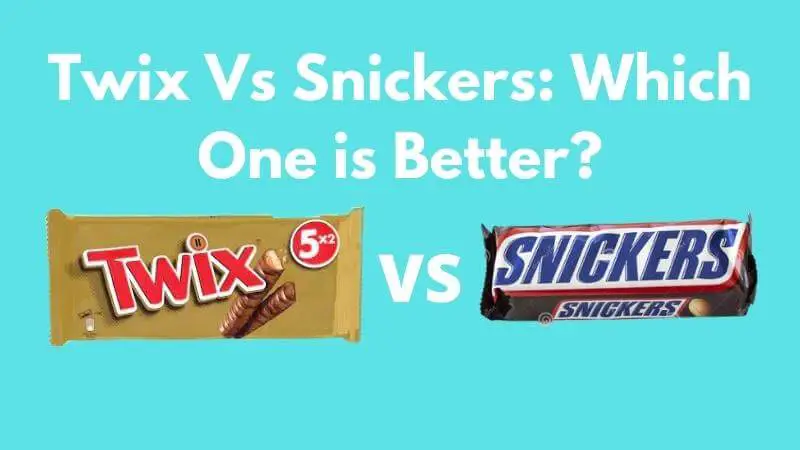
Twix vs Snickers: Which One Is Better? (2026)
Few debates in the confectionery world generate as much passion as the rivalry between Twix and Snickers. Both candy bars are manufactured by Mars, Incorporated, both occupy premium shelf space in virtually every convenience store on the planet, and both have cultivated fiercely loyal followings over the course of several decades. Yet despite sharing a corporate parent, these two chocolate bars could hardly be more different in construction, flavor profile, and eating experience.
This article offers a thorough, side-by-side comparison of Twix and Snickers across every dimension that matters to a candy bar consumer: brand heritage, ingredient composition, taste and texture, nutritional content, available varieties, global popularity, and suitability for different palate preferences. By the end, readers should have all of the information necessary to render their own informed verdict.
Brand History and Origins
Understanding where each bar comes from provides useful context for evaluating what each one represents today.
Snickers
Snickers was introduced in 1930 by Mars, Incorporated, making it one of the oldest mass-produced candy bars still in continuous production. The bar was named after a favorite horse belonging to the Mars family. From its inception, Snickers was designed as a substantial, meal-replacing snack, combining peanuts, nougat, caramel, and milk chocolate into a dense, filling bar. The brand spent decades building its identity around the concept of satisfaction and sustenance, a positioning strategy that culminated in the now-iconic “You’re Not You When You’re Hungry” advertising campaign launched in 2010. That campaign, which featured celebrities behaving out of character due to hunger, became one of the most recognized global advertising efforts of the 21st century.
Snickers has held the title of the world’s best-selling candy bar for many years, with annual global revenues consistently exceeding two billion dollars. It is sold in more than 70 countries and has become a cultural touchstone that transcends regional confectionery preferences.
Twix
Twix arrived considerably later, debuting in the United Kingdom in 1967 under the name “Raider.” The bar was not introduced to the United States market until 1979, and it was not until 1991 that the Raider name was retired in Europe in favor of the global Twix branding. The bar was conceived as a biscuit-based confection, layering a crunchy shortbread cookie with smooth caramel and a milk chocolate coating. This construction placed Twix in a somewhat different category than most of its competitors, blending elements of a cookie and a candy bar into a single product.
Twix has distinguished itself through clever marketing built around the “two bar” format. The long-running “Left Twix vs Right Twix” campaign, which humorously suggested that the two fingers in each package were manufactured by rival factory factions, gave the brand a playful, memorable identity that resonated strongly with younger consumers.
Ingredient Composition
The ingredient lists of Twix and Snickers reveal fundamentally different engineering philosophies. Each bar is built around a distinct structural concept, and the raw materials reflect those divergent approaches.
Snickers Ingredients
A standard Snickers bar is composed of four primary layers. The base consists of a nougat made from sugar, egg whites, and a whipped mixture that provides a chewy, slightly airy foundation. On top of the nougat sits a layer of caramel, which adds sweetness and a sticky, pulling texture. Roasted peanuts are embedded throughout the caramel layer, contributing both crunch and a savory, nutty counterpoint. The entire assembly is then enrobed in milk chocolate.
The full ingredient list for a Snickers bar includes milk chocolate (sugar, cocoa butter, chocolate, skim milk, lactose, milkfat, soy lecithin, artificial flavor), peanuts, corn syrup, sugar, palm oil, skim milk, lactose, salt, egg whites, and artificial flavor. The peanut content is the defining feature, accounting for a significant portion of both the weight and the caloric density of the bar.
Twix Ingredients
A standard Twix bar is built upon a rectangular shortbread biscuit, which serves as the structural backbone. This cookie base is topped with a layer of smooth caramel, and the combined biscuit-and-caramel structure is coated in milk chocolate. Unlike Snickers, Twix contains no nougat and no peanuts, resulting in a fundamentally different flavor and texture experience.
The full ingredient list for a Twix bar includes milk chocolate (sugar, cocoa butter, chocolate, skim milk, lactose, milkfat, soy lecithin, artificial flavor), enriched wheat flour, sugar, palm oil, corn syrup, skim milk, dextrose, salt, cocoa powder, baking soda, soy lecithin, and artificial flavor. The use of enriched wheat flour for the biscuit base sets Twix apart from virtually all of its competitors in the candy bar aisle and introduces a gluten-containing grain component absent from Snickers.
Taste and Texture Profiles
Taste and texture are where these two bars diverge most dramatically, and it is in this domain that personal preference plays the largest role.
Snickers: Bold, Dense, and Nutty
Biting into a Snickers bar produces a complex, layered sensory experience. The teeth first encounter the smooth milk chocolate shell, then push through the sticky caramel and into the dense nougat, encountering roasted peanuts along the way. The overall mouthfeel is chewy, substantial, and requires considerable jaw engagement. The flavor profile is dominated by the interplay between sweet caramel, salty roasted peanuts, and rich milk chocolate. The nougat contributes a mildly vanilla-flavored sweetness that serves as a binding element for the other, more assertive flavors.
Snickers is, by any reasonable measure, a heavy candy bar. It is dense, calorie-rich, and filling. Many consumers describe it as the most “meal-like” of all mainstream candy bars, and it is frequently chosen as a mid-afternoon energy source rather than a light dessert. The salty-sweet balance is one of its greatest strengths; the peanuts prevent the bar from becoming cloying, and the caramel prevents it from becoming too dry or savory.
Twix: Crisp, Layered, and Buttery
The Twix eating experience begins with a satisfying snap as the teeth break through the chocolate coating and into the shortbread biscuit. This initial crunch is the bar’s signature moment. The caramel layer provides a smooth, sweet counterpoint to the dry, crumbly biscuit, and the milk chocolate ties everything together with a creamy finish. The overall texture is lighter and more delicate than Snickers, with a cookie-like quality that makes Twix feel closer to a biscuit or pastry than a traditional candy bar.
Flavor-wise, Twix is characterized by buttery shortbread, sweet caramel, and mild milk chocolate. The profile is less complex than Snickers, with no nutty or salty elements to compete for attention. This simplicity is, for many consumers, a virtue; the clean, dessert-like sweetness of Twix appeals to those who prefer an uncomplicated treat. The bar is also notably less filling than Snickers, making it a more appropriate choice for a light snack or a post-meal dessert.
Nutritional Comparison
Nutrition is a critical differentiator for health-conscious consumers. The following table presents the standard nutritional values for a regular single-serving package of each bar. Note that a standard Snickers bar weighs approximately 52.7 grams (1.86 oz), while a standard Twix package contains two fingers weighing approximately 50 grams (1.79 oz) combined.
| Nutrient | Snickers (1 bar, 52.7 g) | Twix (1 package / 2 fingers, 50 g) |
|---|---|---|
| Calories | 250 | 250 |
| Total Fat | 12 g | 12 g |
| Saturated Fat | 4.5 g | 7 g |
| Trans Fat | 0 g | 0 g |
| Cholesterol | 5 mg | 0 mg |
| Sodium | 120 mg | 100 mg |
| Total Carbohydrates | 33 g | 34 g |
| Dietary Fiber | 1 g | 0 g |
| Total Sugars | 27 g | 24 g |
| Protein | 4 g | 2 g |
Several observations emerge from this comparison. First, the caloric content is effectively identical at 250 calories per standard serving. However, the macronutrient distribution differs in meaningful ways. Snickers provides twice the protein of Twix (4 grams versus 2 grams), a direct consequence of the peanut content. This makes Snickers the marginally better choice for consumers seeking a more satiating snack, as protein contributes more significantly to feelings of fullness than carbohydrates alone.
Conversely, Twix contains notably more saturated fat (7 grams versus 4.5 grams), primarily due to the butter and palm oil used in the shortbread biscuit. Snickers, while containing more total sugars (27 grams versus 24 grams), delivers some of those calories in the form of peanuts, which provide healthy fats, fiber, and micronutrients that the refined flour in Twix does not.
Neither bar qualifies as a health food by any standard, but consumers who are monitoring their saturated fat intake may wish to lean toward Snickers, while those watching total sugar may find Twix slightly preferable. The protein advantage of Snickers, while modest in absolute terms, represents a meaningful relative difference at double the amount found in Twix.
Available Varieties
Both brands have expanded well beyond their original formulations, offering a range of variations designed to capture different market segments and flavor preferences.
Snickers Varieties
Snickers has been particularly aggressive in its variety expansion. The current and recent lineup includes:
- Snickers Original — The classic peanut, caramel, nougat, and milk chocolate formulation.
- Snickers Almond — Substitutes almonds for peanuts, producing a milder, more refined nutty flavor.
- Snickers Peanut Brownie — Features a brownie-flavored nougat base with a denser, fudgier texture.
- Snickers Hi Protein — Reformulated with added whey protein, marketed toward fitness-oriented consumers.
- Snickers Dark — Replaces the milk chocolate coating with dark chocolate for a more intense cocoa flavor.
- Snickers Cruncher — Incorporates crisped rice into the bar for added textural contrast.
- Snickers Ice Cream Bars — Frozen versions available in both individual bars and multi-packs.
- Snickers Minis and Bites — Smaller formats intended for sharing or portion-controlled snacking.
- Snickers Creamy — A newer addition that features a smoother peanut butter filling in place of whole peanuts.
Twix Varieties
Twix has also expanded its lineup, though with a somewhat narrower range:
- Twix Original (Caramel) — The classic shortbread, caramel, and milk chocolate combination.
- Twix Peanut Butter — Replaces the caramel layer with peanut butter, adding a nutty element to the biscuit base.
- Twix Cookies & Creme — Features a cookies-and-cream flavored coating over the traditional biscuit structure.
- Twix Dark — Coated in dark chocolate rather than milk chocolate.
- Twix White — Coated in white chocolate for a sweeter, creamier flavor profile.
- Twix Ice Cream Bars — Frozen versions that incorporate the shortbread-and-caramel concept into an ice cream format.
- Twix Minis and Bites — Smaller formats for sharing and snacking.
- Twix Salted Caramel — Enhances the caramel layer with sea salt for a more sophisticated flavor balance.
Both brands have also released numerous limited-edition and regional variations over the years, including seasonal flavors and collaborations. Snickers holds a slight edge in variety breadth, particularly in the protein-enhanced and nut-substitution categories, while Twix has explored more chocolate coating variations.
Popularity and Sales Data
In terms of commercial performance, the competition between Twix and Snickers is not particularly close. Snickers has long held the distinction of being the best-selling candy bar in the world. Industry analyses consistently place Snickers at the top of global confectionery rankings, with estimated annual retail sales exceeding $3 billion worldwide. The brand’s reach extends to more than 70 countries, and it maintains dominant market share in North America, Europe, and significant portions of Asia and the Middle East.
Twix, while a strong performer in its own right, typically ranks among the top ten best-selling candy bars globally rather than occupying the very top position. In the United States market, Twix generally places within the top five to seven candy bars by retail sales volume, depending on the year and the data source consulted. Its sales are robust, but they do not approach the scale that Snickers commands.
Several factors contribute to this disparity. Snickers benefits from a longer market history, a more universally appealing flavor profile (chocolate and peanuts being a globally beloved combination), and arguably the more effective modern advertising strategy. The “You’re Not You When You’re Hungry” campaign achieved a level of cultural penetration that few confectionery advertisements have ever matched, reinforcing brand awareness across demographics and geographies.
Twix, however, should not be dismissed as a distant second. The brand enjoys particularly strong performance in European markets, where its biscuit-bar identity aligns with long-standing regional preferences for cookie-based confections. In the United Kingdom, where the product originated, Twix remains one of the most popular candy bars sold, and its cultural footprint is arguably on par with Snickers in that market.
Head-to-Head Comparison Table
The following table summarizes the key differences between Twix and Snickers across the most relevant comparison categories.
| Category | Snickers | Twix |
|---|---|---|
| Year Introduced | 1930 | 1967 |
| Core Structure | Nougat, caramel, peanuts, milk chocolate | Shortbread biscuit, caramel, milk chocolate |
| Primary Texture | Chewy, dense, crunchy (peanuts) | Crisp, snappy, crumbly (biscuit) |
| Dominant Flavor | Salty-sweet, nutty | Buttery-sweet, caramel-forward |
| Protein Per Serving | 4 g | 2 g |
| Saturated Fat Per Serving | 4.5 g | 7 g |
| Contains Peanuts | Yes | No (except Peanut Butter variety) |
| Contains Wheat/Gluten | No | Yes |
| Pieces Per Package | 1 bar | 2 fingers |
| Global Sales Ranking | #1 candy bar worldwide | Top 10 worldwide |
| Satiating Quality | High | Moderate |
| Number of Varieties | Extensive | Moderate |
Which Bar Is Better for Different Preferences?
Because “better” is inherently subjective when applied to candy bars, it is more useful to identify which bar best serves specific preference profiles. The following analysis addresses the most common consumer priorities.
For Chocolate Lovers
Neither Twix nor Snickers is the optimal choice for a consumer whose primary interest is chocolate intensity. Both bars use milk chocolate as a coating rather than as the central feature, and neither delivers the deep, complex cocoa experience that a dedicated chocolate bar would provide. That said, Twix allows the chocolate to play a slightly more prominent role in the overall flavor profile, simply because its other components (shortbread and caramel) are milder and less assertive than the peanuts and nougat in Snickers. In Snickers, the chocolate coating often takes a supporting role behind the more dominant peanut and caramel flavors. Consumers seeking a more chocolate-forward experience between these two options should lean toward Twix, particularly the Dark variety.
For Caramel Fans
Both bars feature caramel as a core ingredient, but the caramel experience differs significantly. In Snickers, the caramel layer is intertwined with peanuts and sits atop a chewy nougat base, which means the caramel flavor is diluted by competing elements. In Twix, the caramel sits directly on top of a neutral shortbread biscuit, allowing it to express itself more clearly. The Twix caramel is also typically smoother and more uniform in texture, whereas Snickers caramel is often stretched and pulled by the peanuts embedded within it. For consumers who rank caramel as their highest priority, Twix is the superior choice, and the Twix Salted Caramel variety elevates this advantage further.
For Peanut Lovers
This category produces the clearest winner. Snickers contains a generous quantity of whole roasted peanuts, and the peanut flavor is arguably the single most defining characteristic of the bar. Twix, in its original formulation, contains no peanuts whatsoever. While the Twix Peanut Butter variety introduces a peanut element, it uses processed peanut butter rather than whole peanuts, resulting in a fundamentally different experience. Consumers who love peanuts should choose Snickers without hesitation.
For Texture Preference: Crunchy
Both bars offer crunch, but of very different kinds. Snickers provides the irregular, granular crunch of roasted peanuts distributed throughout a chewy matrix. Twix provides the clean, uniform snap of a shortbread biscuit breaking under the teeth. Consumers who enjoy a varied, unpredictable crunch with chewy elements will gravitate toward Snickers. Those who prefer a clean, crisp, cookie-like crunch with a more consistent bite will prefer Twix. The Twix crunch is arguably more satisfying on a purely textural level, as the biscuit snap is one of the most distinctive sensory experiences in the candy bar category.
For Texture Preference: Chewy
Snickers is the clear winner for consumers who prioritize a chewy eating experience. The nougat base provides sustained chewiness, and the caramel-and-peanut layer adds additional resistance. Eating a Snickers bar is a prolonged, jaw-engaging experience that many consumers find deeply satisfying. Twix, by contrast, breaks apart relatively quickly once the biscuit is bitten, with the caramel providing only a brief moment of pull before the cookie crumbles. The chew factor of Twix is minimal compared to Snickers.
For Sharing and Portion Control
Twix holds a practical advantage in the sharing and portion-control categories. The two-finger format allows a consumer to eat one finger and save the other, or to share one finger with a companion. This built-in divisibility is a genuine convenience feature that Snickers, as a single undivided bar, does not offer. While Snickers does sell multi-bar and fun-size formats, the standard single-bar package does not lend itself as naturally to splitting.
For Satiation and Energy
Consumers seeking a candy bar that will genuinely curb hunger should choose Snickers. The combination of peanuts (providing protein and healthy fats), nougat (providing volume), and caramel (providing slow-releasing sugars) creates a more satiating package than the refined flour and sugar composition of Twix. Snickers has, in fact, built its entire brand identity around this satiating quality, and the nutritional data supports the claim. The higher protein content and lower saturated fat percentage contribute to a more sustained energy release compared to the quick sugar hit that Twix delivers.
For Allergen Considerations
Allergen profiles differ meaningfully between the two bars. Snickers contains peanuts, making it unsuitable for anyone with a peanut allergy. Twix contains wheat and gluten, making it unsuitable for anyone with celiac disease or gluten sensitivity. Both bars contain milk and soy. Consumers with peanut allergies must avoid Snickers, while consumers with gluten sensitivities must avoid Twix. This is a practical distinction that supersedes any preference-based considerations for affected individuals.
The Cultural Factor
It is worth noting that the Twix versus Snickers debate carries cultural dimensions that extend beyond the physical attributes of the bars themselves. Snickers, as the global market leader, carries an air of mainstream dominance. Choosing Snickers is, in a sense, choosing the established consensus. Twix, while enormously popular in absolute terms, occupies a slightly more niche position, appealing to consumers who want something a little different from the peanut-and-chocolate norm that dominates the candy bar aisle.
The marketing identities of the two brands also attract different consumer personalities. Snickers, with its hunger-focused messaging, appeals to pragmatists who view candy as functional sustenance. Twix, with its whimsical Left-versus-Right campaign, appeals to consumers who engage with brands on a more playful, personality-driven level. Neither approach is objectively superior, but they do reveal something about the different emotional territories that each brand occupies in the consumer imagination.
Final Assessment
After evaluating Twix and Snickers across every meaningful dimension, the most honest conclusion is that neither bar is universally “better” than the other. Each excels in different areas, and the optimal choice depends entirely on what a given consumer values most in a candy bar experience.
Snickers is the superior choice for consumers who prioritize satiation, protein content, peanut flavor, chewy texture, and overall substance. It is the bar to reach for when genuinely hungry, when craving a salty-sweet balance, or when seeking the most filling option available in the candy aisle. Its status as the world’s best-selling candy bar is well-earned, reflecting a broad, cross-cultural appeal rooted in a universally satisfying flavor combination.
Twix is the superior choice for consumers who prioritize crunch, caramel prominence, a lighter eating experience, shareability, and a cookie-like quality that distinguishes it from the dense, nougat-heavy candy bar norm. It is the bar to reach for when desiring a refined, biscuit-based treat rather than a heavy, meal-replacement snack. Its two-finger format and cleaner flavor profile make it an elegant alternative to the more robust Snickers.
For consumers with no strong lean in either direction, Snickers represents the safer bet. Its broader flavor complexity, higher protein content, more balanced macronutrient profile, and proven global popularity suggest that it satisfies a wider range of palates and occasions. However, the margin is narrow, and a consumer who discovers a preference for the crisp, buttery snap of a Twix biscuit may never look back. Both bars are masterfully engineered confections from one of the world’s foremost candy manufacturers, and both deserve their places among the most beloved treats ever produced.
Ultimately, the best candy bar is the one that brings the most enjoyment in the moment it is eaten. Whether that bar features peanuts or shortbread, nougat or biscuit, is a matter for each individual to decide.