
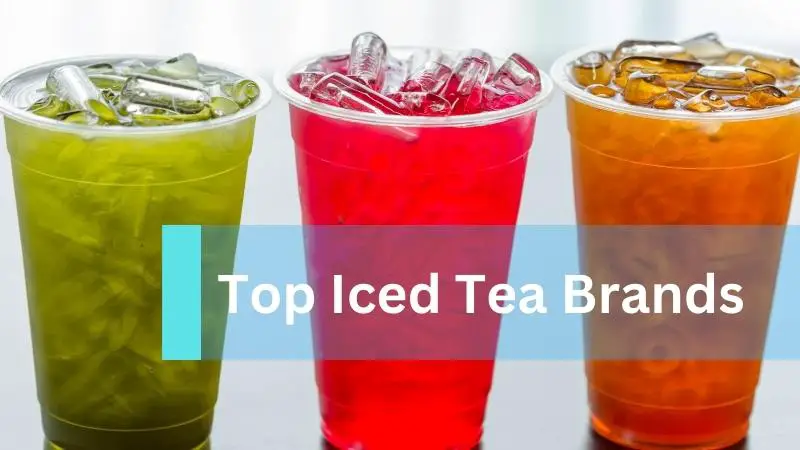
Iced tea is one of those deceptively simple drinks that hides an entire industry behind it. What started as a hot-weather improvisation at the 1904 World’s Fair in St. Louis has become a multi-billion-dollar beverage category with dozens of major brands, hundreds of flavors, and a presence in virtually every grocery store, gas station, and restaurant in America.
If you’re trying to find your go-to iced tea — or just curious about what’s out there — here’s a comprehensive guide to the most notable iced tea brands available in 2026, what makes each one distinct, and which ones are worth your time.
The Major Iced Tea Brands
1. Lipton
Lipton is the world’s most recognized tea brand, period. Their iced tea launched in 1991 and is now available in over 150 countries. The lineup includes lemon, mango, raspberry, nectarine, and peach flavors, with lemon being the flagship that moves more volume than most competing brands’ entire product lines.
Lipton iced tea is brewed from 100% black tea bags, which gives it a genuine tea flavor rather than the purely manufactured taste of some competitors. It’s a solid, dependable choice — not the most exciting iced tea on the shelf, but consistently good and universally available.
2. Pure Leaf
Pure Leaf has become one of the best-selling iced teas in the United States, generating over $900 million in annual sales. The brand’s appeal is its “real brewed” positioning — no powders, no concentrates, no artificial sweeteners. It tastes like someone actually brewed tea and bottled it, which in the iced tea world is surprisingly rare.
The Black Unsweetened variety is their bestseller and arguably the closest thing to homemade iced tea you’ll find in a bottle. It’s not overpowering, not excessively sweet, and has a clean, genuine tea flavor. Pure Leaf is a joint venture between PepsiCo and Unilever, and the quality reflects the investment both companies have made in the brand.
3. Arizona
Arizona is instantly recognizable — those tall, ornate cans with their cherry blossom and Southwestern-inspired artwork are some of the most iconic beverage packaging in the US. Founded in 1971 in Woodbury, New York (not Arizona — the name was chosen because it sounded hot and refreshing), the company didn’t release its first product until 1992.
Arizona’s defining feature is price. The 23-ounce can has maintained its $0.99 price point for years — a remarkable holdout against inflation. Combined with a huge flavor range and bold packaging, Arizona has become the default iced tea for budget-conscious consumers. The Green Tea with Honey is a perennial bestseller.
4. Snapple
Snapple has been a fixture in the iced tea market for nearly 50 years, with over 30 flavors available. Kiwi Strawberry and Black Cherry Lemonade are among the most popular. Snapple’s brand identity leans playful — the “Real Facts” printed inside bottle caps became a cultural phenomenon in the ’90s and early 2000s.
Snapple recently transitioned from its iconic glass bottles to plastic, which generated backlash from loyal customers who associated the glass with the brand’s premium feel. Despite the controversy, Snapple remains widely available and offers one of the broadest flavor selections in the iced tea market.
5. Brisk
Brisk is a partnership between PepsiCo and Unilever, positioned as a bolder, more flavor-forward iced tea targeting younger consumers. The Half & Half (half iced tea, half lemonade) is the standout product, offering about 70 calories per 12-ounce bottle. Brisk has been gaining market share steadily, helped by aggressive pricing and wide distribution through Pepsi’s bottling network.
6. Sweet Leaf
Sweet Leaf, founded in 1998 in Beaumont, Texas, carved its niche as an organic iced tea made with 100% pure cane sugar and no GMOs. It was acquired by Nestlé and has expanded its distribution significantly since. At about 110 calories and 27 grams of sugar per serving, it’s not a diet drink — but the “real ingredients” positioning resonates with consumers who prioritize organic and non-GMO products.
7. Turkey Hill
Turkey Hill started as a dairy in 1931 in Lancaster County, Pennsylvania, and is best known for ice cream. But their iced tea line — while limited in flavor options — has a loyal regional following, particularly in the Mid-Atlantic and Northeast. Their Orange Flavored Tea is a standout. Nutritionally, Turkey Hill runs about 120 calories and 30 grams of sugar per serving — standard for sweetened iced tea.
8. Honest Tea
Honest Tea (originally a Coca-Cola brand) built its reputation on organic ingredients, fair trade sourcing, and “just a tad sweet” positioning. Authentic brewed tea, recyclable bottles, no preservatives, no GMOs, USDA organic certified. It’s the iced tea you buy when you want to feel good about what you’re drinking. The flavors lean subtler than most mainstream brands.
9. Bai
Bai positioned itself as the health-conscious alternative in the iced tea space. Their “Supertea” line contains only 1 gram of sugar per serving, using the antioxidant-rich coffeefruit as a base ingredient. Zero artificial substances, low calorie count, and a clean ingredient list. Bai appeals to consumers who want iced tea flavor without the sugar load — a growing segment of the market.
10. Tejava
Tejava offers what might be the most fresh-brewed taste in the commercial iced tea market. Their Original Black Iced Tea has 0 calories and 0 grams of sugar — it’s literally just brewed Java black tea and water. No sweeteners, no flavors, no additives. If you want unsweetened iced tea that actually tastes like tea, Tejava is hard to beat.
11. Peace Tea
Peace Tea, owned by Coca-Cola, entered the market in 2009 and competes directly with Arizona in the value segment. Their tall cans feature psychedelic, peace-themed artwork and come in a wide range of flavors — Caddy Shack (sweet tea and lemonade), Texas Style Sweet Tea, and Ceylon Tea with Peach are popular picks. Priced competitively, Peace Tea has carved a solid niche among younger consumers.
12. Teavana
Teavana is owned by Starbucks and started production in 1997. The bottled iced tea line is limited — mainly Unsweetened Peach Nectarine Green Tea and Mango Black Tea in the US — but what’s there is well-made. The Starbucks connection gives Teavana premium positioning and distribution through Starbucks locations alongside traditional retail.
13. Crystal Light
Crystal Light is technically a powdered drink mix, not a bottled iced tea, but their Lemon Iced Tea variant has become a pantry staple. With zero sugar and minimal calories, it appeals to people who want iced tea flavor as a daily beverage without the calorie load. The powdered format also makes it exceptionally cheap per serving.
14. Tazo
Originally owned by Starbucks, Tazo was sold to Unilever in 2017. The brand leans into herbal and specialty tea blends — it’s positioned as more artisanal than mainstream brands. Tazo has also been vocal about sustainability and social responsibility, participating in climate change initiatives and human rights advocacy. The iced tea options tend to be more complex in flavor profile than mass-market competitors.
15. Milo’s
Milo’s started as a family-owned fast-food restaurant in Birmingham, Alabama in 1946, and its sweet tea became so popular that it eventually became the main business. Now a women-owned company, Milo’s iced tea holds a 4.5-out-of-5 rating on Walmart — an impressive feat in a category this crowded. The emphasis is on quality and simplicity: real tea, real sugar, no preservatives.
16. Luzianne
Luzianne is a Southern institution. Known primarily as a tea bag brand designed specifically for making iced tea at home, Luzianne has a 5-out-of-5 rating on Walmart. Their tea bags are specially blended to brew smoothly in cold water without becoming bitter — a detail that matters more than you’d think. If you prefer making your own iced tea, Luzianne is a top-tier option.
17. Zevia
Zevia’s entire product line is built on zero sugar and zero calories, sweetened with stevia. Their iced tea offerings aren’t the most widely known, but they deliver solid flavor without any sugar whatsoever. For people who have cut sugar entirely — or are managing conditions like diabetes — Zevia is one of the few options that doesn’t taste like a compromise.
18. Fuze Tea
Owned by Coca-Cola, Fuze Tea combines tea with fruit juice and offers a wide flavor range. At about 80 calories per 12-ounce bottle, it sits in the middle of the nutritional spectrum. Fuze Tea has stronger distribution outside the US — it’s one of the leading iced tea brands in Europe and Latin America.
19. Harney & Sons
Harney & Sons, based in Millerton, New York, produces tea in every format — loose leaf, bagged, bottled, and iced. Their bottled iced teas are premium products with a genuine, aromatic tea character. The Black Currant Fresh Brewed Iced Tea is their bestseller. If you want iced tea that tastes like it was made by people who actually care about tea, Harney & Sons delivers.
20. Nestea
Nestea, backed by Nestlé, is one of the most established names in iced tea globally. Their lemon iced tea and powdered iced tea mixes are available in most markets. The taste emphasis is on real ingredients and a “revitalizing” flavor profile. Nestea’s global distribution gives it reach that most competitors can’t match.
What to Consider When Choosing
The “best” iced tea depends entirely on what you’re optimizing for:
Taste authenticity: Pure Leaf, Tejava, Harney & Sons, and Milo’s are the closest to homemade brewed iced tea.
Budget: Arizona and Peace Tea offer the most volume for the least money.
Low sugar/calories: Bai, Tejava (unsweetened), Zevia, and Crystal Light lead the health-conscious segment.
Organic and clean ingredients: Sweet Leaf, Honest Tea, and Tazo prioritize organic sourcing and minimal processing.
Flavor variety: Snapple and Arizona offer the widest selection if you want to experiment.
Make-your-own: Luzianne tea bags are specifically designed for home iced tea brewing and consistently get top ratings.
The iced tea market continues to evolve. The biggest trend in 2026 is the shift toward lower-sugar and functional options — teas infused with adaptogens, probiotics, or added vitamins. Brands that started as simple sweetened beverages are adding unsweetened and lightly sweetened variants to meet changing consumer preferences. Whether you prefer your iced tea sweet enough to stand a spoon in or completely unsweetened, there’s a brand that has exactly what you’re looking for.