
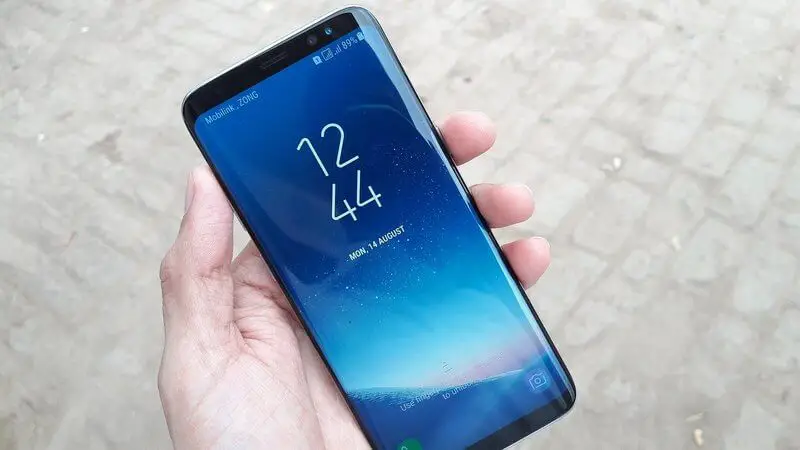
Samsung is not just a company. It is an empire. Founded in 1938 as a small trading outfit in Daegu, South Korea, Samsung has grown into one of the most sprawling conglomerates on the planet — a chaebol whose reach extends from semiconductor fabrication plants to life insurance policies, from warships to washing machines. Samsung Group, the parent entity, accounts for roughly a fifth of South Korea’s GDP. That single statistic should tell you everything about its weight. But most people around the world know Samsung through one arm of that empire: Samsung Electronics. And Samsung Electronics alone pulls in north of $200 billion in annual revenue, making it one of the largest technology companies on Earth by any measure. It is the world’s biggest manufacturer of memory chips, the world’s largest maker of smartphones by volume, and the dominant force in display technology — particularly OLED panels, which it supplies even to competitors like Apple. Understanding Samsung’s mission and vision statements means understanding a company that operates at a scale very few businesses ever reach.
Samsung Mission Statement
“We will devote our human resources and technology to create superior products and services, thereby contributing to a better global society.”
This mission statement does a few things right, and it does them quietly. First, notice the order of priorities: human resources come before technology. That is not accidental. Samsung has always operated under the philosophy that people drive innovation, not the other way around. The company’s founder, Lee Byung-chul, built Samsung on the idea that attracting the best talent in South Korea — and eventually the world — would be the ultimate competitive advantage. That principle still runs through the organization today, from its massive R&D centers in Suwon and San Jose to the Samsung Advanced Institute of Technology, where long-range research happens years before products hit shelves.
The phrase “superior products and services” is worth examining. Samsung does not say “innovative” or “cutting-edge.” It says superior. That word implies a direct comparison — Samsung is telling you its goal is to beat the competition. And if you look at its track record, that framing makes sense. Samsung did not invent the smartphone. Apple did that. But Samsung studied the market, iterated relentlessly, and eventually overtook Apple in global smartphone shipments. Samsung did not invent OLED display technology from scratch, but it invested so heavily in perfecting it that today even Apple depends on Samsung Display for iPhone screens. The word “superior” captures Samsung’s DNA: arrive second, execute better, scale faster.
Then there is the closing clause — “contributing to a better global society.” This is standard corporate language in one sense. Every major company says something about making the world better. But for Samsung, it also reflects a real obligation. As the anchor of a chaebol that essentially props up a significant portion of South Korea’s economy, Samsung carries a national responsibility that companies like Microsoft or Apple simply do not. When Samsung falters, entire supply chains across South Korea feel it. When Samsung invests in a new chip fab, it reshapes employment in entire regions. The “global society” language also signals Samsung’s long-running effort to be seen as more than a Korean company — to be seen as a truly global brand, which it has largely achieved since the early 2010s.
One thing the mission statement does not do is specify which industry Samsung operates in. There is no mention of electronics, semiconductors, or mobile devices. This is by design. Samsung Group encompasses dozens of subsidiaries — Samsung Heavy Industries builds ships, Samsung C&T handles construction and fashion, Samsung Life Insurance is one of Asia’s largest insurers. A mission statement that boxed Samsung into “tech” would be too narrow for the conglomerate’s actual scope. The statement is deliberately broad enough to cover all of it.
Samsung Vision Statement
“Inspire the world, create the future.”
Six words. That is all Samsung uses for its vision statement, and the brevity is striking compared to the more measured, structured mission statement. This is aspirational language at its most distilled. No qualifiers, no caveats, no mention of specific products or markets. Just two imperatives: inspire and create.
“Inspire the world” sets the geographic ambition clearly. Not inspire South Korea. Not inspire Asia. The world. And Samsung has largely delivered on that ambition in terms of sheer reach. Samsung Electronics products are sold in virtually every country on Earth. The Galaxy smartphone line competes head-to-head with Apple‘s iPhone across every major market. Samsung televisions have held the number-one global market share position for close to two decades. In semiconductors, Samsung’s memory chips and foundry services sit inside devices made by competitors and partners alike. The company’s fingerprints are on technology you use every day, even if the Samsung logo is nowhere in sight.
“Create the future” is where the vision gets more interesting. This is not a statement about responding to market demand. It is a statement about shaping what comes next. And to Samsung’s credit, the company has put real money behind that idea. Samsung was the first major manufacturer to bring foldable smartphones to market at scale with the Galaxy Z Fold and Galaxy Z Flip lines. While other companies talked about foldables as a concept, Samsung actually shipped them, iterated on them, and by 2025 had sold tens of millions of foldable units. That is future-creation in a tangible sense — Samsung defined an entirely new product category and forced the rest of the industry to follow.
The vision also aligns with Samsung’s aggressive push into artificial intelligence. As of 2026, Samsung has integrated AI across its product ecosystem in ways that go beyond surface-level features. Galaxy AI, introduced in early 2024, has evolved into a comprehensive on-device intelligence layer across Samsung’s smartphones, tablets, and wearables. On the semiconductor side, Samsung’s high-bandwidth memory (HBM) chips are critical components in the AI server infrastructure that companies around the world are racing to build out. Samsung is not just making AI-powered consumer gadgets — it is manufacturing the physical hardware that makes the entire AI revolution possible. That is about as close to “creating the future” as a company can get.
The vision statement also works as an internal rallying cry. Samsung’s corporate culture, shaped by South Korean business norms and chaebol tradition, tends toward long hours, intense competition, and top-down directives. A vision this simple and bold gives employees across dozens of subsidiaries and hundreds of thousands of workers a shared sense of purpose. Whether you are an engineer designing the next Exynos chip or a line worker at a home appliance factory in Gwangju, “inspire the world, create the future” is easy to internalize.
Analysis of Samsung’s Mission and Vision Statements
Strengths
The biggest strength of Samsung’s mission and vision statements taken together is that they accurately reflect how the company actually operates. That sounds like a low bar, but it is not. Plenty of companies publish mission statements that have nothing to do with their real priorities. Samsung says it will devote human resources and technology to create superior products. Samsung actually does that — it spends more on R&D than almost any other company in the world, routinely exceeding $20 billion annually. Samsung says it wants to inspire the world and create the future. Samsung actually ships products that define new categories, from foldable phones to the quantum dot displays now standard in its premium television lineup.
Another strength is the complementary relationship between the two statements. The mission is operational and grounded — it talks about resources, technology, products, and services. The vision is aspirational and forward-looking — it talks about inspiration and the future. Together, they cover both the “how” and the “where to.” The mission tells employees and stakeholders what Samsung does day to day. The vision tells them where all that effort is headed. That is exactly how a mission and vision pairing should work.
The scope is also well-calibrated. Because Samsung is a conglomerate — not just a phone company or a chip company — both statements need to be broad enough to encompass wildly different business units. They achieve that. Nothing in either statement limits Samsung to a single industry, product line, or geography. A Samsung shipbuilding executive can read these statements and feel they apply. So can a Samsung semiconductor engineer. So can someone working on Samsung’s Bixby voice assistant or its SmartThings home automation platform. Breadth, in this case, is a feature, not a bug.
The global orientation is another clear strength. Samsung’s transformation from a Korean domestic brand to a global powerhouse is one of the great business stories of the past forty years. The mission statement references “a better global society.” The vision says “inspire the world.” Both statements reinforce Samsung’s identity as a company that thinks in global terms. This matters strategically. Samsung competes against Apple in North America, against Xiaomi and other Chinese manufacturers in Asia, against Bosch and LG in home appliances across Europe. A parochial mission statement would undermine that positioning.
Weaknesses
The most obvious weakness is that the mission statement is generic. Strip away the Samsung name and you could attach it to virtually any large technology or manufacturing company. “Devote human resources and technology to create superior products” — that could be Sony, LG, Panasonic, Siemens, or a hundred others. There is nothing in the statement that tells you what makes Samsung different from its competitors. No mention of its unique position as a vertically integrated manufacturer that makes its own chips, its own screens, its own software, and its own finished consumer products. That vertical integration is arguably Samsung’s greatest structural advantage, and the mission statement does not even hint at it.
The vision statement, while memorable, is so compressed that it borders on vague. “Inspire the world, create the future” sounds powerful in a keynote presentation. But what does it actually commit Samsung to? Practically anything could qualify as inspiring or future-creating. Compare this to a more specific vision and the difference becomes clear. When a company says precisely what future it intends to create, that vision can guide strategic decisions. Samsung’s vision, as written, does not provide that kind of directional clarity.
There is also no mention of sustainability or environmental responsibility in either statement. For a company of Samsung’s size — one that operates chip fabrication plants consuming enormous quantities of water and energy, manufactures hundreds of millions of electronic devices per year, and runs a chemicals subsidiary — the absence of any environmental language is notable. As of 2026, stakeholders increasingly expect companies to embed sustainability into their core identity, not just their CSR reports. Samsung has made sustainability commitments separately, but the mission and vision statements do not reflect them.
Finally, neither statement addresses the customer directly. Apple’s messaging relentlessly centers the user experience. Microsoft‘s mission explicitly mentions empowering “every person and every organization.” Samsung’s statements talk about creating superior products and inspiring the world, but they frame the company as the active agent. The customer is a passive beneficiary. In a consumer electronics market where brand loyalty increasingly depends on emotional connection and user-centric design, this company-centric framing is a missed opportunity. Samsung’s products have improved dramatically in user experience over the past decade — its One UI software layer is now widely praised, and its customer service infrastructure has expanded globally. The statements do not capture that evolution.
Samsung’s mission and vision statements do what they need to do at a basic level: they communicate ambition, scope, and a commitment to excellence. They have served the company well during its rise from a regional manufacturer to a global technology leader. But as Samsung moves deeper into the AI era, as it battles for leadership in next-generation semiconductors and competes for consumer loyalty against companies with sharper brand narratives, these statements could benefit from an update. The bones are solid. The specificity is what is missing. Samsung has one of the most remarkable corporate stories of the past century — its mission and vision should tell more of that story.