
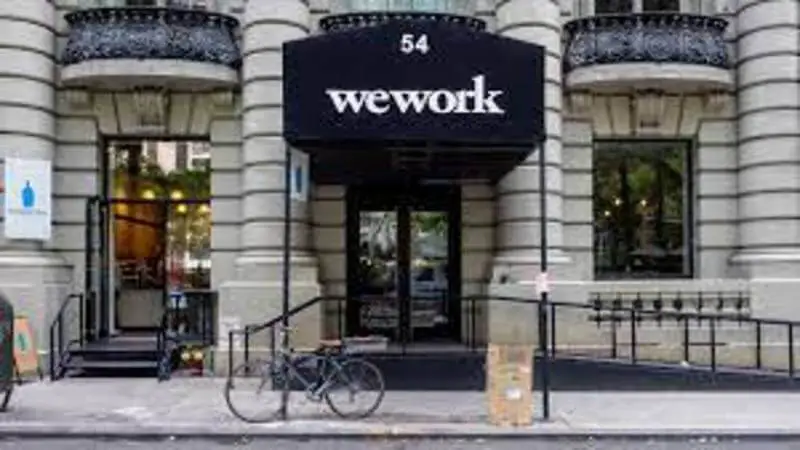
WeWork Mission Statement Analysis (2026)
Few companies in modern business history have embodied the tension between audacious aspiration and operational reality quite like WeWork. Founded in 2010 by Adam Neumann and Miguel McKelvey, the coworking giant spent a decade oscillating between world-changing rhetoric and fundamental questions about its business model. Its mission and vision statements reflect that tension in ways that are instructive for any student of corporate strategy. Following a spectacular failed IPO in 2019, a Chapter 11 bankruptcy filing in November 2023, and a post-bankruptcy emergence in 2024, WeWork now operates as a restructured entity attempting to prove that its core premise — shared, flexible workspace — can survive without the cult-of-personality leadership and reckless expansion that nearly destroyed it.
This analysis examines WeWork’s mission and vision statements in their current form, evaluates their strengths and weaknesses, and contextualizes them within the broader arc of the company’s turbulent history. The goal is not merely to parse language but to assess whether these statements serve as credible guides for a company that has been forced to rebuild its identity from the ground up.
WeWork Mission Statement
WeWork’s mission statement, which has remained largely consistent through multiple corporate upheavals, reads:
“To create a world where people work to make a life, not just a living.”
This statement is notable for its ambition. It does not merely describe a service or a product category. Instead, it positions WeWork as an agent of societal transformation — a company whose purpose extends beyond providing desks and conference rooms into reshaping the fundamental relationship between work and human fulfillment. The statement implicitly critiques traditional employment as soul-crushing drudgery and presents WeWork as the antidote. That is a heavy burden for any company to carry, let alone one that leases office space.
Strengths of WeWork’s Mission Statement
Emotional resonance. The distinction between “making a life” and “making a living” is genuinely compelling. It taps into a widespread sentiment — particularly among millennials and Gen Z workers — that work should be meaningful rather than merely transactional. This is not an empty platitude; it reflects a real shift in workforce expectations that accelerated during and after the COVID-19 pandemic. By anchoring itself to this cultural current, WeWork’s mission statement achieves something that many corporate mission statements fail to do: it makes people feel something.
Memorable and concise. At fourteen words, the statement is easy to recall and repeat. Compare this to the bloated, committee-drafted mission statements that plague most Fortune 500 companies. WeWork’s mission can be quoted from memory, which gives it genuine utility as an internal rallying cry and external marketing tool. The best mission statements function as a kind of shorthand for organizational identity, and this one succeeds on that metric.
Universal applicability. The statement is not limited to a specific geography, industry, or customer segment. It applies equally to a freelance graphic designer in Brooklyn, a startup team in Bangalore, and a corporate satellite office in London. This universality supported WeWork’s global expansion ambitions and continues to serve the company as it operates across multiple markets post-bankruptcy.
Weaknesses of WeWork’s Mission Statement
Disconnected from operational reality. The most damaging criticism of WeWork’s mission statement is that it bears almost no relationship to what the company actually does. WeWork leases commercial real estate, subdivides it, furnishes it, and subleases it to tenants on flexible terms. That is a legitimate and potentially valuable business. But it is not, by any reasonable interpretation, “creating a world where people work to make a life, not just a living.” A mission statement that cannot be credibly connected to daily operations is not aspirational — it is delusional. The gap between WeWork’s stated mission and its actual business model contributed directly to the credibility crisis that derailed its IPO.
Lacks specificity about the customer. The statement does not identify who WeWork serves. Is it freelancers? Startups? Enterprise clients? Remote workers? All of the above? A mission statement that applies to everyone often ends up guiding no one. In WeWork’s case, this vagueness enabled a scattershot expansion strategy that included ventures into co-living (WeLive), education (WeGrow), and wave pools (Wavegarden) — none of which survived contact with financial scrutiny.
Credibility deficit. After the Neumann-era governance failures, the failed IPO, billions of dollars in losses, and a bankruptcy filing, the idealistic tone of this mission statement now reads as tone-deaf to many observers. A company that laid off thousands of employees, abandoned leases in dozens of cities, and left landlords holding significant losses has limited standing to lecture the world about making work more meaningful. The mission statement has not changed, but the context in which it is received has changed dramatically.
WeWork Vision Statement
WeWork’s vision statement, which has evolved somewhat over the years, is generally expressed as:
“To build a community of creators and empower them to do what they love.”
This vision statement complements the mission by specifying the mechanism through which WeWork intends to fulfill its broader purpose. If the mission is the “why,” the vision is meant to be the “how” — or at least the “what it looks like when we get there.” The language of community and creation positions WeWork not as a landlord but as a platform for human potential. Whether that positioning has ever been justified by the actual experience of WeWork membership is a question worth examining carefully.
Strengths of WeWork’s Vision Statement
Community as differentiator. The emphasis on “community” identifies what has historically been WeWork’s most credible competitive advantage over conventional office landlords. Traditional commercial real estate is transactional: a tenant signs a lease, occupies a space, and interacts with the building management primarily through maintenance requests. WeWork, at its best, offered something different — networking events, shared amenities, a sense of belonging to a collective enterprise. The vision statement correctly identifies this community element as central to the value proposition. Companies like Airbnb have similarly leveraged the concept of belonging as a strategic differentiator, though with more operational follow-through.
Action-oriented language. The verbs “build” and “empower” give the vision statement a sense of forward motion. This is not a passive declaration of values; it describes active work that the company intends to do. Effective vision statements create a sense of momentum, and this one achieves that.
Inclusive definition of “creators.” By using the word “creators” rather than “entrepreneurs” or “businesses,” the vision statement casts a wide net. A creator can be a software developer, a podcast producer, a nonprofit organizer, or a corporate innovation team. This breadth is appropriate for a company that serves diverse tenant types across multiple markets.
Weaknesses of WeWork’s Vision Statement
The “community” promise has been inconsistently delivered. For much of WeWork’s history, the community experience varied wildly from location to location. Some buildings featured active programming, engaged community managers, and genuine cross-pollination among members. Others were essentially conventional offices with beer on tap and a WeWork logo on the wall. Post-bankruptcy, with reduced staffing and a more cost-conscious operational model, the ability to deliver on the community promise has been further constrained. A vision statement is only as strong as the organization’s capacity to execute against it.
Vague success criteria. How does one measure whether people have been “empowered to do what they love”? This is not a rhetorical question. Vision statements should, ideally, describe a future state that is recognizable when achieved. WeWork’s vision statement describes a feeling rather than an outcome, which makes it difficult to use as a strategic planning tool. Compare this to vision statements from leading companies that articulate specific, measurable futures their organizations are working toward.
Ignores the enterprise pivot. In recent years, and especially post-bankruptcy, WeWork has increasingly focused on enterprise clients — large corporations seeking flexible satellite offices or overflow space. These clients are not typically motivated by a desire to join a “community of creators.” They want reliable, well-managed office space on flexible terms. The vision statement reflects WeWork’s original identity as a startup-culture incubator and has not been updated to reflect the reality of its current customer base.
The IPO Failure and Bankruptcy: A Mission Statement Stress Test
WeWork’s failed IPO in September 2019 represents one of the most dramatic corporate implosions in recent memory, and the company’s mission and vision statements played a non-trivial role in the debacle. When WeWork filed its S-1 prospectus with the Securities and Exchange Commission in August 2019, the document opened with the words “We dedicate this to the energy of we — greater than any one of us but inside each of us.” The filing mentioned the word “community” more than 150 times. It described the company not as a real estate business but as a “technology platform” and a vehicle for “elevating the world’s consciousness.”
Wall Street was not convinced. Institutional investors looked past the aspirational language and saw a company that was losing nearly $2 billion per year, had a complex web of related-party transactions involving its CEO, and operated under a corporate governance structure that concentrated extraordinary power in Adam Neumann’s hands. The company’s valuation, which had reached $47 billion in a January 2019 private funding round led by SoftBank, collapsed. The IPO was withdrawn. Neumann was ousted as CEO.
The lesson for mission statement analysis is instructive. WeWork’s grandiose language did not merely fail to save the company from scrutiny — it actively invited scrutiny. When a company claims to be elevating human consciousness but is functionally a sublease operator burning through cash, the gap between rhetoric and reality becomes the story. The mission statement became a punchline, and the company’s credibility was destroyed not by what it did but by the distance between what it said and what it did.
The bankruptcy filing in November 2023 was the delayed consequence of these structural problems. Despite cost-cutting measures under subsequent CEOs Sandeep Mathrani and David Tolley, WeWork could not service the massive lease obligations it had accumulated during the Neumann-era expansion. The company entered Chapter 11 with approximately $18.6 billion in total liabilities. It used the bankruptcy process to reject leases on underperforming locations, reduce its real estate footprint, and convert approximately $4 billion in debt to equity.
The Coworking Model: Structural Strengths and Inherent Fragility
To understand why WeWork’s mission and vision statements matter — and why they have been so controversial — it is necessary to understand the economics of the coworking model itself. The fundamental business is straightforward: sign long-term leases on commercial real estate, invest capital in building out and furnishing the space, then sublease that space to tenants on shorter, more flexible terms. Revenue comes from the spread between the cost of the long-term lease and the aggregate income from short-term subleases, plus ancillary services.
This model has genuine structural advantages. It provides flexibility to tenants who cannot or do not want to commit to traditional five- or ten-year commercial leases. It offers turnkey solutions that eliminate the time and cost of office build-outs. It provides access to premium locations and amenities that might be unaffordable for a small company operating independently. And it creates network effects: a WeWork membership in one city can provide drop-in access to spaces in dozens of others.
However, the model also has an inherent fragility that WeWork’s mission-statement idealism consistently obscured. The company bears the risk of long-term lease commitments while offering short-term flexibility to its customers. In economic downturns or periods of reduced demand — such as the COVID-19 pandemic — tenants can leave quickly while WeWork remains locked into its lease obligations. This asset-liability mismatch is not a bug; it is the core structural risk of the business. No amount of mission-statement rhetoric about community and consciousness can change the fact that WeWork is, at bottom, a company that takes long-duration real estate risk in exchange for a flexibility premium.
The coworking industry as a whole has grappled with this tension. Competitors like IWG (Regus), Industrious, and Convene have generally pursued more conservative growth strategies, avoided the messianic branding, and maintained closer alignment between their stated purposes and their actual operations. WeWork’s mission statement set expectations that the business model simply could not sustain.
The Adam Neumann Factor: When Mission Becomes Mythology
Any analysis of WeWork’s mission and vision statements is incomplete without examining the role of co-founder and former CEO Adam Neumann, because for nearly a decade, the man and the mission were inseparable. Neumann did not merely endorse WeWork’s mission statement; he embodied it in a way that blurred the line between corporate purpose and personal mythology.
Neumann was, by most accounts, a genuinely charismatic figure whose ability to articulate a grand vision attracted billions of dollars in investment capital, most notably from SoftBank’s Masayoshi Son. He spoke regularly about WeWork as a movement rather than a company. He compared WeWork to nation-states and religions. He discussed plans to solve the world’s housing crisis, reform education, and become the world’s first trillionaire — then president of the world. The mission statement was the respectable tip of an iceberg of increasingly grandiose claims.
The problem was not that Neumann believed in the mission. The problem was that the mission became a shield against accountability. When board members or investors questioned WeWork’s losses, Neumann could redirect the conversation to the grandeur of the vision. When analysts pointed out that WeWork’s unit economics were unsustainable, Neumann could argue that conventional metrics did not apply to a company that was “elevating the world’s consciousness.” The mission statement, in Neumann’s hands, became a tool for deflecting rather than directing.
This dynamic is worth studying because it illustrates a broader risk in mission-driven organizations. When a mission statement becomes sufficiently grand, it can justify almost anything — including self-dealing, reckless spending, and inadequate governance. Neumann used WeWork funds to purchase real estate that he then leased back to the company. He trademarked the word “We” and charged the company $5.9 million for the rights to use it (a transaction later reversed). He flew on private jets, hosted lavish parties, and cultivated a lifestyle that bore little resemblance to the communitarian ethos of the mission statement. The mission was invoked to justify the scale of spending while providing no guardrails on its direction.
Neumann’s departure from WeWork in September 2019, under pressure from the board and SoftBank, was followed by a $1.7 billion exit package — a sum that underscored how thoroughly the company’s governance had failed. The mission statement survived his departure, but its credibility did not.
Post-Bankruptcy Restructuring: A Mission in Search of a Company
WeWork emerged from Chapter 11 bankruptcy protection in June 2024 with a dramatically reduced footprint and a new corporate structure. The restructuring eliminated approximately $4 billion in debt, rejected leases on more than 150 underperforming locations, and transferred ownership primarily to the company’s former creditors. The WeWork that emerged from bankruptcy was leaner, less leveraged, and notably quieter about its mission to transform human consciousness.
The post-bankruptcy strategy has focused on several practical priorities. First, optimizing the remaining portfolio by concentrating on profitable locations in major metropolitan markets. Second, rebuilding relationships with landlords, many of whom suffered significant losses during the bankruptcy process. Third, investing in technology platforms that allow for more efficient space management and member services. Fourth, pursuing management agreements and franchise-like models that allow WeWork to expand its brand presence without taking on lease risk directly.
This operational pivot raises a fundamental question about the mission and vision statements: do they still apply? The post-bankruptcy WeWork is not a movement. It is not elevating consciousness. It is a commercial real estate services company trying to achieve profitability and operational stability. The mission statement — “to create a world where people work to make a life, not just a living” — hangs over this pragmatic reality like a relic from a different era.
There is an argument to be made that the company should retire or substantially revise its mission and vision statements. A more honest articulation of purpose might focus on what WeWork actually does well: providing high-quality, flexible workspace solutions that help businesses scale efficiently. That is not a world-changing aspiration, but it is a defensible and potentially profitable one. The most effective mission statements in the commercial real estate industry tend to be grounded in service quality and client outcomes rather than existential transformation.
However, there is also a counterargument. WeWork’s brand, despite everything, retains a degree of cultural resonance that its competitors lack. People know what WeWork is. The name carries associations — both positive and negative — that no amount of marketing spend could replicate. The mission statement, for all its flaws, contributed to building that brand. Abandoning it entirely could mean surrendering the one intangible asset that survived bankruptcy.
The Future of Flexible Workspace: Context for WeWork’s Mission
Whatever one thinks of WeWork’s mission statement, the underlying market thesis — that the future of work involves more flexibility, more distributed teams, and less reliance on traditional long-term office leases — has been substantially validated. The COVID-19 pandemic accelerated trends that WeWork had identified early, even if the company executed against those trends poorly.
The flexible workspace industry has grown significantly since 2020. Major commercial landlords like Brookfield, Boston Properties, and Hines have launched their own flexible office products. Traditional office tenants increasingly demand shorter lease terms and the ability to scale up or down. Hybrid work models, in which employees split time between home and office, have created demand for satellite offices and drop-in workspace that did not exist at scale before the pandemic.
In this context, WeWork’s mission statement points toward a real phenomenon, even if it overstates the company’s role in driving it. People do, increasingly, want work that contributes to a meaningful life rather than merely providing a paycheck. Flexible workspace is one small component of that broader shift. The question is whether WeWork can credibly claim to be leading that shift or whether it is simply one provider among many in a maturing market.
The competitive landscape has also evolved substantially. IWG, which operates the Regus, Spaces, and HQ brands, remains the largest flexible workspace provider globally by number of locations. Industrious has pursued a capital-light management agreement model that avoids the lease-liability trap that ensnared WeWork. Newer entrants like Saltbox (focused on e-commerce businesses) and Workrise (focused on energy industry workers) have targeted specific verticals with tailored offerings. Against this backdrop, WeWork’s generalist mission statement — serving all “creators” everywhere — may be less strategically useful than a more focused articulation of purpose.
The macroeconomic environment of 2025 and 2026 has presented additional challenges. Elevated interest rates have increased the cost of capital for real estate-intensive businesses. Office vacancy rates in many major markets remain above pre-pandemic levels, creating pricing pressure on flexible workspace providers. At the same time, the return-to-office mandates issued by major employers including Amazon, JPMorgan Chase, and the U.S. federal government have increased demand for traditional office space in ways that may benefit conventional landlords more than flexible workspace operators.
WeWork’s ability to navigate this environment depends not on the inspirational quality of its mission statement but on mundane operational metrics: occupancy rates, revenue per available desk, lease costs as a percentage of revenue, and member retention. The company that emerges successfully from this period will be the one that executes on these fundamentals, regardless of how eloquently it describes its higher purpose.
Final Assessment
WeWork’s mission and vision statements are, considered purely as exercises in corporate language, above average. They are concise, emotionally resonant, and easy to remember. They articulate a genuine aspiration that aligns with broad cultural trends around the meaning of work. On the level of rhetoric, they are effective.
But mission and vision statements do not exist in a vacuum. They exist in relationship to a company’s actions, its financial performance, its governance structures, and its treatment of stakeholders. Measured against these criteria, WeWork’s statements have been a liability as often as they have been an asset. The grandiose language enabled a culture of unchecked ambition that contributed to billions of dollars in losses, a failed IPO, and a bankruptcy that harmed employees, landlords, and investors. The mission statement did not cause these failures, but it provided rhetorical cover for the decisions that did.
The restructured WeWork faces a choice. It can retain its existing mission and vision statements as aspirational anchors, betting that brand continuity outweighs the credibility gap. Or it can adopt new language that more honestly reflects what the company has become: a flexible workspace provider focused on operational excellence and sustainable growth. Neither choice is obviously correct, but the decision will signal whether WeWork’s leadership has internalized the central lesson of the company’s first chapter — that the words a company uses to describe itself must eventually be reconciled with the reality it creates.
For now, WeWork’s mission and vision statements stand as a cautionary tale and a case study in equal measure. They demonstrate both the power of aspirational language to build a brand and the danger of allowing that language to substitute for sound strategy and disciplined execution. The next chapter of WeWork’s story will be written not in mission statements but in occupancy reports and balance sheets. That may be less inspiring, but it will be more honest — and in the long run, honesty is the only foundation on which a durable mission can be built.