
Does Hawaiian Punch Have Caffeine? (2026)
Hawaiian Punch has held a firm position in the American beverage market for decades. Its bright red color and fruit-forward sweetness have made it a staple in school lunchboxes, family gatherings, and grocery store aisles across the country. But for parents monitoring their children’s dietary intake, or for adults who prefer to limit stimulant consumption, one question tends to surface repeatedly: does Hawaiian Punch contain caffeine?
The answer is straightforward, but the broader conversation around what Hawaiian Punch actually contains deserves a closer look. Sugar content, artificial ingredients, and the drink’s place within the larger kids’ beverage market all factor into whether this fruit punch belongs in your household’s rotation.
Caffeine Content in Hawaiian Punch
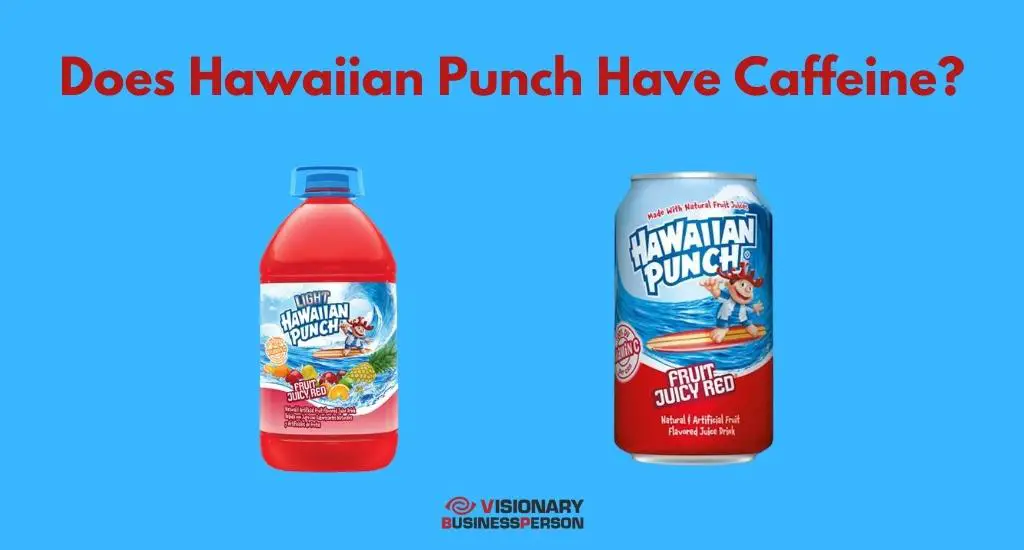
Hawaiian Punch does not contain caffeine. None of the brand’s varieties, including the flagship Fruit Juicy Red, contain any measurable amount of caffeine. This applies across the entire Hawaiian Punch product line, whether purchased as ready-to-drink bottles, juice boxes, or powdered mix packets.
This should not come as a surprise. Hawaiian Punch is a fruit punch drink, and caffeine is not a naturally occurring component in any of the fruit flavors or juice concentrates used in its production. Caffeine appears primarily in cola-style soft drinks, energy drinks, coffee-based beverages, and certain teas. Fruit-flavored drinks such as Hawaiian Punch, cream soda, and Cactus Cooler generally fall outside the caffeine category entirely.
For those who are specifically avoiding caffeine due to pregnancy, medication interactions, anxiety disorders, or simply personal preference, Hawaiian Punch presents no concern on that front. The ingredient list confirms the absence of caffeine, and the manufacturer, Keurig Dr Pepper, does not add synthetic caffeine to any Hawaiian Punch product.
What Is Hawaiian Punch?
Hawaiian Punch originated in 1934, though not as a beverage. The product was initially developed as a tropical-flavored ice cream topping by A.W. Leo, Tom Yates, and Ralph Harrison in a converted garage in Fullerton, California. When the creators noticed that people enjoyed mixing the syrup with water and drinking it on its own, the product shifted direction. By the 1950s, Hawaiian Punch had fully transitioned into the juice drink market.
The brand changed hands multiple times over the following decades. Procter & Gamble, Cadbury Schweppes, and eventually Keurig Dr Pepper all held ownership at various points. Despite these corporate transitions, the core product remained largely the same: a sweetened, fruit-flavored drink marketed primarily toward children and families.
Hawaiian Punch is technically classified as a “fruit punch drink” rather than a juice. This distinction matters. The product contains only about five percent fruit juice, with the remainder composed of water, high fructose corn syrup, and a blend of artificial and natural flavorings. The tropical taste profile draws from a combination of fruit concentrates including apple, pineapple, passionfruit, orange, and guava, though these appear in relatively small quantities.
Nutritional Profile and Sugar Content
While the absence of caffeine may be reassuring, the nutritional profile of Hawaiian Punch warrants scrutiny. The primary concern is sugar. An eight-ounce serving of Hawaiian Punch Fruit Juicy Red contains approximately 70 calories and 17 grams of sugar. Those numbers may appear modest at first glance, but context is important.
Most people do not consume Hawaiian Punch in eight-ounce portions. A standard 20-ounce bottle contains roughly 2.5 servings, which translates to approximately 42 grams of sugar per bottle. That figure approaches the total daily sugar limit recommended by the American Heart Association, which advises no more than 25 grams of added sugar per day for children aged 2 to 18.
The sugar in Hawaiian Punch comes primarily from high fructose corn syrup, a sweetener that has drawn sustained criticism from nutritionists and public health advocates. Unlike the naturally occurring sugars found in whole fruit, high fructose corn syrup offers no accompanying fiber, vitamins, or minerals. It delivers calories without nutritional value.
Beyond sugar, the ingredient list includes Red 40, a synthetic food dye that has been the subject of ongoing debate regarding its effects on children’s behavior. Several European countries require warning labels on products containing Red 40, and California passed legislation in 2023 requiring similar disclosures. Hawaiian Punch also contains sodium hexametaphosphate, citric acid, and various preservatives common to shelf-stable beverages.
A brief nutritional breakdown for one eight-ounce serving of Hawaiian Punch Fruit Juicy Red is as follows:
- Calories: 70
- Total Fat: 0 grams
- Sodium: 70 milligrams
- Total Carbohydrates: 18 grams
- Total Sugars: 17 grams
- Protein: 0 grams
- Caffeine: 0 milligrams
- Fruit Juice Content: 5%
Caffeine-Free Alternatives to Hawaiian Punch
If the goal is to find a caffeine-free beverage that also offers a better nutritional profile than Hawaiian Punch, several options exist across different categories.
For those who enjoy fruit-flavored drinks, brands like Honest Kids and Apple & Eve offer juice boxes with lower sugar content and higher actual juice percentages. These products typically contain between 8 and 10 grams of sugar per serving, roughly half of what Hawaiian Punch delivers, and many use organic ingredients without artificial dyes.
Sparkling water brands such as LaCroix, Spindrift, and Waterloo provide fruit-flavored hydration without any sugar, calories, or caffeine. Spindrift stands out in this category because it uses real squeezed fruit juice for flavoring, resulting in a mild natural sweetness without added sweeteners.
For households that want to replicate the fruit punch experience with fewer artificial ingredients, homemade punch using a blend of 100% fruit juices diluted with sparkling water offers a viable path. A combination of orange juice, pineapple juice, and a splash of cranberry juice, mixed with seltzer, produces a drink that captures a similar flavor profile without high fructose corn syrup or synthetic dyes.
Other caffeine-free soft drinks in the fruit punch and fruity soda space include Faygo’s fruit-flavored varieties, Sunkist Fruit Punch, and various store-brand fruit drinks. However, many of these products share similar sugar and artificial ingredient profiles with Hawaiian Punch, so reading labels carefully remains essential.
Hawaiian Punch and the Kids’ Beverage Market
Hawaiian Punch occupies a specific and somewhat contested segment of the beverage industry: drinks marketed to children. This market has come under increasing pressure from public health organizations, school nutrition policies, and shifting consumer preferences over the past decade.
The American Academy of Pediatrics has issued clear guidance recommending that children consume primarily water and plain milk, with fruit juice limited to small quantities and juice drinks like Hawaiian Punch treated as occasional indulgences rather than daily beverages. Many school districts across the United States have removed fruit punch drinks from cafeteria menus, replacing them with water, milk, and 100% juice options that meet updated USDA nutrition standards.
Keurig Dr Pepper has responded to some of these pressures by expanding the Hawaiian Punch product line to include lower-sugar and sugar-free options. Hawaiian Punch Light, for instance, uses sucralose and acesulfame potassium to reduce sugar content significantly while maintaining the familiar flavor. Whether artificial sweeteners represent a genuine improvement over high fructose corn syrup remains a topic of active debate among nutritionists.
The broader trend in children’s beverages points toward transparency and reduced sugar. Brands that once competed primarily on flavor and price now face consumer demand for cleaner ingredient lists, lower sugar counts, and the elimination of controversial additives like synthetic food dyes. Hawaiian Punch, with its legacy formulation, sits at a crossroads between nostalgia-driven brand loyalty and the modern expectation of healthier options.
It is worth noting that the absence of caffeine gives Hawaiian Punch a genuine advantage over certain other beverages that children may encounter. Iced teas, chocolate milk, and even some sodas marketed in similar contexts contain varying levels of caffeine. In a landscape where energy drinks have increasingly found their way into the hands of younger consumers, a caffeine-free option is not without merit, even if the sugar content raises separate concerns.
Final Assessment
Hawaiian Punch contains zero caffeine. That fact is consistent across every product in the brand’s lineup, from the original Fruit Juicy Red to the various tropical and berry-flavored extensions. For anyone specifically seeking to avoid caffeine, Hawaiian Punch is a safe choice on that single metric.
However, the caffeine question should not be evaluated in isolation. Hawaiian Punch delivers a substantial amount of sugar per serving, relies on high fructose corn syrup as its primary sweetener, contains artificial food dyes that have attracted regulatory attention, and provides minimal nutritional benefit beyond hydration. These factors are especially relevant when the beverage is consumed by children, who represent the brand’s core demographic.
The most practical approach is to treat Hawaiian Punch as what it is: a flavored sugar drink that happens to be caffeine-free. Consumed occasionally and in reasonable portions, it presents no acute health risk. As a daily beverage for children or adults, it falls short of what most current dietary guidelines recommend. Parents and consumers who prioritize both caffeine avoidance and overall nutritional quality will find better options in water, 100% fruit juices served in moderation, and the growing category of low-sugar flavored waters that have gained significant market share in recent years.