
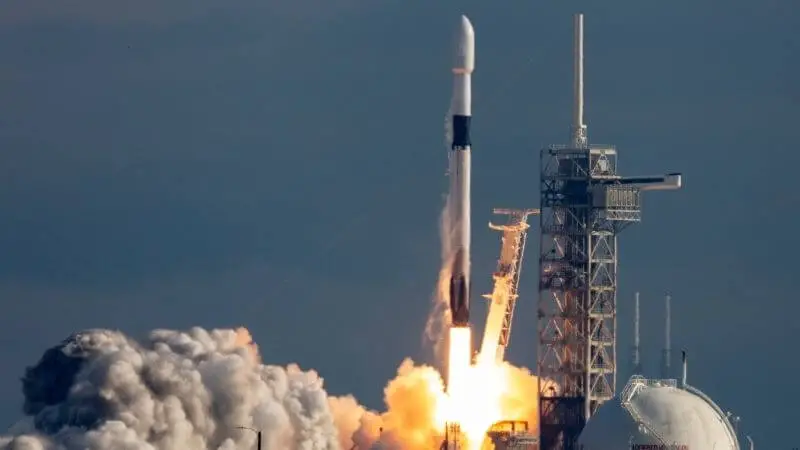
SpaceX Mission Statement Analysis (2026)
SpaceX has fundamentally altered the economics and ambitions of spaceflight since its founding in 2002. Under the leadership of Elon Musk, the company has grown from a scrappy startup launching modified ICBMs into orbit to the dominant force in global launch services, satellite internet, and deep-space transportation development. Its mission and vision statements reflect that trajectory, articulating goals that would have seemed absurd two decades ago but now appear increasingly within reach.
Understanding what drives SpaceX requires a close reading of both its mission statement and its vision statement. These are not interchangeable declarations. The mission statement defines the company’s present-tense operational purpose, while the vision statement projects a long-term aspiration that shapes strategic planning, capital allocation, and organizational culture. This analysis examines both statements in detail, evaluates their strengths and weaknesses, and situates them within the competitive and technological landscape of 2026.
SpaceX Mission Statement
The SpaceX mission statement is:
“SpaceX designs, manufactures, and launches the world’s most advanced rockets and spacecraft. The company was founded in 2002 by Elon Musk to revolutionize space technology, with the ultimate goal of making life multiplanetary.”
This statement performs double duty. It opens with a concrete operational description — designing, manufacturing, and launching rockets and spacecraft — and then pivots to a philosophical declaration about making life multiplanetary. That dual structure is unusual among aerospace mission statements, which tend to anchor themselves in either technical capability or aspirational language, but rarely both.
Strengths of SpaceX’s Mission Statement
The most obvious strength is clarity of purpose. There is no ambiguity about what SpaceX does. It designs rockets. It manufactures rockets. It launches them. The verb sequence is deliberate, mapping the full lifecycle from engineering to production to operations. This distinguishes SpaceX from companies that obscure their core activities behind vague language about “solutions” or “enabling innovation.”
The phrase “the world’s most advanced” is a bold competitive claim, but it is defensible. By 2026, SpaceX operates the only fully reusable orbital-class rocket system in regular service, has completed more orbital launches than any other entity in history on an annual basis, and is flight-testing Starship — the largest and most powerful launch vehicle ever built. The superlative is not empty marketing; it reflects operational reality.
Including the founding narrative (“founded in 2002 by Elon Musk to revolutionize space technology”) serves an important function. It ties the company’s identity to a specific individual and a specific intent. This is a strategic choice. SpaceX is not positioning itself as an anonymous corporation; it is positioning itself as a founder-driven enterprise with a singular, audacious purpose. That framing attracts a particular kind of employee, investor, and partner — one who is motivated by the prospect of contributing to something historically significant.
The closing phrase, “with the ultimate goal of making life multiplanetary,” is the most powerful element. It transforms a conventional aerospace mission statement into something that reads more like a civilizational mandate. It provides a North Star that justifies risk-taking, long development timelines, and the enormous capital expenditures required to build vehicles like Starship. Every operational decision at SpaceX can be evaluated against this phrase: does it move the company closer to making life multiplanetary, or does it not?
Weaknesses of SpaceX’s Mission Statement
The mission statement does not mention customers. This is a notable omission. SpaceX serves NASA, the Department of Defense, commercial satellite operators, and millions of Starlink subscribers. None of these constituencies appear in the statement. For a company that generates tens of billions of dollars in annual revenue from customer contracts, the absence of any customer-facing language is a gap. Compare this to Boeing’s mission statement, which explicitly references the people and organizations it serves.
The statement also does not acknowledge Starlink, which has become one of the largest satellite constellations in history and a major revenue driver. As of 2026, Starlink serves consumers, enterprises, maritime operators, airlines, and government agencies across more than 70 countries. Its omission from the mission statement suggests the statement has not been updated to reflect the company’s actual scope of operations. A mission statement that does not account for a business unit generating significant portions of total revenue is incomplete.
There is also a tension between the operational opening and the aspirational closing. “Designs, manufactures, and launches rockets” is grounded and present-tense. “Making life multiplanetary” is abstract and future-oriented. The two halves of the statement sit somewhat uneasily together, as if the company could not decide whether its mission statement should describe what it does today or what it hopes to achieve in the coming decades. A tighter statement might resolve that tension by connecting the operational work directly to the multiplanetary goal.
SpaceX Vision Statement
The SpaceX vision statement is:
“Making humanity multiplanetary.”
Four words. No qualifiers, no timelines, no caveats. This is one of the most compressed and ambitious vision statements of any major company operating today. It stands in stark contrast to the verbose, committee-drafted vision statements that characterize most large organizations. Among top companies with mission and vision statements, it is arguably the most memorable.
Strengths of SpaceX’s Vision Statement
Brevity is a feature, not a limitation. “Making humanity multiplanetary” is instantly comprehensible, easily remembered, and resistant to dilution. It does not require a slide deck to explain. Every SpaceX employee, from the welder on the Starship production line to the software engineer writing flight algorithms, can internalize this statement and understand how their work contributes to it. That kind of organizational alignment is exceptionally rare and exceptionally valuable.
The word “humanity” is deliberately chosen over alternatives like “people” or “civilization.” It conveys universality. This is not about making Americans multiplanetary or making SpaceX customers multiplanetary. It is about the species. That framing elevates the company’s work beyond commercial competition and into the realm of existential significance. It positions SpaceX not as a business pursuing market share, but as an organization pursuing the long-term survival and expansion of human life.
The present participle “making” implies ongoing action rather than a completed state. SpaceX is not waiting to make humanity multiplanetary at some future date; it is actively making it happen now, through every launch, every test, every iteration. This grammatical choice injects urgency into the statement and reinforces the company’s bias toward execution over deliberation.
From a strategic perspective, the vision statement functions as a filter for decision-making at every level of the organization. Should SpaceX invest in developing on-orbit refueling technology? Yes, because Mars missions require it. Should SpaceX build a global satellite internet network? Yes, because the revenue funds Starship development, which is the vehicle that will carry humans to Mars. Should SpaceX pursue government defense contracts? Yes, because those contracts sustain the production capacity and engineering workforce needed for the multiplanetary mission. The vision statement provides a coherent rationale for what might otherwise appear to be a sprawling, unfocused portfolio of activities.
Weaknesses of SpaceX’s Vision Statement
The primary weakness is the gap between aspiration and near-term reality. As of 2026, no human being has traveled beyond low Earth orbit since the Apollo 17 mission in 1972. Starship is in active flight testing but has not yet carried crew. The infrastructure required to sustain human life on Mars — habitats, life support systems, in-situ resource utilization, radiation shielding — remains largely in the conceptual or early prototype stage. A vision statement that implies imminent multiplanetary expansion may strain credibility with pragmatic stakeholders, even as it inspires idealistic ones.
The statement also lacks any mention of how humanity becomes multiplanetary. It does not reference safety, sustainability, or the ethical dimensions of planetary colonization. As public discourse around space ethics, planetary protection, and the governance of extraterrestrial settlements grows more sophisticated, a vision statement that says nothing about the manner in which multiplanetary expansion will occur may increasingly appear incomplete.
There is also a practical concern: the vision statement does not encompass the full range of value SpaceX delivers. Starlink, which provides internet connectivity to underserved and unserved populations worldwide, is a transformative business in its own right. It has meaningful social impact independent of any Mars ambitions. Yet the vision statement makes no room for it. Employees working on Starlink must derive their sense of purpose indirectly, understanding that their work funds the multiplanetary mission, rather than directly, seeing their contribution reflected in the company’s stated vision.
The Starship Program and Its Role in the Mission
No analysis of SpaceX’s mission and vision is complete without examining Starship, the vehicle that is meant to make both statements operationally real. Starship is a fully reusable two-stage launch system consisting of the Super Heavy booster and the Starship upper stage. When operational, it will be capable of delivering over 100 metric tons to low Earth orbit, making it the highest-capacity launch vehicle in history by a wide margin.
The development trajectory of Starship has been characteristically aggressive. SpaceX has embraced a rapid-iteration approach, building and testing prototypes at its Starbase facility in Boca Chica, Texas, at a pace that has no precedent in the history of large-scale rocketry. Vehicles that would take traditional aerospace contractors years to assemble are built in weeks. Failures are treated as data, not catastrophes. This philosophy — test early, fail fast, iterate relentlessly — is a direct expression of the urgency embedded in the mission statement.
By 2026, Starship has completed multiple orbital test flights, demonstrated booster catch-and-reuse capabilities, and begun proving out the propellant transfer technologies that will be essential for deep-space missions. NASA has selected Starship as the Human Landing System for the Artemis program, tying the vehicle’s development to the agency’s own lunar exploration timeline. The Department of Defense has also expressed interest in Starship for rapid global logistics and point-to-point cargo delivery.
Starship is the bridge between SpaceX’s present-tense mission (“designs, manufactures, and launches the world’s most advanced rockets and spacecraft”) and its future-tense vision (“making humanity multiplanetary”). Without Starship, the vision statement is an aspiration. With Starship, it becomes a plan. The vehicle’s development progress is therefore the single most important metric for evaluating whether SpaceX’s stated mission and vision are credible or merely rhetorical.
Starlink: The Revenue Engine
Starlink occupies a complicated position relative to SpaceX’s mission and vision. It is not mentioned in either statement, yet it is arguably the most commercially significant business SpaceX operates. As of 2026, the Starlink constellation consists of thousands of satellites in low Earth orbit, providing broadband internet service to consumers, businesses, maritime operators, aviation companies, and government agencies worldwide.
The strategic logic of Starlink is straightforward: SpaceX needs an enormous amount of capital to develop Starship and pursue Mars colonization. Traditional launch services, while profitable, do not generate revenue at the scale required. Starlink, by contrast, taps into the multi-hundred-billion-dollar global telecommunications market. If Starlink captures even a modest share of that market, it generates the recurring revenue streams necessary to fund decades of Starship development and interplanetary infrastructure.
Starlink also serves as a proving ground for technologies relevant to the multiplanetary mission. Managing a constellation of thousands of satellites requires advances in autonomous operations, inter-satellite laser links, spectrum management, and ground station infrastructure. Many of these capabilities translate directly to the challenges of establishing and maintaining communications infrastructure on Mars.
From a mission-statement perspective, Starlink represents an evolution that the current statement does not capture. SpaceX is no longer solely a rocket company. It is a telecommunications company, a hardware manufacturer, a network operator, and a consumer service provider. The mission statement’s narrow focus on rockets and spacecraft increasingly understates the breadth of the enterprise.
Starlink’s societal impact also deserves recognition. Providing high-speed internet to remote and rural communities, disaster-stricken regions, and developing nations is a meaningful contribution to global connectivity and economic development. This impact exists independent of any Mars ambitions. A more comprehensive mission or vision statement might acknowledge this dimension of SpaceX’s work, giving Starlink employees and customers a more direct connection to the company’s stated purpose.
Mars Colonization: From Vision to Roadmap
The vision statement — “making humanity multiplanetary” — points directly at Mars. While SpaceX has not published a detailed colonization timeline, the broad contours of its Mars strategy are well understood. The plan involves using Starship to transport cargo and, eventually, crew to the Martian surface, establishing an initial outpost, and then scaling that outpost into a self-sustaining settlement over the course of decades.
The technical challenges are staggering. Mars has a thin atmosphere composed mostly of carbon dioxide, surface temperatures that can drop below minus 60 degrees Celsius, and radiation levels far higher than those on Earth’s surface. Sustaining human life on Mars requires solving problems in life support, habitat construction, food production, water extraction, power generation, and psychological resilience that have never been solved at scale outside of Earth.
SpaceX’s approach to these challenges reflects the same philosophy that produced Falcon 9 and Starlink: move fast, build hardware, test in real conditions, and iterate. The company has stated its intent to send uncrewed Starship vehicles to Mars as early as the late 2020s, using these missions to validate landing procedures, assess in-situ resources, and pre-position supplies for future crewed missions.
The credibility of the Mars colonization vision rests on several factors: the successful development of Starship into a reliable, frequently-flying vehicle; the development of on-orbit refueling technology to extend Starship’s range beyond Earth orbit; the creation of life-support and habitat systems capable of sustaining human life on Mars; and the sustained availability of capital to fund what will be the most expensive engineering project in human history. As of 2026, the first of these factors is well advanced. The others remain works in progress.
It is worth noting that the vision statement does not specify Mars. “Making humanity multiplanetary” could encompass lunar settlements, orbital habitats, or outposts on other celestial bodies. This ambiguity may be intentional. By not naming a specific destination, SpaceX preserves strategic flexibility while maintaining the inspirational power of the multiplanetary concept.
Government Contracts and National Security
SpaceX’s relationship with the United States government has deepened substantially in recent years. The company is a primary launch provider for NASA, the Department of Defense, the National Reconnaissance Office, and the Space Force. These contracts provide a stable revenue base, access to government-funded research and development, and a degree of strategic importance that insulates SpaceX from certain competitive and regulatory risks.
The Artemis program is the most visible NASA partnership. SpaceX’s selection as the Human Landing System provider means that Starship will carry astronauts to the lunar surface as part of NASA’s return-to-the-Moon initiative. This contract validates Starship’s design at the highest levels of technical scrutiny and provides substantial funding for the vehicle’s development.
On the national security side, SpaceX has become a critical asset for the United States Space Force and intelligence community. The company’s ability to launch frequently, reliably, and at lower cost than competitors has made it the preferred provider for many national security payloads. Starshield, SpaceX’s government-focused satellite platform, extends the company’s capabilities into areas such as secure communications, Earth observation, and missile tracking.
These government relationships are not reflected in SpaceX’s mission or vision statements, which make no reference to national security, government partnership, or public-sector service. This omission is understandable — SpaceX positions itself as a commercially-driven company pursuing a civilizational goal, not as a defense contractor — but it leaves a significant dimension of the company’s operations unacknowledged in its foundational statements.
The Competitive Landscape in 2026
SpaceX does not operate in a vacuum. The competitive environment has intensified, with multiple organizations pursuing reusable launch vehicles, satellite constellations, and deep-space transportation systems. Understanding this landscape is essential to evaluating the continued relevance and defensibility of SpaceX’s mission and vision.
Blue Origin, founded by Jeff Bezos, has made significant progress with its New Glenn orbital rocket and continues to develop the New Shepard suborbital vehicle. Blue Origin’s vision of “millions of people living and working in space” shares thematic overlap with SpaceX’s multiplanetary vision but emphasizes orbital habitats and cislunar infrastructure rather than planetary surface settlement. The two companies are direct competitors for government launch contracts and commercial payloads.
United Launch Alliance, the joint venture between Boeing and Lockheed Martin, continues to serve the national security launch market with its Vulcan Centaur rocket. While ULA does not compete with SpaceX on cost, it maintains a strong position in high-reliability government missions and benefits from decades of institutional relationships with the Department of Defense.
Rocket Lab has established itself as a capable small-launch provider and is developing the medium-lift Neutron rocket. Internationally, China’s state-backed and commercial launch companies have increased their cadence and capability dramatically, posing a competitive challenge in the global launch market. Europe’s Ariane 6 and other next-generation vehicles are also entering service, though none yet match SpaceX’s combination of reusability, launch frequency, and cost efficiency.
In the satellite internet market, Starlink faces competition from Amazon‘s Project Kuiper, OneWeb (now part of Eutelsat), and various national and regional broadband initiatives. Project Kuiper, backed by Amazon’s substantial resources, represents the most direct competitive threat to Starlink’s market position.
SpaceX’s mission statement claim of building “the world’s most advanced rockets and spacecraft” must be continually defended against these competitors. As of 2026, the claim holds. No competitor has matched Falcon 9’s reusability record, Starship’s payload capacity, or Starlink’s constellation scale. But the competitive gap is narrowing in several areas, and the mission statement’s superlative will face increasing scrutiny in the years ahead.
It is also instructive to compare SpaceX’s approach to mission and vision formulation with that of related companies. Tesla’s mission statement, for example, focuses on accelerating the transition to sustainable energy — a similarly ambitious goal, but one rooted in an existing market with clear customer demand. SpaceX’s multiplanetary vision, by contrast, addresses a market that does not yet exist, requiring the company to simultaneously create demand and supply for interplanetary transportation.
Organizational Culture and the Mission-Vision Dynamic
The relationship between SpaceX’s mission statement, vision statement, and organizational culture deserves attention. SpaceX is widely regarded as one of the most demanding workplaces in the aerospace industry. Long hours, intense pressure, and a relentless pace of development are defining features of the SpaceX experience. The mission and vision statements play a direct role in sustaining this culture.
When a company’s stated purpose is to make humanity multiplanetary, the implicit message to employees is that their work matters on a civilizational scale. That framing can justify extraordinary personal sacrifice in pursuit of the goal. It can also create a work environment where questioning pace, priorities, or methods is perceived as insufficient commitment to the mission. The power of a vision statement like “making humanity multiplanetary” is that it motivates people to do things they would not otherwise do. The risk is that it can also be used to rationalize practices that would not be acceptable under a less grandiose banner.
The mission and vision also serve as powerful recruitment tools. SpaceX attracts top engineering talent from around the world, many of whom accept lower compensation than they might receive at other technology companies because they want to contribute to the multiplanetary mission. This self-selection process creates a workforce that is deeply aligned with the company’s goals, which in turn drives the rapid innovation and aggressive timelines that characterize SpaceX’s operations.
Recommendations for Statement Refinement
While SpaceX’s mission and vision statements have served the company well, there are several areas where refinement could strengthen their effectiveness.
First, the mission statement should be updated to reflect the company’s expanded scope. Starlink is not a side project; it is a core business with its own customers, revenue, and societal impact. A mission statement that encompasses both launch services and global connectivity would more accurately represent what SpaceX does in 2026.
Second, the mission statement could benefit from customer-facing language. Acknowledging the organizations and individuals that SpaceX serves would signal that the company values its relationships with the entities that fund its operations and depend on its services.
Third, the vision statement, while admirably concise, might be strengthened by the addition of a values-oriented qualifier. “Making humanity multiplanetary — safely, sustainably, and inclusively” would address growing public concerns about the ethics of space colonization without sacrificing the statement’s power or brevity.
These are suggestions, not criticisms. The current statements have been remarkably effective at defining SpaceX’s identity, attracting talent, and guiding strategy. Any refinement should preserve the clarity, ambition, and urgency that make the existing statements distinctive.
Final Assessment
SpaceX’s mission statement and vision statement are among the most distinctive and effective in the corporate world. The mission statement provides a clear operational identity anchored by a bold competitive claim and an aspirational purpose. The vision statement distills a civilizational ambition into four unforgettable words. Together, they create a strategic framework that aligns organizational behavior, attracts top talent, and justifies the enormous investments required to pursue interplanetary transportation.
The statements are not without weaknesses. The mission statement’s failure to mention Starlink or customers leaves significant dimensions of the business unaddressed. The vision statement’s silence on values, ethics, and near-term impact creates gaps that may become more consequential as public scrutiny of SpaceX intensifies. And the tension between present-tense operations and future-tense aspirations runs through both statements, reflecting a company that is simultaneously a profitable launch provider and a speculative bet on the future of human civilization.
But these weaknesses are outweighed by the statements’ strengths. In an industry dominated by bland corporate language and incremental ambitions, SpaceX’s mission and vision stand out for their boldness, their clarity, and their capacity to inspire action. They reflect a company that is not content to optimize within existing constraints but is instead working to redefine what is possible for the human species. Whether SpaceX ultimately succeeds in making humanity multiplanetary remains to be seen. What is not in doubt is that its mission and vision statements have played a central role in transforming a small startup into the most consequential space company on Earth.
For a broader exploration of how leading organizations articulate their purpose, see our analysis of top companies with mission and vision statements, or read our guide on the difference between mission and vision statements.