
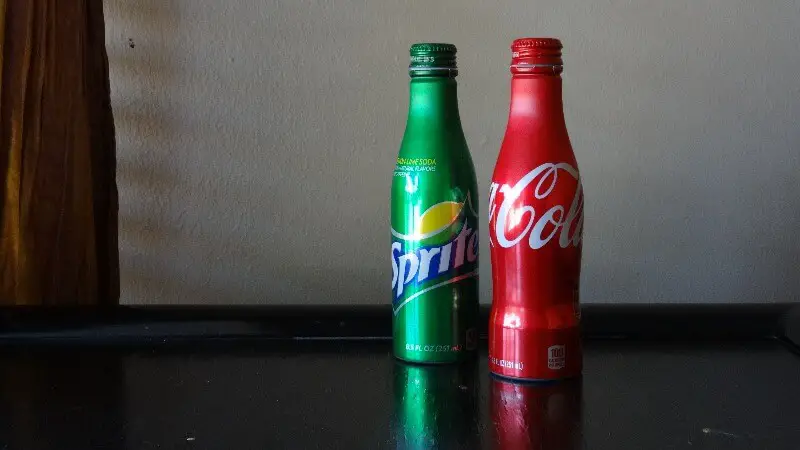
Sprite and Coke are both made by The Coca-Cola Company, sit next to each other in virtually every cooler on the planet, and are two of the best-selling soft drinks in history. But beyond the fact that they’re both carbonated and sweet, they have very little in common. Different color, different flavor profile, different ingredients, different nutritional content, and — crucially — different caffeine levels.
If you’ve ever wondered which one is “better” or “healthier” (spoiler: neither is a health food), here’s an honest breakdown of how they compare.
The Basics
Coke (Coca-Cola) was invented in 1886 by Dr. John S. Pemberton, a pharmacist in Atlanta, Georgia. It was originally sold as a medicinal tonic before becoming the world’s most famous soft drink. The recipe includes coca leaf extract (non-narcotic), cola nut extract, and a proprietary blend of spices and flavorings that Coca-Cola has never fully disclosed.
Sprite arrived much later — first developed in 1959 as “Clear Lemon Fanta” in West Germany, then launched in the US in 1961 under the Sprite name. It was created as Coca-Cola’s answer to 7UP, which had been dominating the lemon-lime soda market. Sprite has since overtaken 7UP in global sales.
Ingredients Comparison
| Coke Ingredients | Sprite Ingredients |
| Carbonated Water | Carbonated Water |
| High Fructose Corn Syrup / Sugar | High Fructose Corn Syrup / Sugar |
| Caramel Color | Citric Acid |
| Phosphoric Acid | Natural Lime & Lemon Flavors |
| Natural Flavors | Sodium Citrate |
| Caffeine | Sodium Benzoate (preservative) |
Both drinks share a carbonated water and sugar base, but the flavor profiles diverge completely from there. Coke’s signature taste comes from its proprietary blend of natural flavors, phosphoric acid (which gives it a slight tartness), and caramel color (which gives it the dark brown appearance). Sprite’s taste comes from citric acid and natural lemon-lime flavors, producing a crisp, citrusy profile.
The most significant ingredient difference is caffeine. Coke contains it; Sprite does not. This single distinction matters for caffeine-sensitive individuals, children, and anyone watching their stimulant intake.
Nutritional Comparison
Here’s how they stack up per 12 fluid ounces (a standard can):
| Nutrient | Coke (12 fl oz) | Sprite (12 fl oz) |
| Calories | 140 | 140 |
| Total Sugar | 39 g | 38 g |
| Sodium | 45 mg | 65 mg |
| Caffeine | 34 mg | 0 mg |
| Fat | 0 g | 0 g |
| Protein | 0 g | 0 g |
The calorie and sugar content are nearly identical — both pack about 140 calories and 38–39 grams of sugar per can. That’s roughly 10 teaspoons of sugar. Neither drink contains fat, protein, or meaningful vitamins or minerals. Sprite has slightly more sodium; Coke has caffeine. From a pure nutrition standpoint, they’re essentially equivalent — two different flavors of sugar water.
Caffeine: The Biggest Practical Difference
Coke contains 34 mg of caffeine per 12-ounce can. Sprite contains zero. This is the most functionally significant difference between the two drinks.
For context, 34 mg of caffeine is modest — about one-third of what you’d get from a cup of coffee. But it’s enough to be relevant for people who are caffeine-sensitive, for children (who metabolize caffeine differently than adults), and for anyone drinking Coke in the evening.
If caffeine is a consideration, Sprite is the clear choice. If you don’t mind moderate caffeine, it’s a non-issue. For a deeper look at caffeine content across soft drinks, including how Coke compares to Dr Pepper and other sodas, that comparison adds useful context.
Taste
This is where personal preference dominates. Coke has a complex, slightly spiced cola flavor with caramel sweetness and a mild tartness from phosphoric acid. Sprite has a cleaner, more straightforward citrus flavor — lemon-lime with a crisp, refreshing fizz. They’re not competing for the same taste experience; they’re entirely different flavor categories.
Coke’s flavor comes from a combination of coca leaf extract (processed to remove cocaine alkaloids), cola nut, vanilla, cinnamon, citrus oils, and other spices — the exact recipe being one of the most famous trade secrets in business history. Sprite’s flavor is simpler: lemon, lime, and carbonation.
People tend to choose Coke when they want a rich, full-bodied soda experience, and Sprite when they want something lighter and more refreshing — particularly in hot weather or as a mixer. In many cultures, Sprite is also the preferred soda for settling an upset stomach (though the medical evidence for this is limited).
Market Position
Coca-Cola is the single best-selling soft drink in the world and has been for over a century. It’s not just a beverage — it’s one of the most recognized brands on earth, with a cultural presence that transcends the product itself.
Sprite is the world’s leading lemon-lime soda, outselling 7UP globally. It has particularly strong market share among younger consumers and in markets across Africa, Asia, and Latin America, where Sprite’s marketing and flavor profile have resonated strongly.
Both are owned by The Coca-Cola Company, so their “competition” is more about portfolio diversification than actual rivalry. Having both a cola and a lemon-lime option ensures Coca-Cola captures consumers regardless of flavor preference.
Which One Should You Choose?
There’s no objectively “better” option — it depends on what you want:
Choose Sprite if: you prefer citrus flavors, want zero caffeine, are serving children, or want a lighter, more refreshing soda. Sprite is also the better mixer for cocktails and mocktails that call for a lemon-lime base.
Choose Coke if: you prefer cola flavor, don’t mind moderate caffeine, or want the deeper, more complex taste profile. Coke is the better pairing with food — its acidity and complexity complement burgers, pizza, and barbecue in ways that Sprite’s lighter profile doesn’t.
Neither is a healthy choice in large quantities — both deliver roughly 10 teaspoons of sugar per can with no nutritional value. If health is the primary concern, both brands offer zero-sugar versions (Coke Zero Sugar and Sprite Zero Sugar) that eliminate the calories while preserving most of the flavor profile. Moderation applies regardless.