
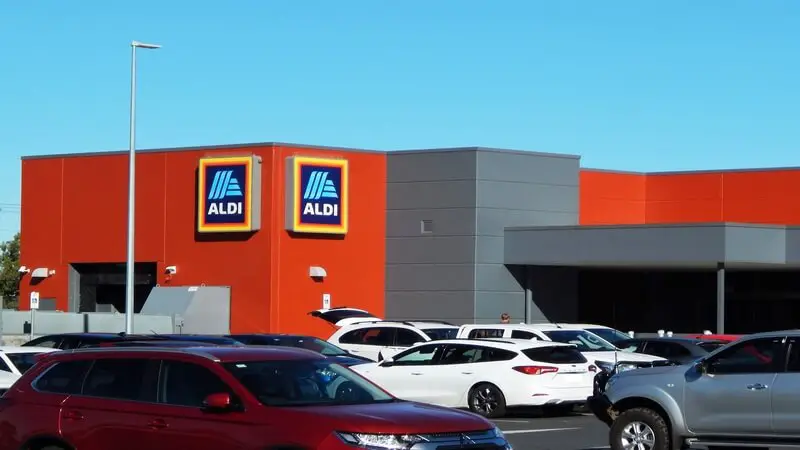
Aldi Mission Statement Analysis (2026)
Aldi has fundamentally altered the landscape of grocery retail across multiple continents. Founded in 1946 by brothers Karl and Theo Albrecht in Essen, Germany, the company has grown from a single store into one of the largest and most influential grocery chains on the planet. With more than 10,000 stores spanning Europe, Australia, and the United States, Aldi operates on a model that prioritizes radical simplicity: fewer products, lower prices, and relentless operational efficiency. The company now stands as the third-largest grocery retailer globally by revenue, a position earned not through expansive product assortments or lavish store formats, but through a disciplined commitment to doing less, better, and cheaper.
Understanding Aldi requires understanding its mission and vision statements. These statements reveal how the company defines its purpose and where it intends to go. For a retailer built on the principle that grocery shopping should not be complicated or expensive, the language of its corporate identity carries particular weight. This analysis examines both statements in depth, evaluates their strengths and weaknesses, and explores the strategic pillars that have made Aldi one of the most disruptive forces in modern retail.
Aldi Mission Statement
“Provide our customers with the products they buy regularly, and ensure that those products are of the highest possible quality at guaranteed low prices.”
This mission statement is a distillation of the Aldi operating philosophy. It does not attempt to be inspirational in the conventional sense. It does not invoke grand language about changing the world or enriching communities. Instead, it speaks directly to the transactional relationship between a grocery retailer and its customers: you will find what you need, it will be good, and it will cost less. The power of this statement lies in its restraint and its precision.
Strengths of the Mission Statement
The most notable strength of Aldi’s mission statement is its operational clarity. Every word maps directly to a tangible business practice. “The products they buy regularly” explains why Aldi stores carry approximately 1,400 core SKUs compared to the 30,000 to 50,000 found in a conventional supermarket. This is not a limitation acknowledged reluctantly; it is a strategic choice articulated as a customer benefit. By stocking only the items shoppers purchase most frequently, Aldi eliminates the paradox of choice and accelerates the shopping experience.
The phrase “highest possible quality” is deliberately ambitious without being vague. It does not promise the best quality in absolute terms, which would be an unsustainable claim for a discount retailer. Instead, it commits to maximizing quality within the constraints of its price model. This is an honest and defensible position. Aldi’s private label products routinely win blind taste tests against national brands, validating this commitment in measurable terms.
“Guaranteed low prices” is the anchor of the entire statement. The word “guaranteed” is significant. It signals that low pricing is not a promotional tactic or a temporary strategy but a structural feature of the business. Aldi does not run weekly sales circulars in the traditional sense because its everyday prices are already positioned below competitors’ sale prices. This guarantee is backed by an operating model designed from the ground up to eliminate cost at every stage of the supply chain.
The statement also succeeds because it avoids the trap of overreach. Many retailers attempt to position themselves as lifestyle brands, community hubs, or wellness destinations. Aldi’s mission statement makes no such claims. It acknowledges that grocery shopping is, for most people, a routine task rather than an experiential journey. By aligning its mission with this reality, Aldi demonstrates a level of self-awareness that is uncommon in corporate communications.
Weaknesses of the Mission Statement
The most significant weakness of the mission statement is its silence on the human element. There is no mention of employees, communities, or suppliers. In an era when stakeholder capitalism has moved from academic theory to boardroom practice, a mission statement that speaks exclusively to the customer transaction feels incomplete. Companies such as Costco have demonstrated that it is possible to commit to low prices while also explicitly acknowledging the role of workforce investment in achieving that goal. Aldi’s omission does not mean it neglects these stakeholders in practice, but the absence from its stated mission creates a gap in its corporate narrative.
The statement also lacks any reference to sustainability or environmental responsibility. Aldi has, in recent years, made substantial commitments to reducing plastic packaging, sourcing sustainable products, and lowering its carbon footprint. None of this is reflected in the mission statement. As consumer expectations around corporate environmental responsibility continue to intensify, a mission statement that ignores this dimension risks appearing dated.
There is also a question of differentiation. The statement could, with minor adjustments, apply to virtually any discount retailer. It does not capture what makes Aldi’s approach specifically different from that of Walmart, Lidl, or any other price-focused competitor. The limited assortment model, the private label dominance, the no-frills store format—these are the elements that define Aldi’s identity, and none of them appear in the mission statement.
Finally, the statement is purely defensive in its framing. It describes what Aldi does today rather than signaling ambition or evolution. For a company in the midst of one of the most aggressive international expansion campaigns in retail history, the mission statement reads as though it were written for a mature, stable business rather than one actively reshaping markets.
Aldi Vision Statement
“To be a leading global discount supermarket chain by offering customers the highest quality products at the lowest possible prices.”
The vision statement extends the mission by adding directional language. Where the mission describes current operations, the vision projects forward. The inclusion of “leading global” and “discount supermarket chain” provides both aspiration and category definition. This is a company that knows exactly what it is and intends to be the best version of that specific thing.
Strengths of the Vision Statement
The vision statement’s primary strength is its explicit embrace of the discount identity. Many retailers that compete on price are reluctant to use the word “discount” in their corporate messaging, fearing it connotes inferior quality or a downmarket experience. Aldi does not share this insecurity. By placing the word at the center of its vision, the company signals confidence in its model and clarity about its market position. This is not a company that aspires to become something other than what it is. It aspires to be the definitive version of what it already is.
The global ambition embedded in the statement is also noteworthy. Aldi operates as two separate entities—Aldi Nord and Aldi Süd—that together cover markets across Europe, North America, and Oceania. The vision statement unifies these operations under a single directional goal. For a company with a famously decentralized structure, this shared vision provides strategic coherence.
The pairing of “highest quality” with “lowest possible prices” creates productive tension. These two objectives are, in most business contexts, contradictory. Aldi’s vision statement does not resolve this tension so much as it embraces it as a defining challenge. The company’s entire operating model—from private label development to store design to supply chain management—exists to reconcile these competing demands. The vision statement, by holding both goals simultaneously, accurately reflects the strategic balancing act that defines Aldi’s daily operations.
Weaknesses of the Vision Statement
The vision statement shares many of the same omissions as the mission statement: no mention of employees, communities, sustainability, or innovation. In addition, it introduces a weakness of its own through the phrase “leading global.” This is a common aspiration in corporate vision statements and, as a result, it carries little distinctive meaning. Leading by what measure? Revenue, store count, customer satisfaction, or price competitiveness? The lack of specificity makes the ambition difficult to evaluate or track.
The statement also fails to address the digital transformation reshaping grocery retail. Online grocery sales, rapid delivery services, and digital-first shopping experiences have become central competitive battlegrounds. Aldi has been slower than many competitors to develop its e-commerce capabilities, and the vision statement provides no indication that digital channels are part of its forward-looking strategy. For a vision statement—a document that should describe the future—this is a meaningful gap.
There is also an inherent conservatism in the vision that may limit its inspirational function. The statement essentially says: we will continue doing what we already do, but at a global scale. There is no language about redefining grocery shopping, pioneering new approaches to food retail, or creating a fundamentally different customer experience. Compare this to companies on the list of top companies with strong mission and vision statements, and Aldi’s vision reads as functional rather than transformative.
The Discount Grocery Model: Operational Philosophy as Strategy
To understand Aldi’s mission and vision in practice, it is necessary to examine the operating model that underpins both statements. The discount grocery model pioneered by the Albrecht brothers is not simply about charging less. It is a comprehensive system of cost elimination that touches every aspect of the business, from product selection to store design to labor deployment.
The foundation of the model is the limited assortment. A typical Aldi store carries roughly 1,400 core products. This is a fraction of what conventional supermarkets offer, and the reduction is intentional. Fewer products mean fewer suppliers to manage, fewer invoices to process, fewer deliveries to coordinate, and less shelf space to maintain. Each product must earn its place in the assortment by demonstrating sufficient volume to justify its inclusion. Products that do not meet this threshold are removed without sentiment.
This limited assortment also enables Aldi to concentrate its purchasing power. Rather than splitting volume across dozens of brands in a single category, Aldi typically offers one or two options. The result is enormous per-SKU volume, which translates into significant leverage with suppliers. Aldi can demand lower prices, tighter quality specifications, and more favorable terms precisely because it offers suppliers access to concentrated, predictable demand.
The store format reinforces the cost structure. Aldi stores are deliberately austere. Products are often displayed in their shipping cartons rather than on traditional shelving. Stores are smaller than conventional supermarkets, reducing rent, utilities, and maintenance costs. Checkout areas are designed for speed. Customers bag their own groceries. Shopping carts require a coin deposit to encourage return, eliminating the need for cart retrieval labor. Every element of the physical environment is designed to remove cost without removing function.
Labor efficiency is another critical pillar. Aldi stores operate with minimal staff, and those employees who are present are trained to perform multiple roles. A single employee might operate a register, stock shelves, and manage the back of house within a single shift. Aldi compensates for this intensity by paying wages that are generally above the grocery industry average—an approach that reduces turnover, improves productivity, and lowers the total cost of labor even as the hourly rate is higher. This is a practical application of the efficiency principle that the mission statement implies but does not articulate.
US Expansion: Rewriting the American Grocery Market
Aldi entered the United States in 1976, opening its first store in Iowa. For decades, growth was measured and methodical, concentrated primarily in the Midwest and Eastern seaboard. That pace has changed dramatically. Aldi has committed billions of dollars to an expansion plan that will bring its US store count to approximately 2,500 locations, positioning it as one of the largest grocery chains in the country by physical footprint.
This expansion is not simply a matter of adding stores. Aldi has simultaneously invested in remodeling its existing locations, introducing fresh produce and organic options, and refining its product assortment to reflect American consumer preferences. The “Aldi Finds” program—a rotating selection of limited-time specialty and seasonal items—has become a significant traffic driver, creating a treasure-hunt shopping dynamic that generates repeat visits and social media engagement.
The US expansion tests the limits of Aldi’s mission statement in important ways. American grocery shoppers have different expectations than their European counterparts. They expect wider assortments, more brand-name options, and increasingly, digital ordering and delivery capabilities. Aldi has responded with modest expansions to its product range and partnerships with delivery platforms such as Instacart, but the company has been careful not to compromise its core operating model in pursuit of incremental market share.
The acquisition of select Winn-Dixie and Harvester stores through the Southeastern Grocers deal has further accelerated Aldi’s geographic reach. Converting these locations to the Aldi format requires significant capital investment but provides immediate access to established customer bases in markets where Aldi previously had limited or no presence. This acquisition strategy represents a departure from Aldi’s traditional organic growth approach and suggests a willingness to adapt its expansion playbook when market conditions warrant it.
The American market also presents challenges that the mission and vision statements do not anticipate. Regional taste preferences, varying real estate costs, intense competition from established players, and a regulatory environment that differs state by state all complicate the execution of a standardized model. Aldi’s ability to maintain its price advantage while accommodating these variations will determine whether its US ambitions are fully realized.
Private Label Strategy: The Engine of the Aldi Model
More than 90 percent of the products on Aldi’s shelves are private label, sold under a portfolio of store-owned brands. This is not a peripheral strategy. It is the engine that powers every aspect of Aldi’s competitive position. Private label products allow Aldi to control quality specifications, packaging, pricing, and margins in ways that are impossible when relying on national brand manufacturers.
Aldi’s private label brands are carefully designed to signal quality without mimicking national brands too closely. Brands such as Simply Nature (organic and natural products), Specially Selected (premium items), liveGfree (gluten-free), and Fit & Active (health-conscious options) each target specific consumer segments and dietary preferences. The breadth of this private label portfolio allows Aldi to address diverse customer needs without expanding its overall SKU count.
The quality of Aldi’s private label products has become a competitive weapon in its own right. The company submits its products to rigorous testing and benchmarks them against national brand equivalents. Multiple consumer surveys and blind taste tests have ranked Aldi private label products equal to or better than their branded counterparts. This performance validates the mission statement’s commitment to “highest possible quality” and undermines the historical assumption that private label means inferior.
From a financial perspective, private label products carry higher gross margins than national brands because Aldi eliminates the marketing, slotting, and distribution costs that national brand manufacturers embed in their wholesale prices. These savings are partially passed to consumers through lower prices and partially retained to fund store expansion and operational improvements. The result is a virtuous cycle: private label products enable lower prices, lower prices drive traffic, higher traffic increases volume, and increased volume strengthens purchasing leverage with suppliers.
The private label strategy also insulates Aldi from the promotional wars that erode margins across the conventional grocery sector. National brand manufacturers frequently fund promotional discounts that create temporary price advantages for retailers willing to participate. Aldi’s lack of dependence on national brands means it is largely unaffected by these dynamics, providing a more stable and predictable pricing environment for both the company and its customers.
Competition: Lidl, Walmart, and Trader Joe’s
Aldi’s competitive landscape is defined by three distinct challenges, each originating from a different strategic direction. Lidl represents the closest analog, Walmart embodies scale-driven competition, and Trader Joe’s occupies a unique position that both overlaps with and diverges from Aldi’s approach.
Lidl: The Mirror Competitor
Lidl is Aldi’s most direct competitor, sharing German origins, a limited-assortment model, and aggressive international expansion ambitions. In European markets, the two chains have competed for decades, and their rivalry has intensified as both have expanded into the United States and other growth markets. Lidl’s US entry in 2017 was met with significant attention, and its subsequent store openings along the East Coast have placed it in direct geographic competition with Aldi in several markets.
The operational differences between the two are subtle but consequential. Lidl stores tend to be larger than Aldi locations and carry a somewhat broader assortment, including an in-store bakery that has become a signature differentiator. Lidl also invests more heavily in store aesthetics, with wider aisles and more polished displays. These choices reflect a slightly different interpretation of the discount model—one that accepts modestly higher operating costs in exchange for an elevated shopping experience.
Aldi’s advantage over Lidl in the US market is primarily one of incumbency. With decades of operational experience, an established supply chain, and a recognized brand, Aldi has a significant head start. Lidl’s early US performance was uneven, marked by store closures and strategic adjustments. However, Lidl has stabilized its American operations and continues to expand, ensuring that the competitive pressure on Aldi will only increase.
Walmart: The Scale Incumbent
Walmart represents a fundamentally different competitive challenge. Where Lidl competes on similar terms, Walmart competes on scale. With more than 4,700 US locations, an advanced logistics network, a massive e-commerce platform, and the purchasing power that comes from being the largest retailer on earth, Walmart can match or beat Aldi’s prices on many items while offering an assortment that is orders of magnitude larger.
Aldi’s defense against Walmart rests on convenience and specificity. Aldi stores are smaller, faster to navigate, and often located in neighborhoods and suburban corridors that Walmart’s larger format cannot easily serve. The Aldi shopping trip is typically completed in a fraction of the time required for a Walmart visit, a meaningful advantage for time-constrained consumers. Additionally, Aldi’s private label quality has, in many categories, surpassed Walmart’s Great Value brand in consumer perception, creating a qualitative differentiation that complements the price competition.
Walmart’s growing investment in grocery delivery, pickup, and digital integration does present a longer-term threat. As more grocery spending migrates online, Aldi’s reliance on the physical store experience becomes a potential vulnerability. The mission and vision statements offer no guidance on how Aldi intends to address this shift, which is a strategic and communicative weakness.
Trader Joe’s: The Philosophical Sibling
Trader Joe’s occupies a unique position in Aldi’s competitive landscape. Owned by Aldi Nord (while Aldi US stores are operated by Aldi Süd), Trader Joe’s shares the limited-assortment and private-label-dominant model but applies it to a fundamentally different market position. Where Aldi emphasizes low prices and utilitarian efficiency, Trader Joe’s emphasizes discovery, personality, and a curated shopping experience. The stores are decorated with hand-painted signage, employees wear Hawaiian shirts, and the product selection skews toward adventurous, globally-inspired items.
The comparison is instructive because it illustrates how the same structural model can support very different brand identities. Both chains carry roughly 4,000 or fewer products, both rely heavily on private label, and both achieve strong margins through operational efficiency. But Trader Joe’s has cultivated a devoted following that views shopping there as a pleasurable experience rather than a practical errand. Aldi has not achieved this level of emotional connection with its customer base, and its mission and vision statements suggest this is not a priority.
Whether this represents a weakness depends on perspective. Trader Joe’s higher-income customer demographic generates higher per-transaction spending, but Aldi’s broader accessibility serves a larger addressable market. The two chains rarely compete for the same customer on the same shopping occasion, making them complementary rather than directly competitive in practice.
Sustainability and Corporate Responsibility
Neither the mission nor the vision statement addresses sustainability, but Aldi’s operational practices in this area have become increasingly significant. The company has committed to reducing packaging across its private label portfolio, increasing the proportion of sustainably sourced ingredients, and improving energy efficiency in its stores and distribution centers. Aldi has pledged that 100 percent of its packaging will be reusable, recyclable, or compostable, a target that requires substantial changes to product design and supplier requirements.
These commitments are strategically important for several reasons. Consumer demand for sustainable products continues to grow, particularly among younger demographics that will become the core grocery-spending population over the next decade. Regulatory pressure on packaging waste and carbon emissions is intensifying across Aldi’s key markets. And sustainability-driven supply chain improvements often align with cost reduction, creating a natural fit with Aldi’s efficiency-first operating model.
The absence of sustainability language from the mission and vision statements means that these efforts lack a clear connection to the company’s stated identity. This is more than a branding oversight. It represents a missed opportunity to signal to customers, employees, and investors that sustainability is embedded in Aldi’s strategic direction rather than appended as a separate initiative. Companies such as Tesco have integrated environmental commitments into their core corporate messaging, providing a template that Aldi would benefit from examining.
The Aldi Customer: Who the Mission Serves
Aldi’s mission statement implicitly defines its target customer: someone who shops for routine grocery items, values quality, and prioritizes price. This is a broad definition, and intentionally so. Aldi does not position itself as a store for a particular income bracket or demographic segment. It positions itself as a rational choice for anyone who prefers not to overpay for groceries.
In practice, Aldi’s customer base has evolved significantly. The chain was historically associated with price-sensitive, lower-income shoppers. Over the past decade, Aldi has attracted a growing number of middle- and upper-middle-income customers who shop there by choice rather than necessity. This demographic shift has been driven by improvements in product quality, the introduction of organic and specialty items, and a broader cultural shift away from brand loyalty toward value consciousness.
The “smart shopping” narrative has been particularly effective. Aldi has cultivated the perception that shopping there is not a concession to budget constraints but a savvy financial decision. Social media has amplified this positioning, with dedicated communities sharing product recommendations, recipes, and shopping strategies. This organic advocacy is arguably more valuable than any paid marketing campaign and represents a dimension of brand strength that the mission statement does not capture.
Final Assessment
Aldi’s mission and vision statements are, in many respects, mirrors of the company itself: functional, efficient, and stripped of anything unnecessary. They communicate a clear value proposition—quality products at the lowest prices—and they do so without pretension or ambiguity. For a company that has built its entire identity around the elimination of waste, this minimalism is philosophically consistent.
However, philosophical consistency is not the only measure of a corporate statement’s effectiveness. The statements fail to address several dimensions that are increasingly relevant to how companies are evaluated by customers, employees, regulators, and the public. Sustainability, workforce investment, digital strategy, and community impact are all absent. These omissions do not reflect operational reality—Aldi has meaningful initiatives in each of these areas—but they do create a gap between what the company does and what it says about itself.
The mission statement is the stronger of the two documents. Its specificity and operational transparency give it a credibility that many corporate mission statements lack. The vision statement, while adequate, suffers from generic language that could apply to multiple competitors and does not convey the distinctive ambition that Aldi’s actual business trajectory warrants.
As Aldi continues its aggressive expansion in the United States and other markets, the company would benefit from revisiting both statements. A mission that acknowledges the role of employees and suppliers in delivering its customer promise would be more complete. A vision that addresses digital transformation and sustainability would be more forward-looking. Neither revision would require abandoning the operational discipline that defines Aldi. It would simply mean allowing the company’s stated purpose to evolve at the same pace as its business.
In the final analysis, Aldi’s mission and vision statements do what they were designed to do: they articulate a focused, price-driven value proposition with no wasted words. That is entirely in character for a company that has turned the elimination of excess into the world’s most successful grocery strategy. The question is whether, in a retail environment that demands more from companies than low prices alone, this level of restraint remains sufficient. The answer, increasingly, is that it does not—and that Aldi’s corporate messaging will eventually need to reflect the broader, more complex company it has already become.