
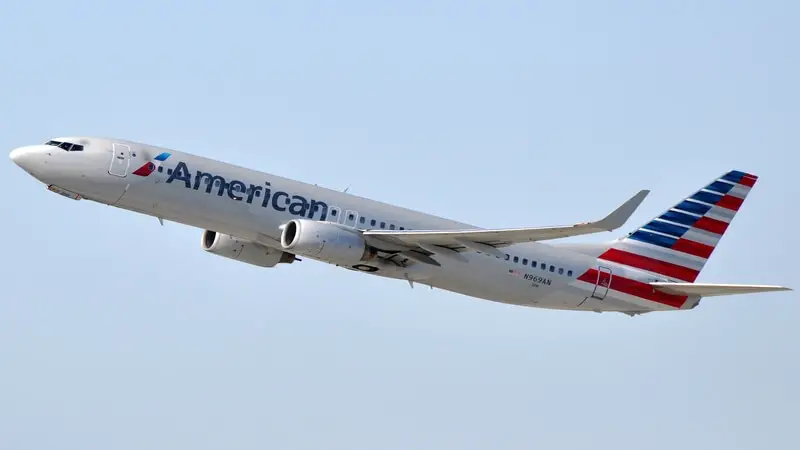
American Airlines Mission Statement Analysis (2026)
American Airlines Group Inc. holds the distinction of operating the world’s largest airline by fleet size, passenger volume, and revenue passenger miles. Headquartered in Fort Worth, Texas, the carrier serves more than 350 destinations across roughly 50 countries. With a history stretching back to 1930, American Airlines has endured deregulation, mergers, a bankruptcy restructuring, and relentless competitive pressure from both legacy and low-cost rivals. Its mission and vision statements are expected to articulate the strategic intent behind an operation of that scale — and to differentiate the airline from formidable competitors such as Delta Air Lines, United Airlines, and Southwest Airlines.
This analysis examines each statement in detail, identifies structural strengths and weaknesses, and evaluates how effectively they align with American Airlines’ actual operations, competitive position, and long-term trajectory.
American Airlines Mission Statement
American Airlines states its mission as follows:
“To care for people on life’s journey.”
At just eight words, this is among the most concise mission statements in commercial aviation. It deliberately avoids operational language — there is no mention of aircraft, routes, safety, or on-time performance. Instead, the airline frames its entire purpose around a human-centered idea: caring for people as they move through life. The word “journey” functions as a double entendre, referring simultaneously to the physical act of air travel and to the broader arc of a customer’s personal or professional life.
Strengths of the Mission Statement
Emotional resonance over transactional language. Most airline mission statements default to language about safety, reliability, and competitive fares. American Airlines’ statement sidesteps that pattern entirely. By choosing the verb “care,” the company positions itself not merely as a transportation provider but as a service organization with emotional accountability. This is a meaningful rhetorical choice. Passengers do not simply need to get from Point A to Point B; they need to arrive for weddings, funerals, job interviews, family reunions, and business deals. The statement acknowledges that the human stakes of air travel extend well beyond logistics.
Brevity that enables organizational flexibility. An eight-word mission statement is easy to memorize, easy to repeat in employee training, and easy to embed into corporate culture. It does not lock the airline into any specific operational model. Whether American Airlines is operating regional jets through its American Eagle subsidiaries or wide-body aircraft on transatlantic routes, the mission applies equally. That flexibility is valuable for a company that must adapt to fuel price volatility, shifting demand patterns, and evolving regulatory environments.
Inclusive scope of stakeholders. The phrase “people on life’s journey” is not explicitly limited to passengers. It can reasonably encompass employees, business partners, and communities served by the airline’s route network. This breadth allows the statement to function as a unifying principle across departments — from flight operations and maintenance to customer service and corporate strategy. A gate agent resolving a missed connection and a mechanic inspecting an engine can both see their work as “caring for people on life’s journey.”
Weaknesses of the Mission Statement
Lack of industry specificity. The most significant weakness of this mission statement is that it could belong to virtually any service organization. A hospital system, a hotel chain, a financial services firm, or even a rideshare company could adopt identical language without changing a single word. A mission statement should, at minimum, signal what business a company is in. American Airlines’ statement does not reference aviation, travel, transportation, or connectivity. This omission creates an identity gap — a reader encountering the statement in isolation would have no way of knowing it belongs to an airline, let alone the world’s largest one.
Ambiguity of “care.” While “care” is an emotionally appealing word, it is also a vague one. It does not specify what caring looks like in practice. Does it mean competitive pricing? Superior in-flight service? Industry-leading safety protocols? Robust customer support during irregular operations? The statement provides no answer, and that ambiguity makes it difficult to use the mission as a meaningful benchmark for performance. When a mission statement cannot be falsified — when there is no scenario in which a company could clearly be said to have failed it — its strategic utility diminishes considerably.
No competitive differentiation. In an industry where Delta Air Lines, United Airlines, and Southwest Airlines all compete for many of the same passengers, a mission statement should articulate why a customer would choose one carrier over another. American Airlines’ mission offers no such differentiation. It does not claim superiority in any dimension — not in network breadth, not in service quality, not in value, and not in innovation. The statement is pleasant but provides no competitive edge.
American Airlines Vision Statement
American Airlines expresses its vision through the following statement:
“To build the world’s greatest airline.”
This vision statement is even more concise than the mission — just seven words. Where the mission focuses on human care, the vision shifts to competitive ambition. The word “greatest” is doing the heavy lifting here, and the word “build” implies an ongoing process rather than a finished state. The company is not claiming to already be the greatest airline; it is declaring an aspiration to become one.
Strengths of the Vision Statement
Ambitious and aspirational tone. A vision statement should describe a desired future state, and “the world’s greatest airline” is unambiguously aspirational. It sets a ceiling that is, by definition, the highest possible — there is no airline above “the greatest.” This kind of language can serve as a powerful internal motivator. Employees at every level of the organization can orient their daily work around the question: “Does this action move us closer to being the world’s greatest airline?” That clarity of purpose is a genuine asset.
Use of “build” implies continuous improvement. The verb “build” is a deliberately constructive choice. It suggests that greatness is not a destination but an ongoing project — something assembled incrementally through sustained effort. This framing is honest. No airline achieves and permanently holds a position of dominance; the competitive landscape shifts constantly. By using “build” rather than “be” or “become,” American Airlines acknowledges that the pursuit of excellence is perpetual.
Global scope signals ambition. The phrase “the world’s greatest” makes clear that American Airlines measures itself against a global competitive set, not merely a domestic one. This is appropriate for an airline that operates an extensive international route network and competes head-to-head with carriers on every inhabited continent. It signals to investors, employees, and customers alike that the airline’s ambitions are not constrained by geography.
Weaknesses of the Vision Statement
“Greatest” is undefined and unmeasurable. The central problem with this vision statement is the word “greatest.” By what metric? Revenue? Profitability? Customer satisfaction? On-time performance? Network breadth? Safety record? Employee satisfaction? Environmental sustainability? The statement does not say. This is not a minor quibble — it is a fundamental strategic deficiency. A vision that cannot be measured cannot be tracked, and a vision that cannot be tracked cannot meaningfully guide resource allocation or strategic decision-making. When everything qualifies as “greatness,” the word loses its power to direct organizational behavior.
Credibility gap with customer experience. American Airlines has, over the past decade, faced persistent criticism regarding seat pitch reduction, ancillary fee proliferation, and inconsistent customer service. J.D. Power surveys and American Customer Satisfaction Index data have repeatedly placed American Airlines behind Delta Air Lines in overall customer satisfaction. Claiming to build “the world’s greatest airline” while trailing a domestic competitor on widely publicized quality metrics creates a credibility gap. A vision statement that feels disconnected from lived customer experience risks being perceived as hollow marketing rather than genuine strategic commitment.
No articulation of what “greatest” means for stakeholders. The statement is entirely inward-looking. It describes what American Airlines wants to become but says nothing about what that future state means for the people it serves. Compare this to a hypothetical alternative: “To build the world’s greatest airline by delivering unmatched reliability, value, and service to every traveler.” That version — while imperfect — at least signals the dimensions along which the airline intends to compete. The existing statement offers ambition without direction.
The World’s Largest Airline: Scale as Strategy
American Airlines is, by most conventional measures, the largest airline on the planet. Its mainline fleet exceeds 900 aircraft, and its regional partners add several hundred more. It operates thousands of daily flights. Following the 2013 merger between American Airlines and US Airways — itself the product of earlier consolidations involving America West, Piedmont, and Allegheny Airlines — the combined entity emerged as a colossus of commercial aviation.
Scale of this magnitude carries both advantages and burdens. On the advantage side, American Airlines’ sheer size gives it significant purchasing leverage with aircraft manufacturers, fuel suppliers, and airport authorities. Its sprawling hub network — anchored by Dallas/Fort Worth, Charlotte, Miami, Chicago O’Hare, Philadelphia, Phoenix, and Washington Reagan — provides connectivity that few competitors can match in aggregate. A passenger originating in a mid-sized Southeastern city, for example, can reach virtually any major global destination with a single connection through Charlotte or Miami.
The burden of scale, however, is complexity. Integrating the cultures, systems, and operational practices of multiple merged airlines has proven to be a multi-year challenge. Labor relations, fleet standardization, and technology platform consolidation have all required sustained investment and management attention. The mission statement’s promise to “care for people on life’s journey” is considerably harder to fulfill when the organization employs more than 100,000 people spread across hundreds of stations worldwide. Consistency of service delivery at that scale demands robust training programs, technology infrastructure, and a corporate culture that reinforces the mission at every customer touchpoint.
The vision statement’s aspiration to “build the world’s greatest airline” implicitly raises the question of whether greatest means largest. American Airlines already holds that title by fleet count. If size alone constituted greatness, the vision would already be achieved. The fact that the airline continues to frame greatness as something to be built suggests an awareness that scale is necessary but insufficient — that operational excellence, customer loyalty, and financial performance must accompany size for the claim to hold weight.
AAdvantage: Loyalty as a Business Within the Business
No analysis of American Airlines’ strategic position is complete without examining AAdvantage, its frequent flyer and loyalty program. Launched in 1981 as the airline industry’s first full-scale loyalty program, AAdvantage has evolved from a customer retention tool into a standalone financial engine. The program’s co-branded credit card partnerships — most notably with Citi and Barclays — generate billions of dollars in annual revenue through the sale of miles to financial institutions.
AAdvantage’s strategic importance is difficult to overstate. During the financial distress of the early 2020s, when passenger revenue collapsed, the loyalty program’s cash flows provided a critical financial lifeline. American Airlines leveraged AAdvantage as collateral for a substantial loan facility, underscoring the market’s assessment that the loyalty program’s future earnings stream had a tangible, multi-billion-dollar asset value independent of the airline’s flight operations.
The mission statement’s focus on “caring for people on life’s journey” has a direct connection to the loyalty program’s logic. AAdvantage is, at its core, a relationship vehicle — a mechanism for recognizing and rewarding passengers who repeatedly entrust their travel to American Airlines. Status tiers (Gold, Platinum, Platinum Pro, Executive Platinum, and the invite-only Concierge Key) create a hierarchy of care, with each tier offering incrementally more attentive service: priority boarding, complimentary upgrades, dedicated service lines, and lounge access.
However, American Airlines has faced criticism for repeated devaluations of AAdvantage miles, changes to qualification criteria, and a 2023 overhaul of the status structure that initially angered many loyal customers. The company reversed some of those changes following backlash, but the episode illustrated the tension between short-term revenue optimization and long-term loyalty. A mission built on “care” and a vision built on “greatness” are both undermined when the airline’s most dedicated customers feel that their loyalty is being exploited rather than reciprocated.
AAdvantage competes directly with Delta SkyMiles and United MileagePlus for the allegiance of frequent business travelers — a demographic that generates disproportionate revenue relative to its headcount. The ability to attract and retain these high-value customers is one of the most consequential battlegrounds in the legacy carrier segment, and the quality of the loyalty program is a primary weapon in that fight.
Fleet Strategy and Operational Modernization
American Airlines’ fleet strategy reflects both the ambitions of its vision statement and the practical constraints of operating the world’s largest airline. The carrier has committed to a significant fleet renewal program, with orders for Boeing 787 Dreamliners, Boeing 737 MAX variants, and Airbus A321XLR aircraft. These next-generation aircraft offer substantial improvements in fuel efficiency, range, and passenger comfort relative to the older models they replace.
The Boeing 787 Dreamliner has become central to American Airlines’ long-haul international strategy. Its range and efficiency enable routes that were previously uneconomical with older wide-body types, opening new markets and providing competitive scheduling on existing ones. The Airbus A321XLR, with its extended range, offers the ability to serve transatlantic routes with a narrowbody aircraft — a development that could reshape network economics by allowing profitable service to secondary European cities that cannot support wide-body capacity.
Fleet decisions carry direct implications for the customer experience and, by extension, for both the mission and vision statements. American Airlines has invested in retrofitting existing aircraft with new cabin interiors, including the Flagship Suite product in business class on select international routes. These premium products are explicitly designed to compete with Delta One and United Polaris — the premium cabin offerings of its two closest domestic rivals.
The challenge, however, is consistency. While American Airlines’ best products — Flagship First and Flagship Business on newly configured aircraft — are competitive with anything offered by U.S. carriers, the fleet still includes older aircraft with dated interiors that lag behind the competition. A passenger who enjoys a Flagship Suite on a transatlantic Boeing 787 may have a materially different experience on a domestic Boeing 737 with tight seat pitch and limited amenities. That inconsistency is at odds with a vision of building “the world’s greatest airline,” which implies a standard of excellence that should be apparent regardless of route or aircraft type.
Competitive Landscape: Delta, United, and Southwest
American Airlines’ mission and vision statements do not exist in a vacuum. They must be evaluated against the strategic positioning of the airline’s primary competitors, each of which brings a distinct competitive philosophy to the market.
Delta Air Lines has, over the past fifteen years, established itself as the quality leader among U.S. legacy carriers. Delta’s operational reliability — consistently leading or near-leading the industry in on-time performance, completion factor, and baggage handling — has earned it a premium brand perception. Delta has also invested heavily in the customer experience, from airport facilities (notably the Sky Club lounge network) to in-flight products. In customer satisfaction surveys, Delta routinely outperforms American Airlines. This creates a direct challenge to American’s vision of being “the world’s greatest airline.” If greatness is measured by customer perception, Delta has a credible claim to the title that American Airlines aspires to hold.
United Airlines competes with American Airlines most directly on international network breadth. United’s hub at Newark Liberty provides a strong transatlantic gateway, while its San Francisco hub anchors a robust transpacific network. United has also pursued an aggressive fleet modernization strategy, ordering hundreds of new aircraft and investing in premium cabin products. United’s competitive positioning has sharpened considerably, and it now challenges American Airlines on both network coverage and product quality across multiple markets.
Southwest Airlines presents a different kind of competitive threat. While Southwest does not directly compete with American Airlines on international routes or premium cabin products, it exerts significant pricing pressure on domestic routes. Southwest’s low-cost model, combined with policies like free checked bags and no change fees, appeals to price-sensitive travelers and forces legacy carriers to compete on value. American Airlines’ mission statement — focused on “caring for people” — must contend with the reality that many travelers define care primarily in economic terms, and Southwest’s value proposition resonates strongly on that dimension.
The competitive dynamics are further complicated by the alliance structures within which these carriers operate. American Airlines is the anchor of the oneworld alliance, which includes British Airways, Japan Airlines, Qantas, and Cathay Pacific, among others. This alliance provides American Airlines with global connectivity that supplements its own route network, particularly in markets where it does not operate its own metal. The quality of alliance partners and the seamlessness of the alliance experience — joint ventures, reciprocal lounge access, aligned loyalty benefits — are important dimensions of the “greatness” that American Airlines aspires to build.
American Airlines’ joint venture with British Airways and Iberia across the Atlantic, and with Japan Airlines across the Pacific, provides deep coordination in two of the most lucrative long-haul markets. These partnerships allow for revenue sharing, coordinated scheduling, and aligned sales efforts that benefit passengers through increased frequency and connectivity. The strength of these joint ventures is a genuine competitive asset and one that aligns with the vision of building a world-class airline through strategic collaboration as well as organic growth.
Labor Relations and the Human Dimension
An airline that defines its mission as caring for people must necessarily attend to the well-being of its own workforce. American Airlines employs tens of thousands of pilots, flight attendants, mechanics, gate agents, ramp workers, and corporate staff. Labor relations have historically been a complex and sometimes contentious aspect of the airline’s operations, particularly in the years surrounding the 2011 bankruptcy and the subsequent merger with US Airways.
Pilot compensation, in particular, has been a focal point of industry-wide negotiations. American Airlines reached a new pilot contract that brought pay rates to competitive levels, a necessary step to retain experienced aviators in a labor market characterized by significant demand. Flight attendant negotiations have followed a similar trajectory, with the workforce seeking compensation and work-rule improvements that reflect the post-pandemic realities of the industry.
The connection between labor relations and the mission statement is not abstract. Frontline employees are the most visible embodiment of the airline’s promise to “care for people.” A flight attendant who feels overworked, undercompensated, or unsupported by management is unlikely to deliver the kind of service that makes passengers feel genuinely cared for. The vision of building “the world’s greatest airline” is, in practice, a vision that depends on attracting and retaining the world’s greatest airline employees — and that requires competitive compensation, respectful workplace conditions, and a corporate culture that treats internal stakeholders with the same care the mission promises to external ones.
Financial Performance and Strategic Execution
American Airlines’ financial trajectory provides important context for evaluating the credibility of its vision statement. The airline emerged from the pandemic era with a significantly elevated debt load — among the highest in the industry. While revenue recovery has been strong, driven by robust travel demand, the balance sheet remains a strategic constraint. Debt service obligations limit the capital available for fleet renewal, product investment, and technology upgrades — the very investments required to “build the world’s greatest airline.”
In contrast, Delta Air Lines has prioritized balance sheet repair and achieved investment-grade credit ratings, providing it with lower borrowing costs and greater financial flexibility. This financial disparity has practical consequences: Delta can invest more aggressively in premium products, airport facilities, and technology, while American Airlines must balance investment ambitions against debt reduction imperatives.
American Airlines has responded with a strategy focused on revenue optimization, including dynamic pricing, unbundled fare products, and a push to sell directly through its own channels rather than through third-party distribution platforms. The airline’s technology investments in its mobile application, self-service tools, and operational systems are aimed at both improving the customer experience and reducing operational costs. These initiatives are consistent with the mission and vision, but their effectiveness will ultimately be judged by whether they produce tangible improvements in the metrics that matter most to passengers: reliability, comfort, value, and service quality.
Environmental Commitments and Sustainability
Modern corporate mission and vision statements increasingly face scrutiny through an environmental lens, and American Airlines is no exception. The airline has published commitments to achieve net-zero carbon emissions by 2050, invested in sustainable aviation fuel (SAF) procurement agreements, and pursued fleet efficiency gains through the retirement of older, less fuel-efficient aircraft.
Neither the mission nor the vision statement explicitly references environmental responsibility, which is a notable omission given the aviation industry’s carbon footprint and the growing importance of sustainability to investors, regulators, and a segment of the traveling public. “Caring for people on life’s journey” could be interpreted to include caring for the planet on which those journeys take place, but that is an inference rather than an explicit commitment. Similarly, “the world’s greatest airline” could encompass environmental leadership, but the statement does not define it as such.
This omission does not necessarily mean that American Airlines neglects sustainability, but it does mean that the airline’s most prominent strategic statements do not signal environmental ambition. In an era where competitors, regulators, and capital markets increasingly prioritize environmental performance, the absence of sustainability language from the mission and vision represents a missed opportunity to signal leadership on an issue of growing strategic importance.
Final Assessment
American Airlines’ mission statement — “To care for people on life’s journey” — and its vision statement — “To build the world’s greatest airline” — are, in combination, aspirational, emotionally appealing, and strategically incomplete.
The mission statement succeeds in establishing a human-centered organizational purpose. Its brevity is a practical asset for internal communication, and its emotional register is appropriate for a service business that touches people’s lives at moments of significance. However, its lack of industry specificity, its inability to differentiate American Airlines from any other service organization, and the vagueness of the word “care” limit its strategic utility.
The vision statement succeeds in setting an ambitious target and framing greatness as an ongoing construction project rather than a static achievement. Its global scope is appropriate for a carrier of American Airlines’ size and reach. However, the undefined nature of “greatest” — and the credibility gap between the aspiration and certain dimensions of the current customer experience — weaken the statement’s persuasive power.
Together, the two statements paint a picture of an airline that wants to be the best in the world at caring for people. That is a worthy ambition. The challenge lies in execution. American Airlines must contend with a heavily leveraged balance sheet, inconsistent product delivery, fierce competition from Delta and United on quality and Southwest on value, and the inherent complexity of operating the world’s largest airline. The mission and vision provide a directional compass, but they lack the specificity needed to serve as a true strategic blueprint.
For American Airlines to close the gap between aspiration and reality, the airline will need to define greatness in measurable terms, invest consistently in the customer and employee experience, manage its balance sheet toward greater flexibility, and demonstrate that “caring for people” is not merely a slogan but a standard against which every operational decision is held accountable. The statements are a starting point — not a destination. The work of building genuinely follows.
For further analysis of how leading companies articulate their strategic purpose, explore our comprehensive guide to top companies with mission and vision statements.