
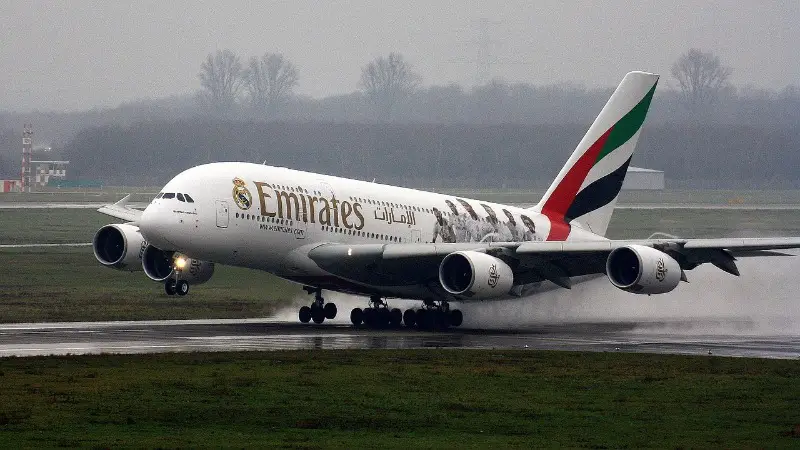
Emirates Airline Mission Statement Analysis (2026)
Emirates Airline has grown from a modest two-aircraft operation in 1985 to one of the most recognized aviation brands on the planet. Headquartered in Dubai, United Arab Emirates, and wholly owned by The Emirates Group — itself a subsidiary of the Investment Corporation of Dubai — the airline operates a fleet of wide-body aircraft to more than 150 destinations across six continents. Its rapid ascent has been closely tied to the strategic vision of Dubai as a global connecting hub, and its mission and vision statements reflect that symbiotic relationship between carrier and city.
This analysis examines the Emirates Airline mission statement and vision statement in detail, evaluating the strategic language, organizational priorities, and competitive positioning these declarations convey. Understanding these foundational statements is essential for grasping how Emirates differentiates itself from competitors such as Qatar Airways, Singapore Airlines, and British Airways — all of which compete fiercely for premium long-haul traffic.
Emirates Airline Mission Statement
The Emirates Airline mission statement reads:
“To connect the world to, and through, our Dubai hub by delivering world-class travel services, while maximizing the sustainable value of all stakeholders.”
This mission statement is notable for its directness and strategic clarity. In a single sentence, Emirates communicates four essential pillars of its business model: geographic connectivity, the centrality of Dubai, service excellence, and stakeholder value creation. Each of these elements deserves careful examination.
Geographic Connectivity and the Hub Model
The phrase “connect the world to, and through, our Dubai hub” is arguably the most strategically significant element of the entire mission statement. It explicitly names the hub-and-spoke model as the airline’s operational foundation. Dubai International Airport (DXB) and, increasingly, Al Maktoum International Airport (DWC) serve as the geographic fulcrum through which Emirates channels passenger traffic from hundreds of origin-destination pairs that might not otherwise justify direct service.
This language also distinguishes between two distinct passenger segments. The words “to Dubai” acknowledge the substantial volume of travelers whose final destination is Dubai itself — business travelers, tourists, and the large expatriate population that drives demand year-round. The word “through” captures the sixth-freedom traffic that forms the backbone of the Emirates network: passengers connecting, for example, from London to Sydney or from São Paulo to Bangkok via Dubai. This dual emphasis reveals a sophisticated understanding of how the airline generates revenue from both point-to-point and connecting flows.
Compared to the mission statements of carriers such as Southwest Airlines, which emphasize domestic accessibility and low fares, the Emirates mission statement is unapologetically global in scope. It does not confine itself to a region or market segment. Instead, it positions the airline as a facilitator of worldwide connectivity, which aligns with Dubai’s broader economic strategy as a trade, tourism, and logistics hub.
World-Class Travel Services
The commitment to “delivering world-class travel services” establishes a quality benchmark that permeates every aspect of the Emirates brand. This is not a vague aspiration; the airline has invested billions of dollars in tangible product differentiation to substantiate this claim. Its fleet of Airbus A380 and Boeing 777 aircraft features first-class private suites with closing doors, onboard shower spas, and an in-flight lounge — amenities that few competitors can match at comparable scale.
The choice of the term “world-class” rather than “luxury” or “premium” is deliberate. It signals that Emirates aims to deliver excellence across all cabins, not exclusively at the front of the aircraft. The airline’s economy class product, its ice entertainment system (with thousands of channels of on-demand content), and its complimentary meal service have consistently won industry awards. By framing its service ambition in universal terms, the mission statement avoids alienating the majority of passengers who fly in economy while still reinforcing the aspirational quality that defines the brand.
Sustainable Stakeholder Value
The closing clause — “maximizing the sustainable value of all stakeholders” — introduces two important concepts. First, the word “sustainable” signals awareness of long-term viability. This encompasses financial sustainability (consistent profitability and prudent capital allocation), environmental sustainability (fleet modernization and fuel efficiency), and operational sustainability (workforce development and supply chain resilience). In an era when airlines face growing scrutiny over carbon emissions and environmental impact, this language positions Emirates as mindful of its broader obligations.
Second, the reference to “all stakeholders” extends the airline’s accountability beyond shareholders alone. Stakeholders in the Emirates ecosystem include employees (over 60,000 across The Emirates Group), passengers, the government of Dubai, airport authorities, suppliers, and the communities served by its route network. By explicitly naming stakeholder value rather than shareholder returns, the mission statement aligns with contemporary governance principles that recognize the interdependence between a corporation and its broader operating environment.
Emirates Airline Vision Statement
The Emirates Airline vision statement reads:
“To be the world’s best and most innovative airline, leading the industry in service quality, operational excellence, and customer satisfaction.”
Where the mission statement articulates what Emirates does and for whom, the vision statement declares what the airline aspires to become. It is forward-looking, ambitious, and competitive. The vision establishes a clear hierarchy of priorities — best, most innovative, and leading — that together define the airline’s strategic direction.
Aspiration to Global Leadership
The phrase “the world’s best” is a bold declaration. It does not hedge with qualifiers such as “one of the best” or “among the leading.” Emirates positions itself as pursuing outright supremacy in the global aviation industry. This ambition is consistent with the airline’s behavior: it has aggressively expanded its network, invested in premium products at every cabin level, and built brand awareness through high-profile sponsorships (Arsenal FC, Real Madrid, the Emirates Spinnaker Tower, and numerous sporting events worldwide).
This aspirational language also serves an internal function. For the airline’s multinational workforce — drawn from more than 160 nationalities — the vision provides a unifying objective. Regardless of department or role, every employee can orient their efforts toward the goal of making Emirates the undisputed leader in commercial aviation.
Innovation as a Differentiator
The inclusion of “most innovative” is particularly telling. Emirates has historically differentiated itself through product innovation rather than price competition. It was among the first airlines to install personal seatback screens in every seat across all classes, the first to offer onboard showers in first class on the A380, and an early adopter of premium economy as a distinct cabin product to capture the segment between business and economy.
By embedding innovation in its vision statement, Emirates signals that technological and experiential advancement will remain central to its competitive strategy. This distinguishes the airline from carriers that compete primarily on network breadth, schedule frequency, or fare levels. It also creates an expectation — both internally and externally — that Emirates will continue to introduce new products and services rather than simply maintaining the status quo.
The Three Pillars: Service Quality, Operational Excellence, and Customer Satisfaction
The vision statement concludes by identifying three specific domains in which Emirates intends to lead: service quality, operational excellence, and customer satisfaction. These are not interchangeable concepts, and their inclusion as a triad reveals a comprehensive understanding of what constitutes airline leadership.
Service quality refers to the tangible and intangible elements of the travel experience — seat comfort, catering, cabin crew attentiveness, lounge facilities, and ground handling. Operational excellence encompasses on-time performance, safety record, fleet reliability, and the efficiency of back-office functions such as revenue management, maintenance, and crew scheduling. Customer satisfaction is the outcome metric: the degree to which passengers feel that their expectations have been met or exceeded, as measured through surveys, Net Promoter Scores, and repeat booking behavior.
By naming all three, the vision statement acknowledges that delivering a superior product (service quality) must be supported by efficient and reliable operations (operational excellence) and ultimately validated by the people who matter most (customer satisfaction). This integrated perspective is more sophisticated than vision statements that focus on a single dimension, and it reflects the complexity of managing a large-scale international airline.
Emirates Airline Core Values
Emirates operates according to a set of core values that underpin its mission and vision. While the airline does not always publish these in a single formalized list, the following principles are consistently reflected in its corporate communications, annual reports, and leadership statements:
Safety First: Aviation safety is the non-negotiable foundation of every operational decision. Emirates maintains rigorous safety protocols, invests in continuous crew training, and operates one of the youngest wide-body fleets in the industry, which directly contributes to mechanical reliability and safety outcomes.
Customer Centricity: The passenger experience is the organizing principle around which products, services, and processes are designed. From the booking interface to baggage delivery, Emirates aims to minimize friction and maximize satisfaction at every touchpoint.
Innovation and Excellence: A commitment to continuous improvement drives the airline to seek out new technologies, cabin products, and service concepts. Emirates does not view innovation as a one-time initiative but as an ongoing discipline embedded in its corporate culture.
Diversity and Inclusion: With a workforce comprising more than 160 nationalities, Emirates regards cultural diversity as a strategic asset. The airline actively recruits globally, and its cabin crew training emphasizes cross-cultural communication and sensitivity — capabilities that are essential for serving a similarly diverse passenger base.
Commercial Discipline: Despite its reputation for premium products and lavish service, Emirates operates with a strong commercial orientation. The airline has been profitable for the vast majority of its operating history, and its financial performance is closely managed to ensure that investments in product and network expansion generate adequate returns.
Contribution to Dubai: Emirates explicitly acknowledges its role as an economic engine for its home city. The airline’s network drives tourism, facilitates trade, and supports Dubai’s position as a global business center. This value is distinctive among airlines and reflects the unique ownership structure that ties the carrier’s success to the broader prosperity of its sovereign stakeholder.
These core values create a framework that translates the mission and vision statements into daily operational priorities. They also differentiate Emirates from competitors whose value sets may emphasize different priorities, such as the low-cost efficiency emphasized by budget carriers or the alliance-centric collaboration valued by network airlines like United Airlines.
Strengths of the Emirates Mission and Vision Statements
A close reading of the Emirates mission and vision statements reveals several notable strengths that contribute to their effectiveness as strategic declarations.
Strategic Specificity
Unlike many corporate mission statements that rely on generic language applicable to virtually any industry, the Emirates mission statement is explicitly anchored in aviation and geography. The reference to “our Dubai hub” immediately identifies the airline, its base of operations, and its strategic model. A reader encountering this statement without knowing its source could reasonably infer the identity of the company — a test that many mission statements fail. This specificity makes the statement more credible and more useful as a strategic guide.
Clear Articulation of the Business Model
The mission statement succinctly describes the hub-and-spoke model that defines the Emirates network. By distinguishing between traffic flowing “to” and “through” Dubai, the statement communicates the dual revenue streams that sustain the airline. This clarity is valuable for employees, investors, and partners who need to understand the fundamental logic of the business. It also provides a decision-making framework: any initiative that does not serve the goal of connecting the world through Dubai should be questioned.
Balanced Stakeholder Orientation
The explicit mention of “all stakeholders” in the mission statement reflects a mature approach to corporate governance. Rather than privileging one constituency — shareholders, customers, or employees — the statement acknowledges the airline’s obligations to multiple groups. This balance is particularly important for a state-owned enterprise, where the interests of the sovereign owner (the government of Dubai) must be harmonized with those of passengers, employees, and the broader aviation ecosystem.
Ambitious Yet Credible Vision
The vision statement’s aspiration to be “the world’s best and most innovative airline” is ambitious, but Emirates has the track record and resources to make such a claim credible. The airline has won the Skytrax World’s Best Inflight Entertainment award more than a dozen consecutive times, operates the world’s largest fleet of Airbus A380 aircraft, and has consistently ranked among the top airlines globally in passenger surveys. An aspiration that is backed by tangible achievements carries far more weight than one that exists only on paper.
Multi-Dimensional Performance Framework
By identifying service quality, operational excellence, and customer satisfaction as three distinct leadership domains, the vision statement creates a comprehensive performance framework. This prevents the organization from optimizing along a single dimension at the expense of others — a common pitfall in the airline industry, where cost-cutting can undermine service quality, or product investment can erode financial discipline. The tripartite structure encourages balanced execution.
Weaknesses of the Emirates Mission and Vision Statements
Despite their strengths, the Emirates mission and vision statements exhibit certain limitations that merit discussion.
Limited Environmental and Sustainability Detail
While the mission statement references “sustainable value,” the word “sustainable” appears to function primarily as a synonym for “enduring” rather than as a direct reference to environmental sustainability. In an era when the aviation industry faces intense scrutiny over its carbon footprint — and when competitors are making explicit net-zero commitments — the absence of clear environmental language is a notable gap. Airlines such as British Airways and its parent IAG have embedded specific sustainability targets into their corporate messaging, and Emirates risks appearing less committed to environmental responsibility by comparison.
Absence of Employee-Centric Language
Neither the mission nor the vision statement explicitly mentions employees, crew, or workforce development. For an airline that employs over 60,000 people and relies heavily on the quality of human interaction to deliver its service promise, this omission is surprising. Carriers like Southwest Airlines place employees at the center of their mission language, recognizing that engaged and motivated staff are the primary drivers of customer satisfaction. The Emirates statements treat employees as implicit stakeholders rather than explicit priorities, which may limit their effectiveness as tools for talent attraction and retention.
Potential Over-Reliance on the Hub Model
The mission statement’s exclusive focus on “our Dubai hub” accurately describes the current business model but may constrain strategic flexibility. The airline industry is evolving rapidly, with ultra-long-range aircraft (such as the Airbus A350-900ULR and Boeing 777-8) enabling direct point-to-point services that bypass traditional hub airports. If Emirates were to diversify its network strategy — for example, by operating secondary hubs or investing in point-to-point routes that do not transit Dubai — the current mission statement would need revision. A more forward-looking statement might acknowledge the possibility of network evolution beyond the single-hub model.
Generic Vision Language
While the mission statement benefits from strategic specificity, the vision statement is more conventional. The aspiration to be “the world’s best” is shared by virtually every premium airline, from Singapore Airlines to Qatar Airways. The vision could be strengthened by incorporating elements that are uniquely Emirates — perhaps referencing the airline’s role as a bridge between cultures, its commitment to redefining the travel experience, or its ambition to make global travel accessible to more people. As it stands, the vision statement could belong to any number of aspirational carriers.
No Mention of Digital Transformation
The aviation industry is undergoing a profound digital transformation, encompassing biometric boarding, artificial intelligence-driven revenue management, predictive maintenance, and personalized passenger experiences powered by data analytics. Neither the mission nor the vision statement acknowledges this dimension of modern airline operations. Given that Emirates has invested significantly in digital capabilities — including its app, website, and operational technology platforms — the statements could better reflect the role of technology in achieving the airline’s objectives.
Industry Context and Competitive Positioning
To fully appreciate the Emirates mission and vision statements, it is necessary to consider them within the broader context of the airline industry and the competitive dynamics that shape the carrier’s strategic choices.
Emirates operates in the premium long-haul segment, where it competes directly with the other Gulf carriers — Qatar Airways and Etihad Airways — as well as established network airlines such as Singapore Airlines, British Airways, Cathay Pacific, and Lufthansa. Each of these competitors has its own approach to mission and vision articulation, and comparing them reveals important strategic differences.
Qatar Airways, for example, emphasizes its commitment to being “the best airline in the world” with a focus on five-star service, positioning that overlaps significantly with the Emirates vision. Singapore Airlines highlights the “Singapore Girl” brand and a heritage of service excellence rooted in Asian hospitality traditions. British Airways emphasizes its British identity and global connectivity through the oneworld alliance. Each carrier uses its mission and vision language to stake out a distinctive position, and the effectiveness of these statements depends on the degree to which they reflect genuine competitive advantages.
The Emirates mission statement’s emphasis on Dubai as a hub is perhaps its most distinctive competitive feature. No other airline ties its identity so explicitly to a single city. This is both a strength and a vulnerability. It is a strength because Dubai’s geographic position — roughly equidistant from Western Europe, East Africa, South Asia, and the Far East — is genuinely advantageous for connecting traffic. It is a vulnerability because any disruption to Dubai’s attractiveness as a hub (whether from geopolitical instability, infrastructure constraints, or competitive pressure from nearby hubs in Doha and Abu Dhabi) would directly challenge the airline’s core mission.
The competitive landscape also includes a growing challenge from ultra-long-haul point-to-point services. As aircraft technology enables routes such as Singapore to New York nonstop or Perth to London nonstop, some passengers who previously connected through Dubai may choose direct alternatives. The Emirates mission statement does not address this structural shift, which represents a long-term strategic consideration for the airline.
Additionally, the rise of premium economy as a distinct cabin class has altered competitive dynamics. Emirates was relatively late to introduce premium economy compared to some competitors, though it has now rolled out the product on its A380 fleet. The mission statement’s reference to “world-class travel services” is broad enough to encompass this product evolution, but it does not specifically signal the airline’s intent to compete across the full spectrum of cabin products, from economy to first class.
From a financial perspective, the Emirates business model has proven remarkably resilient. The airline returned to profitability after the disruptions of the COVID-19 pandemic and has continued to invest in fleet renewal and product enhancement. Its financial performance supports the credibility of its ambitious vision, though the absence of explicit financial targets in the mission and vision statements means that external observers must look to annual reports and investor communications for quantitative context.
The relationship between Emirates and the government of Dubai also warrants attention. As a state-owned enterprise, Emirates benefits from supportive infrastructure policies (including the expansion of Dubai’s airport facilities and the development of the Al Maktoum International Airport), favorable regulatory frameworks, and strategic alignment with Dubai’s economic development agenda. The mission statement’s reference to stakeholder value implicitly encompasses this sovereign relationship, but it does so with a subtlety that may not be apparent to casual readers.
Compared to the mission and vision language of American carriers such as United Airlines and Southwest Airlines, the Emirates statements reflect a fundamentally different operating context. American carriers operate within a deregulated domestic market characterized by intense price competition and a strong emphasis on shareholder value. Emirates, by contrast, operates primarily in the international long-haul market, where product differentiation and service quality play a proportionally larger role in competitive outcomes. These contextual differences are reflected in the language and priorities of each airline’s foundational statements.
The Role of Brand and Sponsorship
One dimension not explicitly addressed in the mission and vision statements — but central to the Emirates competitive strategy — is the airline’s extensive investment in global brand building through sponsorship. Emirates is the shirt sponsor of Arsenal FC and AC Milan, the title sponsor of numerous golf tournaments and horse racing events, and the naming rights holder for several stadiums and landmarks worldwide. These sponsorships serve to reinforce the “world-class” positioning articulated in the mission statement and to build brand awareness in markets where the airline seeks to attract passenger traffic.
The absence of brand and marketing language from the formal mission and vision statements is not unusual — few airlines reference marketing strategy in their foundational declarations. However, the scale of the Emirates sponsorship portfolio is so central to the airline’s identity that it effectively functions as an extension of the vision statement’s aspiration to be “the world’s best.” Brand visibility and brand equity are mechanisms through which Emirates translates its vision into market position, and any comprehensive analysis of the airline’s strategic declarations must acknowledge this complementary dimension.
Fleet Strategy and Mission Alignment
The Emirates fleet strategy offers a concrete illustration of how the mission statement translates into operational decisions. The airline has built its network around two aircraft types: the Airbus A380, the world’s largest commercial passenger aircraft, and the Boeing 777 family, the most successful wide-body aircraft in aviation history. This two-type fleet strategy delivers several advantages that directly support the mission.
The A380’s capacity (up to 615 passengers in a single-class configuration, though Emirates typically configures its aircraft for approximately 489 passengers in a three-class layout) enables the airline to serve high-demand routes while maximizing revenue per departure. The aircraft’s size also allows for the onboard amenities — showers, lounge, bar — that differentiate Emirates from competitors and substantiate the “world-class” service promise.
The Boeing 777 fleet, including the newer 777X variants that Emirates has on order, provides the range and efficiency needed to serve thinner routes and to complement A380 operations with additional frequencies. As Emirates transitions toward the 777X and potentially the A350, the fleet renewal process ensures that the airline maintains the youngest possible fleet age — a factor that contributes to fuel efficiency, reliability, and passenger comfort.
This fleet strategy is a direct manifestation of the mission statement’s commitment to connecting the world through Dubai with world-class services. The aircraft are the physical expression of the airline’s strategic intent, and their selection, configuration, and deployment reflect the priorities articulated in the mission and vision.
Final Assessment
The Emirates Airline mission and vision statements are, on balance, effective strategic declarations that communicate the airline’s purpose, ambition, and competitive positioning with reasonable clarity. The mission statement’s explicit reference to the Dubai hub model, the dual “to and through” traffic flows, and the commitment to stakeholder value creation provide a clear and actionable framework for strategic decision-making. The vision statement’s aspiration to global leadership, innovation, and multi-dimensional excellence sets a high standard that is credible given the airline’s track record and resources.
The primary strengths of these statements lie in their strategic specificity (particularly the mission statement), their alignment with the airline’s actual competitive behavior, and their balance between aspiration and credibility. Emirates does not merely claim to be world-class; it invests billions of dollars annually in fleet, product, and service to substantiate that claim. The mission and vision statements serve as accurate reflections of the airline’s strategic intent rather than aspirational abstractions disconnected from reality.
The principal weaknesses center on omissions rather than errors. The limited treatment of environmental sustainability, the absence of employee-centric language, the lack of digital transformation acknowledgment, and the somewhat generic quality of the vision statement represent areas where the statements could be strengthened. These are not fatal flaws — many excellent airlines have similar gaps in their foundational declarations — but they do represent missed opportunities to differentiate Emirates more sharply from competitors and to signal responsiveness to evolving industry priorities.
When compared to the mission and vision statements of peer airlines, Emirates occupies a middle ground between the highly specific (such as Southwest’s employee-first mission) and the highly generic (such as carriers that default to boilerplate language about safety and service). The Dubai hub reference is the single most distinctive element, and it is this geographic and strategic anchor that gives the Emirates statements their identity and force.
Looking ahead, Emirates may benefit from revisiting its mission and vision language to incorporate explicit references to environmental sustainability commitments, digital innovation, and workforce development. As the airline industry continues to evolve — driven by technological change, shifting passenger expectations, and growing environmental accountability — the foundational statements that guide corporate strategy should evolve in parallel. For now, however, the Emirates mission and vision statements serve their purpose: they define an airline that knows what it is, understands where it operates, and aspires to be the best in the world at what it does.