
Macy’s Mission Statement Analysis (2026)
Macy’s, Inc. operates as one of the most recognized names in American retail, running a portfolio that includes the flagship Macy’s department stores, the upscale Bloomingdale’s chain, and the specialty beauty retailer Bluemercury. Founded in 1858, the company has survived wars, depressions, and the wholesale reinvention of American commerce. Whether it can survive the current era of e-commerce dominance and shifting consumer behavior is the question that defines its present leadership.
Understanding how Macy’s articulates its purpose requires examining both its mission and vision statements. These statements reveal not only what the company believes it does today but also where it intends to position itself in a retail landscape that has punished legacy department stores with remarkable consistency over the past decade.
Macy’s Mission Statement
“Macy’s mission is to be a bright, welcoming place for customers to discover the magic of Macy’s by providing quality products at affordable prices, creating memorable shopping experiences, and fostering community connections.”
This mission statement positions Macy’s as something more than a transactional retailer. It attempts to evoke a specific emotional register — the idea that shopping at Macy’s should feel like an event rather than an errand. The language of “magic” and “discovery” connects directly to the company’s heritage as a destination department store, the kind of place where the Thanksgiving Day Parade originates and where holiday window displays draw crowds who have no intention of buying anything.
The statement also signals a three-pronged approach: product quality at accessible price points, experiential retail, and community engagement. Each of these elements carries strategic weight, and each faces distinct competitive pressures that merit serious examination.
Strengths of Macy’s Mission Statement
The mission statement’s greatest strength is its acknowledgment that modern retail requires more than merchandise. By foregrounding “memorable shopping experiences” and “community connections,” Macy’s signals that it understands the fundamental challenge facing brick-and-mortar retailers: if the only value proposition is product availability, customers will default to the convenience and selection of online platforms. This is not a trivial insight. Many legacy retailers have failed precisely because they treated their physical presence as self-evidently valuable rather than something that must be actively justified through differentiated experiences.
The phrase “quality products at affordable prices” also represents a deliberate positioning choice. Macy’s is not attempting to compete with luxury retailers on exclusivity, nor is it racing to the bottom on price against discount chains. This middle-market positioning aligns with the company’s actual merchandise mix, which spans from private-label basics to aspirational brands. The mission statement accurately reflects what a customer encounters when walking into a Macy’s store, which is not always the case with corporate purpose statements.
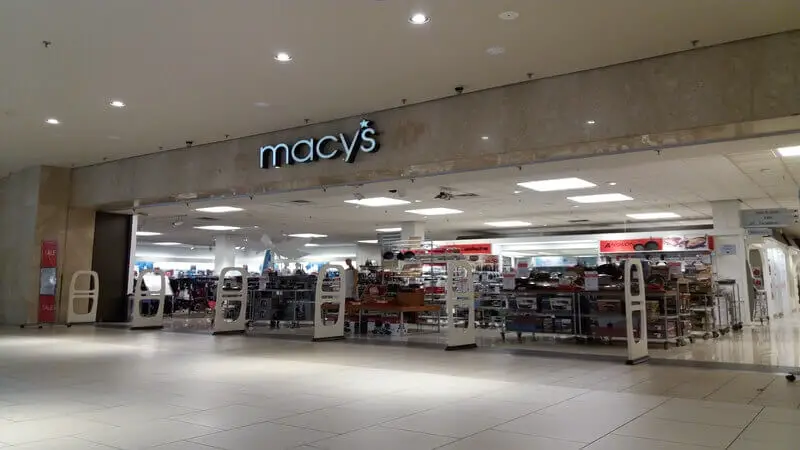
The reference to being a “bright, welcoming place” is understated but significant. It acknowledges that the physical environment matters — that lighting, layout, and atmosphere contribute to the shopping experience. For a company that has invested heavily in store renovations through its Bold New Chapter strategy, this language serves as both a customer promise and an internal directive to store operations teams.
Weaknesses of Macy’s Mission Statement
The most conspicuous weakness is the absence of any digital or omnichannel language. In a period where Macy’s generates a substantial share of its revenue through e-commerce, the mission statement reads as though it were written for a purely physical retail operation. The word “place” strongly implies a brick-and-mortar location. A customer who shops exclusively on macys.com — and there are millions of them — would find little in this statement that speaks to their experience.
This omission is not merely aesthetic. It reflects a deeper tension within the company’s identity. Macy’s leadership has repeatedly emphasized the importance of digital integration, yet the mission statement does not encode that priority. When a company’s stated purpose diverges from its operational strategy, it creates confusion both internally and externally.
The word “magic” also presents a risk. While it connects to brand heritage, it sets an experiential bar that many Macy’s locations cannot clear. A flagship store in Manhattan may deliver on the promise of discovery and wonder. A mid-tier mall location in suburban Ohio, staffed to minimum levels and stocked with increasingly consolidated merchandise, often cannot. When mission statements promise experiences that vary dramatically by location, they undermine credibility rather than build it.
Finally, “community connections” remains vague. It could refer to local hiring practices, charitable giving, community events, or simply the social function of a department store as a gathering place. Without specificity, this element of the mission reads as an afterthought rather than a genuine strategic commitment.
Macy’s Vision Statement
“To be the preferred omnichannel fashion retailer for the moderate-to-upscale customer, leveraging our iconic brands, strong consumer insights, and operational excellence to deliver an exceptional experience every time.”
The vision statement operates in a fundamentally different register than the mission. Where the mission is warm and aspirational, the vision is strategic and precise. It names the target customer segment (moderate-to-upscale), identifies the competitive arena (omnichannel fashion retail), and specifies the capabilities that will drive success (brand equity, consumer data, and operational execution). This is a statement written for investors and internal strategists as much as for customers.
Strengths of Macy’s Vision Statement
The vision statement corrects the mission statement’s most significant omission by explicitly naming omnichannel retail as the company’s competitive domain. This single word — “omnichannel” — signals that Macy’s leadership views physical and digital retail not as separate channels but as an integrated system. The practical implications are substantial: ship-from-store fulfillment, buy-online-pickup-in-store capabilities, unified inventory management, and digital clienteling tools for in-store associates.
The identification of “moderate-to-upscale” as the target segment is equally important. This language implicitly acknowledges the collapse of the broad middle market in American retail and positions Macy’s toward the higher end of its historical range. It also creates strategic coherence across the portfolio: Macy’s serves the moderate-to-upper-moderate customer, Bloomingdale’s serves the upper-moderate-to-upscale customer, and Bluemercury targets the prestige beauty customer. Each brand occupies a distinct but adjacent position.
The reference to “strong consumer insights” is a nod to the company’s investments in data analytics and its Star Rewards loyalty program, which generates enormous volumes of purchase behavior data. In an era where personalization drives conversion rates, this is a genuinely differentiating capability — particularly against smaller competitors who lack the transaction volume to build comparable data assets.
Weaknesses of Macy’s Vision Statement
The aspiration to be the “preferred” omnichannel fashion retailer raises an immediate credibility question: preferred by whom, and compared to what? In the moderate-to-upscale segment, Macy’s competes against Nordstrom, which has built a stronger reputation for service and curation. It competes against Amazon, which dominates on convenience and selection. It competes against direct-to-consumer brands that have eroded the value of department store curation by going straight to the end customer. The word “preferred” implies a level of competitive dominance that Macy’s does not currently possess in any of these matchups.
“Operational excellence” is the kind of phrase that appears in vision statements across every industry, from airlines to hospital systems. It communicates nothing specific about what Macy’s intends to do differently. Given that the company’s operational challenges — including inventory management issues, inconsistent store experiences, and supply chain disruptions — have been well documented, the phrase reads more like an aspiration than a description of current capability.
The vision also lacks any reference to sustainability, social responsibility, or workforce investment. These omissions are notable given that the moderate-to-upscale customer segment increasingly factors environmental and social considerations into purchasing decisions. Competitors who embed these commitments into their strategic vision may build stronger emotional connections with the demographic Macy’s is targeting.
The Department Store Decline and Macy’s Position
Any analysis of Macy’s strategic statements must reckon with the structural decline of the American department store. The format that once anchored every major shopping mall in the country has experienced a prolonged contraction driven by multiple reinforcing factors: the rise of e-commerce, the growth of off-price retailers like TJ Maxx and Ross, the expansion of fast fashion, and the direct-to-consumer revolution that allows brands to bypass wholesale intermediaries entirely.
The casualty list is long and growing. JCPenney went through bankruptcy. Sears collapsed entirely. Neiman Marcus restructured through Chapter 11. Lord & Taylor liquidated. Barneys New York shuttered. Each of these failures had company-specific causes, but they also shared a common thread: the department store model, built on breadth of assortment and the convenience of one-stop shopping, lost its competitive rationale when the internet offered infinitely broader selection with next-day delivery.
Macy’s has survived where others have not, but survival is not the same as thriving. The company’s revenue peaked in fiscal 2014 and has not returned to that level. Store traffic has declined steadily. The company has closed hundreds of locations over the past decade. The stock price, despite periodic rallies, has substantially underperformed the broader market over any meaningful time horizon.
Against this backdrop, the mission and vision statements read as documents produced by a company that understands its predicament but has not yet found a fully convincing answer. The mission appeals to heritage and emotional resonance. The vision appeals to strategic sophistication and data-driven decision-making. Neither statement directly addresses the existential question: why should the department store format continue to exist?
The Omnichannel Imperative
Macy’s has invested billions in its omnichannel infrastructure, and the vision statement’s emphasis on this capability is well justified. The company’s digital platform has grown significantly, and its ability to use stores as fulfillment nodes gives it a logistical advantage over pure-play e-commerce competitors for certain product categories and delivery timelines.
The omnichannel strategy manifests in several concrete ways. Buy-online-pickup-in-store (BOPIS) and curbside pickup options leverage the existing store footprint to compete with Amazon on speed for customers who live near a Macy’s location. Ship-from-store capabilities convert retail locations into distribution centers, improving inventory efficiency and delivery times. The Macy’s app integrates in-store and digital experiences, allowing customers to scan products, check availability, and access personalized offers.
However, the omnichannel strategy contains an inherent tension. Every dollar spent fulfilling online orders from stores is a dollar that changes the economics of those physical locations. Store associates who pack shipments are not serving in-store customers. Floor space dedicated to fulfillment staging is not generating the experiential retail the mission statement promises. Macy’s must balance two operational models within the same physical footprint, and this balance is extraordinarily difficult to optimize.
The company’s competitors have taken different approaches to this challenge. Nordstrom has invested in smaller-format Nordstrom Local locations that serve primarily as service and pickup hubs, separating the experiential and fulfillment functions. Amazon has moved in the opposite direction, building a purely digital operation supplemented by physical experiments like Amazon Style. Macy’s approach — asking full-size department stores to serve both functions simultaneously — is the most operationally complex of the three, and its long-term viability remains an open question.
The Bloomingdale’s and Bluemercury Portfolio Strategy
One of the underappreciated aspects of Macy’s corporate strategy is its portfolio approach. The company does not operate as a single brand but as a collection of three distinct retail concepts, each targeting a different customer segment and serving a different strategic purpose.
Bloomingdale’s operates in the contemporary-to-luxury space, competing with Nordstrom and, to a lesser extent, Neiman Marcus and Saks Fifth Avenue. The brand carries higher-end merchandise, offers a more curated shopping experience, and maintains a smaller footprint of approximately 30 full-line stores supplemented by outlet locations and a growing digital business. Bloomingdale’s has consistently outperformed the Macy’s nameplate on comparable-store sales, suggesting that the upscale positioning is more defensible in the current environment.
Bluemercury, acquired in 2015, operates roughly 160 specialty beauty stores. The prestige beauty market has been one of the strongest segments in retail, demonstrating resilience through economic downturns and continued growth even as other discretionary categories have softened. Bluemercury provides Macy’s with exposure to this high-margin segment and a retail format — small, neighborhood-based, service-intensive — that is structurally better suited to current consumer preferences than the traditional department store.
The portfolio strategy has implications for how the mission and vision statements should be read. The mission statement, with its language of discovery and magic, is most clearly aligned with the Macy’s nameplate and its heritage as an American retail icon. The vision statement, with its emphasis on omnichannel capability and consumer insights, speaks to the enterprise level — the shared infrastructure and data platforms that support all three brands. This layered structure is strategically sound, but it also means that no single statement fully captures the company’s identity or strategic intent.
Store Closures and the Bold New Chapter
In early 2024, Macy’s announced its “Bold New Chapter” strategy, a sweeping restructuring plan that included the closure of approximately 150 underperforming Macy’s locations by 2026-2027. The plan simultaneously called for investment in roughly 350 remaining stores — designated as “go-forward” locations — along with continued expansion of Bloomingdale’s and Bluemercury.
This strategy represents the most significant acknowledgment yet that the traditional Macy’s department store cannot sustain its historical footprint. The closures disproportionately affect locations in lower-traffic malls, secondary markets, and areas where the customer demographics have shifted away from Macy’s target segment. The go-forward locations are concentrated in higher-income trade areas, stronger malls, and markets where Macy’s maintains genuine competitive relevance.
The store closure program creates a paradox for the mission statement’s emphasis on “community connections.” Each closure severs a connection to a specific community — often a community where Macy’s may have been the last full-line department store anchor. The company’s stated purpose and its operational reality are moving in opposite directions on this dimension. Macy’s is not becoming more connected to communities; it is deliberately and rationally retreating from communities where the economics no longer work.
The investment in go-forward locations is more aligned with the mission’s aspirational language. These stores are receiving updated fixtures, improved lighting, enhanced beauty departments, and technology upgrades designed to make the physical shopping experience more compelling. If the mission statement describes a “bright, welcoming place,” the Bold New Chapter is essentially an admission that many existing locations do not meet that standard and that a smaller, better-invested fleet is preferable to a large, underfunded one.
Strategically, the math is straightforward. The 150 locations slated for closure generate disproportionately low revenue and margins relative to their operating costs. Concentrating investment in higher-performing stores should improve average productivity metrics, even as total revenue from physical stores declines. The question is whether this concentration strategy generates enough improvement to offset the inevitable loss of scale advantages in vendor negotiations, marketing efficiency, and brand visibility.
Competition: Amazon, Nordstrom, and the New Retail Order
Macy’s competitive landscape has shifted dramatically from the era when its primary rivals were other department stores. Today, the company faces threats from multiple directions, each attacking a different element of the value proposition described in its mission and vision statements.
Amazon represents the most fundamental challenge. The e-commerce giant has effectively commoditized product availability and delivery speed, two capabilities that once gave department stores a meaningful advantage over smaller specialty retailers. Amazon’s fashion business, while not universally admired for curation or brand prestige, has grown into one of the largest apparel retailers in the United States by revenue. For the price-conscious segment of Macy’s target market, Amazon offers comparable products with superior convenience.
Macy’s defense against Amazon rests on several factors: the ability to touch, try on, and immediately take home physical merchandise; the curation and brand relationships that Amazon’s marketplace model struggles to replicate; and the emotional and experiential dimensions of in-store shopping that the mission statement emphasizes. These defenses are real but narrow. They apply most strongly to categories like formalwear, cosmetics, and designer apparel, where the physical experience adds genuine value. They apply weakly to categories like basics, home goods, and accessories, where convenience dominates the purchase decision.
Nordstrom poses a different kind of threat. Where Amazon competes on price and convenience, Nordstrom competes on service, curation, and customer experience — precisely the dimensions where Macy’s mission statement stakes its claim. Nordstrom’s service culture, anchored by its famously liberal return policy and its investment in personal styling, represents the gold standard in department store retail. Macy’s aspiration to deliver “memorable shopping experiences” implicitly benchmarks against Nordstrom, and the comparison is not always favorable.
Nordstrom has also moved more aggressively into off-price through Nordstrom Rack, capturing the value-oriented customer that Macy’s also targets. The Rack format benefits from Nordstrom’s brand halo while offering a treasure-hunt shopping experience that appeals to consumers who have migrated away from full-price department stores. Macy’s Backstage concept, an off-price initiative integrated within select Macy’s stores, has not achieved the same level of customer enthusiasm or operational clarity.
Beyond these two primary competitors, Macy’s faces erosion from direct-to-consumer brands that no longer need department store distribution to reach customers. When a brand like Nike or Coach decides to pull back from wholesale and invest in its own stores and website, Macy’s loses both merchandise differentiation and the foot traffic that brand-seeking customers generate. This trend is structural, not cyclical, and it threatens the fundamental role of the department store as a curated marketplace for third-party brands.
The off-price sector continues to exert pressure as well. TJ Maxx, Ross Dress for Less, and Burlington have collectively grown their market share substantially over the past decade by offering brand-name merchandise at significant discounts. For the moderate customer — the lower end of the segment Macy’s vision statement targets — these retailers offer a compelling alternative that satisfies the desire for branded products without the full-price department store markup.
Final Assessment
Macy’s mission and vision statements, read together, present a company caught between two identities. The mission statement reaches backward toward heritage, emotional resonance, and the romanticism of physical retail. The vision statement reaches forward toward data-driven omnichannel commerce and strategic portfolio management. Neither statement is dishonest, but neither fully reconciles the tensions that define Macy’s present situation.
The mission statement works best as an aspirational document for in-store teams and brand marketing. Its language of magic, discovery, and community resonates with the emotional dimensions of retail that algorithms cannot replicate. Its weakness is its silence on the digital transformation that now accounts for a significant portion of company revenue and an even larger share of strategic investment. A mission statement that does not acknowledge how most new customers will first encounter the brand is incomplete.
The vision statement works best as a strategic framework for investors and senior leadership. Its specificity about target segments, competitive positioning, and core capabilities provides genuine strategic clarity. Its weakness is its reliance on generic business language — “operational excellence,” “exceptional experience” — that does not differentiate Macy’s from any other company issuing a corporate vision statement. A vision should be distinctive enough that it could not be attributed to a competitor. Macy’s vision, with minor word changes, could belong to virtually any mid-to-upscale retailer.
The Bold New Chapter strategy represents the most concrete expression of both statements. By closing underperforming stores and investing in go-forward locations, Macy’s is making operational decisions that align with the mission’s promise of a “bright, welcoming place.” By expanding Bloomingdale’s and Bluemercury while investing in digital infrastructure, it is executing on the vision’s omnichannel and portfolio aspirations. The strategy is rational and, by the standards of legacy retail, relatively bold.
Whether it is bold enough is another matter. The department store format faces headwinds that no mission statement, however well-crafted, can neutralize. Consumer habits have shifted. Mall traffic has declined. Brand partners are going direct. Amazon has reset expectations for speed and convenience. In this environment, Macy’s survival depends less on the eloquence of its purpose statements and more on the speed and discipline of its operational execution.
Macy’s has the brand recognition, the data assets, the real estate portfolio, and the vendor relationships to remain a significant force in American retail. What it lacks — and what its mission and vision statements do not fully address — is a clear answer to the question that every department store must eventually confront: what do we offer that no other format can replicate? Until that question receives a compelling and specific answer, the statements will read as well-intentioned frameworks for a company that is managing decline more skillfully than its peers rather than charting a genuinely new course.
For a broader perspective on how leading companies define their strategic direction, explore our collection of top companies with mission and vision statements.