
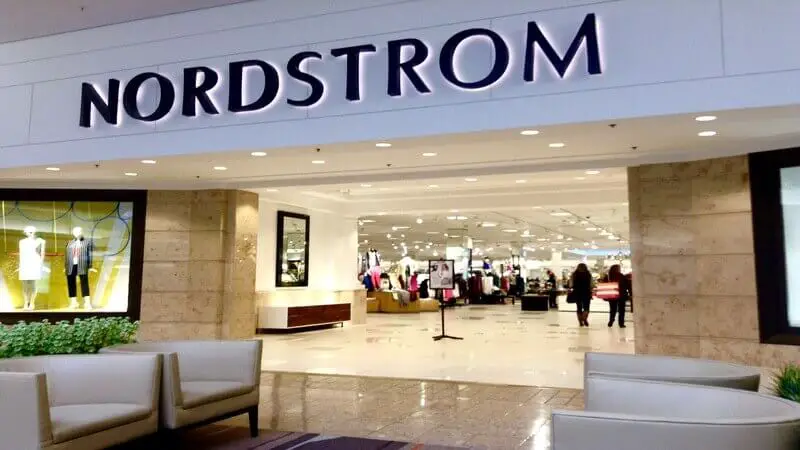
Nordstrom Mission Statement Analysis (2026)
Nordstrom has operated at the intersection of luxury aspiration and accessible premium retail for more than a century. Founded in 1901 as a shoe store in Seattle, the company grew into one of the most recognized department store chains in North America, building its reputation on a near-legendary commitment to customer service. Today, with roughly 350 stores across its full-line and Nordstrom Rack banners, the company stands at a pivotal inflection point: it completed its transition to private ownership in early 2025, removing itself from the quarterly earnings scrutiny that shapes so many retail decisions.
That structural shift makes an examination of Nordstrom’s mission and vision statements particularly relevant. Corporate statements drafted under public-market pressure often prioritize broad, inoffensive language designed to satisfy analysts. A privately held Nordstrom, controlled once again by the founding family in partnership with Mexican retail conglomerate El Puerto de Liverpool, has the latitude to sharpen those statements or to let them atrophy. What follows is a thorough analysis of both.
Nordstrom Mission Statement
“To give customers the most compelling shopping experience possible.”
This statement has remained functionally unchanged for years, surviving multiple leadership transitions, the pandemic, and now the privatization process. Its brevity is both a strength and a limitation. At nineteen words, it communicates a single, unmistakable priority: the customer experience. There is no mention of shareholders, employees, sustainability, or geographic expansion. The statement bets everything on one concept, and that bet reflects the company Nordstrom has always claimed to be.
Strengths of the Mission Statement
Clarity of purpose. Many retailers draft mission statements that attempt to serve every stakeholder simultaneously, producing language so diluted it means nothing. Nordstrom avoids this entirely. The statement identifies one audience (customers) and one objective (the most compelling shopping experience). A store associate reading this sentence understands, without further explanation, what is expected. A district manager making a staffing decision understands which trade-off to favor. This kind of operational clarity is rare, and it is worth acknowledging.
Aspirational without being vague. The phrase “most compelling shopping experience possible” sets a measurable, if subjective, standard. It does not claim Nordstrom will “change the world” or “empower communities.” It says the company will deliver a shopping experience that exceeds what competitors provide. That claim can be tested every time a customer walks into a store or opens the Nordstrom app. Compare this to the mission statements of peers like Macy’s or JCPenney, which often layer in so many objectives that no single priority emerges.
Heritage alignment. Nordstrom’s founding mythology is built on customer service stories: the company that accepted a tire return despite never selling tires, the sales associates who hand-deliver orders to customers’ cars, the personal stylists who maintain years-long relationships with individual shoppers. The mission statement does not need to spell out these anecdotes because its language directly maps to them. When a corporate statement aligns with a company’s actual folklore, it carries weight that manufactured language cannot replicate.
Channel agnosticism. The statement says “shopping experience,” not “in-store experience” or “retail experience.” This phrasing proved prescient as Nordstrom invested heavily in digital infrastructure, buy-online-pick-up-in-store capabilities, and its Nordstrom Local concept (small, inventory-free service hubs). The mission did not need revision when the channel mix shifted because it was never anchored to a specific channel in the first place.
Weaknesses of the Mission Statement
No mention of product or curation. Nordstrom is, at its core, a retailer of clothing, shoes, accessories, and beauty products. The mission statement says nothing about fashion, style, quality, or the curatorial role that distinguishes a department store from a marketplace. A company like Amazon could adopt identical language without changing a word. For a business that depends on buyers selecting the right brands and merchants presenting them in the right context, the absence of any product-related language is a meaningful gap.
Employee invisibility. Nordstrom employs tens of thousands of people, many of whom are the direct interface between the company and the “compelling shopping experience” the mission promises. Yet the statement does not acknowledge their role. This is not merely a symbolic oversight. Mission statements that recognize employees tend to perform better as internal alignment tools. Associates who see themselves reflected in the corporate purpose are more likely to internalize it. Nordstrom relies on its culture to bridge this gap, but culture without textual reinforcement erodes over time, particularly during periods of turnover or organizational change.
Absence of differentiation. “The most compelling shopping experience possible” is a superlative claim, but it does not specify what makes Nordstrom’s version of that experience different from what Neiman Marcus, Saks Fifth Avenue, or even Kohl’s might promise. Every retailer aspires to a compelling experience. What distinguishes Nordstrom is its specific blend of service, selection breadth, price range, and return policy. None of those differentiators appear in the statement.
Static language in a period of transformation. Nordstrom went through one of the most significant structural changes in its history when the founding family, in partnership with El Puerto de Liverpool, took the company private. That transaction signaled a shift in strategic orientation: longer time horizons, different capital allocation priorities, and potentially a redefined relationship with customers. A mission statement drafted years before this transition may not fully reflect the company Nordstrom intends to become.
Nordstrom Vision Statement
“To serve customers better, to always be relevant in their lives, and to form lifelong relationships.”
While Nordstrom has not always drawn a sharp public line between its mission and vision, leadership communications and corporate filings have consistently articulated this forward-looking ambition. The vision shifts from the mission’s focus on the shopping moment to a broader concept: an ongoing relationship with customers that extends beyond transactions.
Strengths of the Vision Statement
Relationship orientation. The phrase “lifelong relationships” is doing significant work in this statement. It signals that Nordstrom does not view customers as transaction units to be maximized in a given quarter. It implies continuity, personalization, and the kind of trust that takes years to build. This framing supports investments in loyalty programs (the Nordy Club), personal styling services, and the data infrastructure required to recognize and serve repeat customers across channels.
Relevance as a strategic concept. The commitment to “always be relevant” is more demanding than it might initially appear. Relevance requires constant adaptation. A retailer that was relevant to a customer in their twenties must evolve its assortment, service model, and communication style as that customer enters their forties. This single word encodes an entire strategic philosophy: Nordstrom must change as its customers change, rather than expecting customers to remain loyal to a static offering.
Implicit omnichannel commitment. To remain “relevant in their lives,” Nordstrom must meet customers wherever they spend their time. In 2026, that means a mobile-optimized digital experience, seamless integration between online and in-store inventory, social media engagement, and potentially new channels that have not yet matured. The vision does not prescribe specific channels, which gives the company room to experiment without contradicting its stated direction.
Emotional weight. Corporate vision statements frequently read like consulting deliverables: precise, structured, and entirely forgettable. Nordstrom’s version, with its emphasis on “serving better” and “lifelong relationships,” carries an emotional register that is difficult to manufacture. It sounds like something a family-owned business would say, which, as of 2025, Nordstrom once again is. This authenticity gives the statement an advantage over more polished alternatives.
Weaknesses of the Vision Statement
Measurement difficulty. How does Nordstrom know when it has formed a “lifelong relationship”? What metric captures “relevance in their lives”? Vision statements are inherently aspirational, but the best ones suggest a direction that can be operationalized. Nordstrom’s version is emotionally resonant but strategically ambiguous. Leadership teams change. Without quantifiable benchmarks, the vision risks becoming a decorative phrase rather than a planning tool.
Customer-exclusive scope. Like the mission statement, the vision says nothing about employees, communities, suppliers, or the environment. A vision for 2026 and beyond that does not reference sustainability, ethical sourcing, or workforce development may feel incomplete to younger consumers and to the talent pool Nordstrom must attract. This is not an argument for cramming every stakeholder into a single sentence. It is an observation that a vision focused exclusively on customer relationships may not capture the full scope of what the company needs to become.
No competitive positioning. The vision does not specify where Nordstrom sits in the retail landscape. Is it a luxury retailer? A premium-but-accessible one? A fashion authority? The statement could apply equally to Costco or to Chanel. For a company navigating the contested middle ground between true luxury and mass-market retail, some signal about positioning would strengthen the vision considerably.
Tension with the Nordstrom Rack model. Forming “lifelong relationships” suggests intimacy, personalization, and high-touch service. Nordstrom Rack, which accounts for a substantial portion of the company’s revenue, operates on a fundamentally different model: treasure-hunt off-price shopping with minimal service intervention. The vision does not reconcile these two experiences, leaving it unclear whether Rack customers are part of the “lifelong relationship” the company envisions or whether they exist in a separate strategic category.
The Customer Service Legacy: Substance Behind the Statements
Neither the mission nor the vision statement can be evaluated in isolation from Nordstrom’s operational history. The company’s customer service reputation is not a marketing invention; it was built over decades through specific, verifiable practices that distinguished Nordstrom from every other department store in North America.
The most consequential of these practices was the commission-based compensation model for sales associates, which Nordstrom maintained long after most competitors abandoned it. Commission pay created a direct financial link between service quality and associate income. A salesperson who built a loyal client base, who remembered preferences, who followed up after purchases, earned more. This alignment of incentives produced the legendary service stories that became Nordstrom’s most effective marketing asset.
Equally important was the company’s return policy, which for decades operated with virtually no restrictions. Customers could return merchandise without receipts, without time limits, and in some cases without the merchandise having been purchased at Nordstrom at all. The policy was economically irrational in isolation, but it served a strategic function: it eliminated purchase risk for customers, which increased both conversion rates and average transaction values. Customers who know they can return anything are customers who buy more freely.
These practices gave the mission statement credibility. When Nordstrom claimed to offer “the most compelling shopping experience possible,” the claim was backed by structural choices that competitors could not easily replicate. However, both practices have come under pressure. Commission structures have been modified repeatedly, and the return policy has been tightened as return fraud has grown industrywide. The question for 2026 is whether the mission statement still reflects operational reality or whether it has become an artifact of a service model that no longer fully exists.
The Nordstrom Local experiment offers a partial answer. Launched in 2017, these small-format, inventory-free locations functioned as service hubs: places where customers could pick up online orders, make returns, have alterations done, and consult with stylists. The concept represented a genuine attempt to reimagine what “compelling shopping experience” means in an era when product discovery increasingly happens online. Though Nordstrom ultimately closed its Los Angeles Local locations in 2023, the experiment demonstrated that the company was willing to invest real capital in service innovation, not merely repeat legacy talking points.
Nordstrom Rack and the Dual-Brand Challenge
Any serious analysis of Nordstrom’s mission and vision must account for Nordstrom Rack, which has grown from a clearance outlet into a strategic pillar of the business. With over 250 locations across the United States, Rack generates a significant share of total company revenue and serves a customer demographic that overlaps only partially with the full-line Nordstrom shopper.
The mission statement’s promise of “the most compelling shopping experience possible” applies differently in a Rack context. Full-line Nordstrom stores invest in trained sales associates, curated visual merchandising, and amenities like in-store restaurants and bars. Rack stores are designed around a different value proposition: branded merchandise at reduced prices, presented in a high-density, self-service format. The experience is compelling in its own way, but it is compelling because of price, not service.
This creates a strategic tension that the mission statement does not address. If Nordstrom defines its purpose as delivering the best shopping experience, does that standard apply uniformly across banners? Or does Rack operate under a different, unstated set of priorities? The company has historically treated the two banners as complementary parts of a single ecosystem, arguing that Rack serves as an entry point that introduces younger and more price-sensitive customers to the Nordstrom brand, eventually converting some into full-line shoppers. The data on that conversion funnel, however, has never been publicly detailed in a way that would confirm the thesis.
The vision statement’s aspiration to “lifelong relationships” faces an even sharper test at Rack. The off-price model is inherently transactional. Customers visit Rack to find deals; they do not, for the most part, develop ongoing relationships with specific associates or expect personalized service. The Nordy Club loyalty program attempts to bridge this gap by linking purchases across both banners into a single rewards structure, and that integration is genuinely clever. But the emotional promise of “lifelong relationships” sits uneasily atop a shopping experience that most Rack customers would describe in functional rather than relational terms.
Under private ownership, Nordstrom has the opportunity to clarify this relationship. The company could develop banner-specific articulations of its mission that maintain a common thread while acknowledging operational differences. Alternatively, it could invest in elevating the Rack experience to more closely resemble the full-line standard. Either approach would represent progress over the current ambiguity.
The Going-Private Transition and Its Strategic Implications
In late 2024, the Nordstrom family, led by Erik and Pete Nordstrom, completed a take-private transaction in partnership with El Puerto de Liverpool, Mexico’s largest department store operator. The deal, valued at approximately $6.25 billion, ended Nordstrom’s decades-long run as a publicly traded company and returned control to the founding family.
This transition has profound implications for how the mission and vision statements function within the organization. Public companies face relentless pressure to deliver quarterly results, which often forces short-term thinking. Investments in customer experience, associate training, store remodels, and technology infrastructure are expensive and produce returns over years, not quarters. A public Nordstrom had to justify every such investment against its impact on the next earnings report. A private Nordstrom does not.
The mission statement’s promise of “the most compelling shopping experience possible” becomes more credible under private ownership because the company now has the structural freedom to make investments that a public market might punish. Remodeling a store, expanding personal styling services, or absorbing higher return rates all cost money in the near term. A private company can make those bets without worrying about a stock price reaction.
The partnership with El Puerto de Liverpool adds another dimension. Liverpool operates a network of department stores and shopping centers across Mexico that occupy a similar market position to Nordstrom’s: premium but not ultra-luxury, with an emphasis on service and brand assortment. The partnership opens potential avenues for cross-border expansion, shared sourcing, and operational knowledge transfer. If Nordstrom’s vision is to “always be relevant” in customers’ lives, a geographic expansion into Mexican markets through Liverpool’s infrastructure would be a concrete expression of that ambition.
However, the privatization also introduces risks that the current statements do not acknowledge. Private equity-backed retail transactions have a troubled history. While the Nordstrom deal is family-led rather than private equity-driven, it was financed with significant debt. Debt service requirements can constrain precisely the kind of long-horizon, customer-first investments that the mission statement implies. If debt payments force cost reductions in staffing, store maintenance, or merchandise quality, the “most compelling shopping experience possible” becomes a hollow promise.
The Nordstrom family has argued that private ownership will allow them to operate with greater agility and to prioritize the customer experience over Wall Street expectations. That argument is plausible. But it will be tested when interest rates, consumer spending patterns, or competitive pressures create conditions that demand difficult trade-offs. The mission and vision statements, in their current form, offer no framework for navigating those trade-offs because they assume a world in which customer experience is the sole priority. Business reality is rarely that simple.
Luxury Retail Competition: Neiman Marcus, Saks, and the Battle for Position
Nordstrom’s mission and vision do not exist in a vacuum. They must be evaluated against the competitive landscape, which has shifted dramatically in recent years. The two most relevant competitors, Neiman Marcus and Saks Fifth Avenue, have both undergone wrenching transformations that redefine the context in which Nordstrom operates.
Neiman Marcus emerged from bankruptcy in 2020 under new ownership and has pursued a strategy focused on its highest-spending customers. The company has invested in personalized services, exclusive merchandise, and intimate store experiences designed to make its top clients feel recognized and valued. This approach represents a deliberate narrowing of focus: Neiman Marcus is not trying to serve everyone, only the customers who spend the most. Its mission orientation, while not always articulated in a single public statement, is implicitly about exclusivity and ultra-high-touch service.
Saks Fifth Avenue, meanwhile, was separated from its e-commerce operation in a corporate restructuring and subsequently moved to acquire Neiman Marcus in a deal that, if fully realized, would create the largest luxury department store group in North America. The combined entity, backed by Amazon’s investment, would have the scale, data, and technology resources to compete with Nordstrom on service while maintaining a higher luxury positioning.
Against this backdrop, Nordstrom’s mission statement reveals a positioning gap. By promising “the most compelling shopping experience possible” without specifying a market segment, Nordstrom leaves itself open to competition from above and below. Neiman Marcus and Saks can claim to offer a more compelling experience for luxury shoppers. Macy’s and Kohl’s can claim to offer a more compelling experience for value-oriented shoppers. Nordstrom occupies the middle, which is the most difficult position in retail to defend.
The vision statement’s emphasis on “lifelong relationships” is more defensible competitively. Neither Neiman Marcus nor Saks has historically invested in the kind of broad-based loyalty infrastructure that Nordstrom has built through the Nordy Club. Nordstrom’s relationship-building tools, including personal stylists, the loyalty program, and its digital communication capabilities, extend across a wider customer base than what its luxury competitors typically serve. If the company can execute on the “lifelong relationship” promise at scale, it would possess a competitive advantage that pure luxury players cannot easily match.
The competitive threat from below is equally significant. Off-price retailers like TJX Companies (TJ Maxx, Marshalls) and Ross Stores have captured an enormous share of the apparel market by offering branded goods at steep discounts with virtually no service. These companies do not aspire to compelling experiences or lifelong relationships; they aspire to treasure-hunt excitement and low prices. Nordstrom Rack competes directly in this space, which means Nordstrom is simultaneously trying to differentiate on experience (at full-line stores) and compete on price (at Rack). The mission and vision statements do not reconcile this duality, and that is a strategic vulnerability.
Nordstrom’s position also faces pressure from direct-to-consumer brands that have bypassed department stores entirely. Companies that once relied on Nordstrom for distribution now operate their own stores and e-commerce platforms, controlling the customer experience from end to end. When a brand like Vuori or Skims opens its own retail location, it is implicitly arguing that it can deliver a more compelling shopping experience for its products than Nordstrom can. The mission statement’s ambitious claim becomes harder to sustain as the most desirable brands pursue their own retail strategies.
What Stronger Statements Would Look Like
The analysis above is not an argument that Nordstrom’s mission and vision are failures. They are, in many respects, above average for the retail industry. But “above average” is not “the most compelling possible,” and a company that holds itself to that standard in its mission should apply the same standard to the statement itself.
A stronger mission statement would incorporate three elements currently missing. First, it would reference Nordstrom’s specific role as a curator of fashion and style, distinguishing the company from retailers that simply aggregate products. Second, it would acknowledge the people who deliver the experience, grounding the customer promise in a commitment to the associates who fulfill it. Third, it would signal where Nordstrom sits in the market, premium but inclusive, aspirational but accessible, so that the statement serves a positioning function in addition to an inspirational one.
A stronger vision statement would address two gaps. It would articulate how Nordstrom’s relationship with customers creates value that extends beyond transactions, perhaps referencing the role of style and self-expression in customers’ lives. And it would provide some acknowledgment of the company’s broader responsibilities, to its employees, to the communities where it operates, and to the environmental impact of the fashion industry it participates in. Vision statements that ignore these dimensions increasingly feel out of step with stakeholder expectations across all demographics.
Companies that have navigated similar challenges well include those on the list of top companies with strong mission and vision statements. What distinguishes the best corporate statements is not length or complexity but specificity: they say something that only that company could say, in language that reflects its actual operations and strategic choices.
Final Assessment
Nordstrom’s mission and vision statements are concise, customer-focused, and broadly aligned with the company’s operational heritage. The mission statement, with its emphasis on the “most compelling shopping experience possible,” is a clear directive that has served the organization well as a cultural touchstone. The vision statement, with its aspiration toward “lifelong relationships” and perpetual relevance, captures something genuine about the way Nordstrom’s best customers experience the brand.
Both statements, however, show their age. They were shaped in an era when Nordstrom was a publicly traded, U.S.-focused department store competing primarily with other department stores. The company that exists in 2026 is different in almost every structural respect. It is privately held. It has a major international partner. It operates two distinct retail formats with divergent service models. It competes not only with department stores but with direct-to-consumer brands, luxury conglomerates, off-price chains, and digital marketplaces. The mission and vision statements do not reflect this complexity.
The going-private transition is both a risk and an opportunity for these statements. The risk is that without public accountability, the statements become purely ceremonial, words on a wall that no one references when making decisions. The opportunity is that the Nordstrom family, freed from quarterly reporting obligations, can craft statements that reflect a genuine, long-term strategic vision rather than a public-relations exercise. A family that has operated this business across four generations understands, presumably, that words matter only when they are backed by decisions.
If Nordstrom revises its corporate statements in the coming years, and a privatization is precisely the kind of inflection point that often prompts such revisions, the company should resist two temptations. The first is the temptation to say everything, to produce a bloated paragraph that references customers, employees, communities, sustainability, innovation, diversity, and every other concept that a modern stakeholder might expect. The current statements’ greatest strength is their focus, and that focus should be preserved. The second temptation is to say nothing new, to keep the existing language unchanged out of reverence for tradition. Tradition is valuable, but a 125-year-old company that cannot evolve its language is a company that may struggle to evolve its strategy.
The ideal outcome is a set of statements that retains the customer-first clarity of the current mission, adds the specificity and differentiation that the current statements lack, and reflects the structural reality of a privately held, internationally partnered, dual-format retailer navigating the most competitive era in the history of fashion retail. Nordstrom has the heritage, the resources, and now the ownership structure to produce statements of that caliber. Whether it will do so remains to be seen.