
Topshop Mission Statement Analysis (2026)
Topshop was once the undisputed anchor of British high street fashion. Founded in 1964 as a department within the Sheffield-based Peter Robinson chain, the brand grew into a standalone retail empire that defined how an entire generation of young women in the United Kingdom and beyond approached style. At its peak under the Arcadia Group umbrella, Topshop operated more than 500 stores across the globe, generated annual revenues exceeding one billion pounds, and counted Kate Moss, Beyoncé, and a parade of London Fashion Week designers among its collaborators.
That era is over. The collapse of Arcadia Group in late 2020 and ASOS’s subsequent acquisition of the Topshop brand portfolio in February 2021 for approximately 295 million pounds marked one of the most dramatic transitions in modern retail history. Topshop no longer operates physical stores. It exists exclusively as a digital-first label within the ASOS ecosystem, and its mission and vision have been fundamentally reshaped by that reality. Understanding where the brand stands today requires examining both the statements it has carried forward and the strategic context that now governs every decision made on its behalf.
For readers seeking a foundational understanding of corporate direction-setting, the guide on the difference between mission and vision statements provides essential background.
Topshop Mission Statement
Topshop has historically positioned its mission around the democratization of fashion-forward style. Throughout the Arcadia years and into the ASOS period, the brand’s operational mission can be distilled to the following statement:
“To bring the latest trends and fashion-forward style to every young woman at accessible prices.”
This mission encapsulates the three pillars that defined Topshop from its rise through the 1990s and 2000s: trend responsiveness, demographic focus, and price accessibility. Under ASOS ownership, the brand has retained this core positioning while reframing it within a digital-native context. ASOS has described its acquired brands, Topshop chief among them, as vehicles for delivering “fashion democracy” to a global audience unbound by geographic retail footprints.
Strengths of the Topshop Mission Statement
Clear demographic targeting. The mission leaves no ambiguity about whom Topshop exists to serve. By centering “every young woman,” the statement anchors the brand in a well-defined consumer segment. This specificity has historically allowed Topshop to make sharper merchandising decisions than competitors attempting to address broader age ranges. While the definition of “young” has broadened in recent years to encompass women from their late teens through their early thirties, the demographic intent remains precise enough to guide product development and marketing.
Emphasis on trend velocity. The phrase “latest trends” signals a commitment to speed-to-market that distinguished Topshop during its physical retail dominance. Unlike heritage fashion houses that operate on seasonal calendars, Topshop built its reputation on the ability to translate runway concepts into affordable garments within weeks. This element of the mission aligned perfectly with the brand’s operational model and gave store teams a clear mandate: stock what is current, not what is safe.
Price accessibility as a core promise. The inclusion of “accessible prices” performs important work within the mission. It distinguishes Topshop from premium contemporary brands while simultaneously elevating it above the lowest tier of fast fashion. This middle-market positioning was a strategic asset during the brand’s physical retail era and continues to serve a purpose within the ASOS portfolio, where Topshop occupies a quality tier above ASOS’s own-brand offerings.
Weaknesses of the Topshop Mission Statement
No acknowledgment of the digital-only reality. The most significant weakness of the mission statement in its current form is its silence on the channel through which Topshop now exclusively operates. The statement could belong to a brand with 500 stores or zero stores; it draws no distinction. For a label that has undergone one of the most radical channel transformations in retail history, the absence of any reference to digital experience, online community, or e-commerce innovation represents a missed opportunity to signal the brand’s evolved identity.
Gender-specific language may limit growth. Anchoring the mission to “every young woman” was a strength when Topshop operated alongside Topman as a sibling brand within Arcadia. With Topman also now folded into the ASOS portfolio, the gendered framing of the Topshop mission creates potential tension. Broader cultural shifts toward gender-fluid fashion and inclusive sizing add further pressure on a mission statement that defines its audience in binary terms.
Lack of differentiation from competitors. The mission’s three core elements—trends, youth, affordability—describe virtually every fast fashion brand operating globally. Readers familiar with the Zara mission and vision statement analysis or the Forever 21 mission statement breakdown will recognize the overlap. Topshop’s mission does not articulate what makes the brand distinct from these competitors, whether that distinction lies in British design heritage, curatorial sensibility, or cultural credibility. The mission tells consumers what it sells; it does not tell them why Topshop, specifically, should be the one to sell it to them.
No mention of sustainability or ethical practices. As of 2026, the absence of any sustainability language within Topshop’s mission is conspicuous. ASOS has made public commitments to responsible sourcing and circular fashion initiatives, yet the Topshop brand mission does not reflect these priorities. In a market where younger consumers increasingly factor environmental impact into purchase decisions, this omission risks positioning the brand as indifferent to one of its core audience’s stated concerns.
Topshop Vision Statement
While Topshop has never published a formal, standalone vision statement in the manner of some publicly traded companies, the brand’s aspirational direction has been articulated through various corporate communications, brand strategy documents, and ASOS investor presentations. Synthesizing these sources yields a vision statement that reflects the brand’s current trajectory:
“To be the world’s most influential high street fashion brand, shaping how a new generation discovers and expresses personal style through digital-first experiences.”
This vision represents a forward-looking aspiration that builds upon Topshop’s heritage while acknowledging the fundamental shifts in how the brand now reaches its audience. It positions influence—rather than revenue or store count—as the primary measure of success, and it foregrounds digital experience as the medium through which that influence will be exercised.
Strengths of the Topshop Vision Statement
Aspiration rooted in influence rather than scale. By identifying “most influential” as the target state rather than “largest” or “most profitable,” the vision acknowledges a commercial reality: Topshop will not out-scale Zara, H&M, or Shein on volume. What the brand can credibly pursue is cultural relevance—a commodity that Topshop possessed in abundance during the mid-2000s when its Oxford Circus flagship was considered a fashion destination on par with department stores. The vision wisely anchors itself to the asset the brand can most plausibly reclaim.
Explicit embrace of digital-first identity. Unlike the mission statement, the vision directly addresses the channel transformation. The phrase “digital-first experiences” signals that Topshop’s online-only existence is not a limitation imposed by circumstance but a strategic orientation to be optimized. This framing converts what could be perceived as a loss—the absence of physical stores—into a deliberate choice aligned with generational consumer preferences.
Generational framing creates forward momentum. The reference to “a new generation” performs two functions simultaneously. It signals that Topshop intends to acquire younger consumers rather than simply retaining those who shopped the brand during the Arcadia era. It also implicitly acknowledges that the brand must earn relevance with each successive cohort rather than relying on residual loyalty. This is a mature strategic insight encoded in aspirational language.
Personal style as the value proposition. By emphasizing personal expression, the vision sidesteps the commodity trap that ensnares many fast fashion brands. Rather than promising cheap clothing, it promises a tool for self-discovery and identity construction. This elevation of purpose is consistent with how premium fashion brands communicate and helps position Topshop above its price-point peers in perceived value.
Weaknesses of the Topshop Vision Statement
The “world’s most influential” claim lacks a credible pathway. Ambition is valuable in a vision statement, but the gap between aspiration and current reality must feel bridgeable to be motivating. Topshop in 2026 operates as one brand within a multi-brand portfolio managed by ASOS, a company that has itself faced significant commercial headwinds. Claiming global influence as the target state, when the brand has no physical presence and limited standalone marketing investment, may read as disconnected from operational reality.
No measurable milestones or defining criteria. How would Topshop or its stakeholders know when it has become “the world’s most influential high street fashion brand”? The vision offers no framework for measurement. Influence is inherently difficult to quantify, and the statement does not specify whether it means influence over consumer behavior, industry trends, cultural conversations, or some combination thereof. A stronger vision would provide at least directional indicators of what influence looks like in practice.
Silence on sustainability and social responsibility. As with the mission statement, the vision makes no reference to environmental stewardship, ethical labor practices, or the broader social responsibilities that fashion brands increasingly face. For a brand targeting younger consumers who are disproportionately concerned with sustainability, this absence is not neutral—it communicates a deprioritization of values that competitors are actively foregrounding.
Dependence on ASOS infrastructure is unacknowledged. The vision describes what Topshop aspires to become without acknowledging the structural reality that every aspect of the brand’s operations—from logistics to site experience to data analytics—is mediated by ASOS. This is not inherently problematic, but it does mean that Topshop’s ability to deliver on its vision is contingent on decisions made at the portfolio level rather than the brand level. A more transparent vision might acknowledge this interdependence.
The Collapse of Arcadia Group and Its Impact on Topshop’s Identity
No analysis of Topshop’s current mission and vision can be complete without examining the corporate collapse that severed the brand from its operational heritage. The Arcadia Group, owned by Sir Philip Green and his family, entered administration on 30 November 2020 after years of declining performance exacerbated by the COVID-19 pandemic. The group had been struggling well before the pandemic, however. Store traffic had been falling since the mid-2010s, the brand had failed to adapt to e-commerce at the pace required, and a series of corporate governance controversies—including allegations of sexual harassment and racial abuse leveled at Green, and the massive deficit in the Arcadia pension fund—had tarnished the group’s reputation.
The administration process laid bare the structural fragility of the Arcadia model. The group operated approximately 444 stores in the United Kingdom and 22 internationally at the time of collapse. More than 13,000 jobs were at immediate risk. The brand portfolio—which included Topshop, Topman, Miss Selfridge, Dorothy Perkins, Burton, Evans, and Wallis—was carved up and sold to different buyers. ASOS acquired Topshop, Topman, Miss Selfridge, and the HIIT activewear brand for 295 million pounds, a fraction of the valuations these brands had carried at their peak.
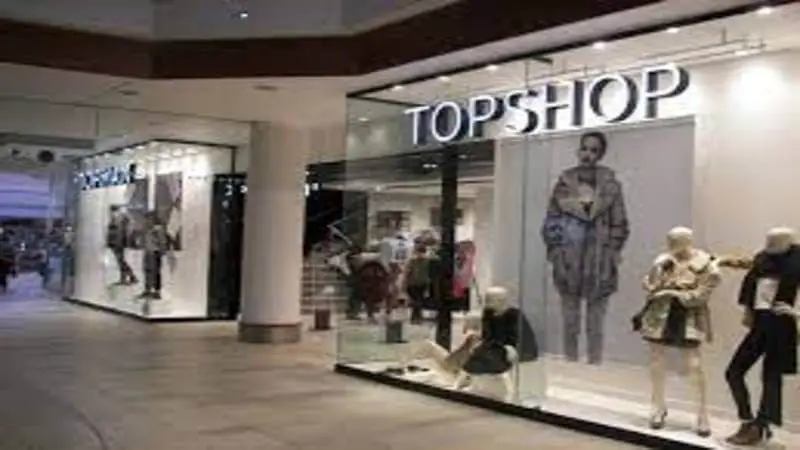
The collapse had a profound impact on Topshop’s identity. For decades, the brand’s mission and vision had been inseparable from its physical retail experience. The Oxford Circus flagship, opened in its expanded form in 2004, was not merely a store—it was an experiential environment that hosted DJ sets, styling events, personal shopping consultations, and in-store beauty services. The mission of democratizing fashion was enacted through a physical space that made visitors feel they were participating in culture, not merely purchasing garments. The loss of that space, and all 300-plus Topshop and Topman stores alongside it, fundamentally altered what the brand could credibly claim as its purpose.
The ASOS Acquisition and Topshop’s Digital Rebirth
ASOS’s acquisition of Topshop in February 2021 was structured as a brand-and-inventory purchase rather than a business acquisition. ASOS bought the intellectual property—the brand names, customer databases, and existing stock—but did not take on the stores, the leases, or the vast majority of the workforce. This distinction is critical for understanding the mission and vision that would follow. ASOS was not acquiring a retailer; it was acquiring a set of brand assets to be redeployed within an existing digital infrastructure.
From a strategic perspective, the acquisition gave ASOS something it had long lacked: owned brands with genuine cultural heritage and consumer recognition. ASOS had built its platform as a multi-brand marketplace supplemented by its own-label products, but its own brands did not carry the emotional resonance or fashion credibility of Topshop. By folding Topshop into its portfolio, ASOS gained a brand that consumers associated with quality, trend authority, and British fashion identity—attributes that are expensive to build from scratch and relatively inexpensive to maintain once established.
The integration has not been without challenges. ASOS has had to determine how much autonomy the Topshop brand should retain within the broader ASOS experience. Early decisions suggested a relatively tight integration: Topshop products are sold on the ASOS platform alongside thousands of other brands, with no standalone Topshop e-commerce destination. This means the brand’s ability to control its own customer journey—from discovery through purchase to post-sale engagement—is mediated entirely by the ASOS interface. The mission of being “fashion-forward” must now be communicated within the constraints of a marketplace product listing rather than through the immersive environment of a flagship store.
ASOS has also experimented with limited physical retail partnerships to restore some element of tangibility to the brand. A notable collaboration with Nordstrom, announced in late 2021, brought Topshop products into select Nordstrom locations in the United States, providing a physical touchpoint for American consumers. However, these partnerships remain secondary to the digital-first strategy and have not fundamentally altered the brand’s operational model.
The Online-Only Transition and What It Means for Brand Purpose
Topshop’s transition from a physical retail network to an exclusively online brand raises foundational questions about what a fashion brand’s mission can and should encompass in a digital-only context. When a brand exists solely as a collection of product listings on a third-party platform, the traditional mechanisms of mission delivery—store design, staff training, in-person customer service, community events—are no longer available. The mission must be delivered through product design, visual merchandising within a digital interface, social media presence, and the intangible qualities of brand storytelling.
This transition has forced Topshop to reckon with a question that many digitally native brands never have to ask: what happens when the experience is stripped away and only the product remains? For brands born online—such as ASOS itself, or competitors like Boohoo and PrettyLittleThing—the product-as-brand equation is native and unquestioned. For Topshop, which spent decades cultivating an experience that extended well beyond the garments themselves, the reduction to product-only represents a genuine loss of brand dimension.
The vision statement’s emphasis on “digital-first experiences” represents an attempt to address this gap. Rather than conceding that the online-only format is inherently less experiential, the vision frames digital as a medium through which new forms of experience can be created. In practice, this has manifested in ASOS’s investment in styling tools, virtual try-on technology, and social commerce features that attempt to recreate some of the discovery and curation that physical retail once provided. Whether these digital tools can truly substitute for the sensory richness of a well-designed store remains an open question, but the strategic intent is clear: Topshop’s digital experience should feel like more than a transaction.
British High Street Fashion Legacy and Topshop’s Cultural Significance
To understand the weight carried by Topshop’s mission and vision, one must appreciate the brand’s role within the broader narrative of British high street fashion. The British high street—a term referring to the main commercial thoroughfares of towns and cities across the United Kingdom—has served as both a retail ecosystem and a cultural institution for over a century. Brands like Marks & Spencer, Next, and Topshop did not merely sell clothing; they shaped how ordinary British consumers understood and participated in fashion.
Topshop’s particular contribution was the introduction of a fast, design-led sensibility into the high street context. Before Topshop’s rise in the 1990s and 2000s, affordable fashion in the United Kingdom tended to be either basic and utilitarian or derivative and poorly executed. Topshop changed this by hiring talented young designers, investing in trend forecasting, and creating a store environment that felt aspirational rather than purely functional. The brand made it possible for a university student to dress in a way that reflected genuine fashion awareness without requiring a designer budget.
This cultural role is central to understanding why Topshop’s mission and vision matter beyond the commercial context. When the mission speaks of “accessible prices” and “fashion-forward style,” it is invoking a legacy that shaped British popular culture, influenced street style globally, and launched the careers of designers who went on to lead major fashion houses. The brand’s vision of being “the world’s most influential high street fashion brand” is not merely a commercial aspiration—it is a claim on cultural heritage.
The challenge, of course, is that cultural heritage is difficult to maintain in the absence of the institutions that created it. The Oxford Circus flagship, the London Fashion Week shows, the Kate Moss collaboration launches that generated queues around the block—these were the mechanisms through which Topshop built and sustained its cultural capital. Without them, the brand must find new ways to assert cultural relevance, and neither the mission nor the vision yet provides a clear blueprint for how this will be achieved.
Competing in the Fast Fashion Landscape of 2026
The competitive environment in which Topshop now operates bears little resemblance to the one in which its mission and vision were originally conceived. The fast fashion landscape of 2026 is dominated by players that did not exist or were marginal when Topshop was at its peak. Shein, the Chinese ultra-fast fashion platform, has reshaped consumer expectations around price, variety, and speed in ways that make even the most aggressive traditional fast fashion retailers appear slow and expensive by comparison. Temu and similar platforms have further compressed pricing expectations at the entry level of the market.
At the same time, the middle market that Topshop historically occupied has been squeezed from above by the “masstige” strategies of brands like COS, & Other Stories, and Arket—all owned by the H&M Group—which offer elevated design and quality at moderate premiums. Zara, which operates on a vertically integrated model that gives it unmatched speed-to-market capabilities, continues to set the pace for trend-responsive fashion at accessible price points. For context on how Zara articulates its own strategic direction, the Zara mission and vision statement analysis provides a useful comparison.
Topshop’s mission of delivering “latest trends” and “fashion-forward style” at “accessible prices” describes a value proposition that multiple competitors now deliver with greater operational efficiency. Shein can move from design to delivery in as few as ten days. Zara’s integrated supply chain allows it to refresh store inventory twice weekly. Against these benchmarks, Topshop’s trend responsiveness—now mediated through ASOS’s supply chain rather than its own—must work harder to remain credible.
The competitive picture is further complicated by the rise of resale and secondhand platforms such as Vinted, Depop, and ThredUp, which offer consumers access to fashion at even lower price points while simultaneously addressing sustainability concerns. For price-sensitive younger consumers who are also environmentally conscious, the combination of lower cost and reduced environmental impact makes secondhand shopping an increasingly attractive alternative to purchasing new fast fashion—regardless of the brand.
What Topshop retains that these competitors largely lack is a brand identity with genuine emotional resonance. Shein has scale but no soul. Temu has price but no prestige. Zara has efficiency but maintains a deliberately austere brand personality. Topshop, by contrast, carries associations with creativity, cultural participation, and a specific form of British cool that has global appeal. The question facing the brand is whether these associations can be sustained and monetized in the absence of the retail infrastructure that originally created them.
The answer, to the extent that the mission and vision provide one, is that Topshop must lean into differentiation through design credibility and curation rather than competing on speed or price. This is a defensible strategy—provided the brand invests sufficiently in the design talent and creative direction required to maintain genuine trend authority. A Topshop that merely follows trends identified by algorithm, as many digital-native fast fashion brands do, will be indistinguishable from its competitors. A Topshop that shapes trends through distinctive design choices and culturally resonant storytelling has a viable path to relevance. The mission and vision, as currently articulated, gesture toward the latter but do not yet commit to it with sufficient specificity.
For readers interested in how other fashion retailers navigate similar competitive dynamics, the Forever 21 mission statement analysis offers a cautionary parallel—another brand that experienced dramatic decline and acquisition after failing to adapt to shifting market conditions.
Final Assessment
Topshop’s mission and vision statements reflect a brand in transition. The mission retains the core elements that defined Topshop during its era of physical retail dominance—trend authority, youth focus, and price accessibility—but has not evolved to account for the fundamental changes in how the brand operates, competes, and reaches its audience. It is a statement that describes what Topshop sells without addressing how or why the brand remains relevant in a market that has moved dramatically since the statement was first articulated.
The vision is more forward-looking and more interesting. Its emphasis on influence over scale, digital-first experience, and generational relevance suggests a strategic awareness of both the brand’s strengths and its constraints. However, the vision is undermined by the gap between its ambition and the operational reality of functioning as one brand within a multi-brand platform, without the standalone infrastructure or investment required to pursue global cultural influence independently.
Both statements share two significant omissions. The first is sustainability: in 2026, a fashion brand targeting consumers under 30 that makes no reference to environmental or social responsibility in its foundational statements is making an implicit choice that will not go unnoticed. The second is differentiation: neither the mission nor the vision articulates what makes Topshop distinct from the dozens of other brands making similar promises about trends, accessibility, and style. The British design heritage, the cultural legacy, the creative credibility that once made Topshop a genuine cultural institution—none of this appears in the formal strategic language.
What Topshop needs, and what its mission and vision do not yet provide, is a strategic narrative that bridges heritage and future. The brand possesses something rare: genuine cultural capital accumulated over six decades of shaping British fashion. It also faces something daunting: the need to translate that capital into digital-age relevance without the physical spaces, standalone operations, or independent resources that originally created it. A revised mission might explicitly claim the brand’s British design heritage as a differentiator. A revised vision might define influence in concrete terms—perhaps through creative partnerships, designer collaborations, or cultural initiatives that extend the brand’s presence beyond the ASOS product page.
As it stands, Topshop’s mission and vision are functional but insufficient. They describe a brand that sells trendy, affordable fashion to young women online. They do not describe a brand that shaped British culture, survived corporate collapse, and is attempting one of the most ambitious reinventions in modern retail history. The story is far more compelling than the statements suggest, and the gap between the two represents both a weakness and an opportunity.
For a broader perspective on how leading companies articulate strategic purpose, the comprehensive directory of top companies with mission and vision statements offers valuable comparative context.