
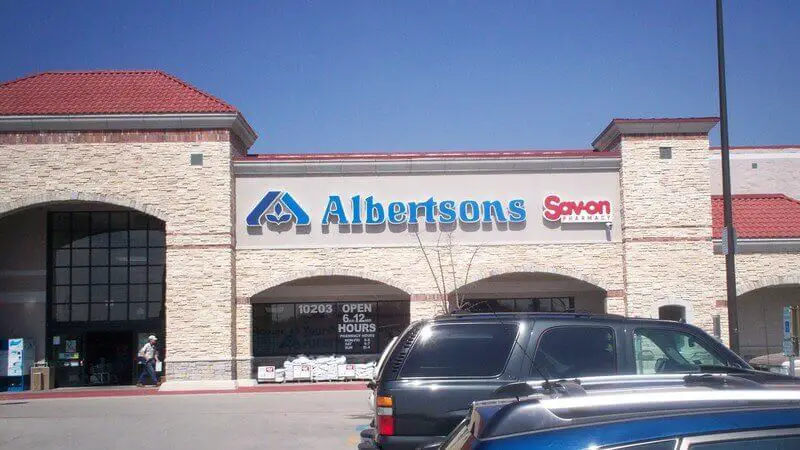
Albertsons Mission Statement Analysis (2026)
Albertsons Companies, Inc. stands as the second-largest supermarket chain in the United States, operating more than 2,200 stores under a portfolio of well-known banners including Safeway, Vons, Jewel-Osco, Shaw’s, Acme, Tom Thumb, and its namesake Albertsons. The company employs roughly 290,000 associates across 34 states and the District of Columbia, generating annual revenues that consistently exceed $75 billion. In an industry defined by razor-thin margins, relentless competition from Walmart, Kroger, Costco, and Amazon, and rapidly shifting consumer expectations around digital convenience, Albertsons has had to articulate a corporate identity that justifies the complexity of managing so many regional brands under a single corporate umbrella.
The past several years have been especially turbulent for Albertsons. The proposed $24.6 billion merger with Kroger, announced in October 2022, consumed enormous executive attention before ultimately collapsing in late 2024 after federal and state regulators blocked the deal. With that chapter closed, Albertsons has been forced to chart an independent path forward, making its mission and vision statements more consequential than ever. These statements must now communicate a standalone strategic identity to investors, employees, suppliers, and customers alike.
This analysis examines the mission and vision statements of Albertsons Companies, evaluating their strategic clarity, competitive relevance, and capacity to guide the organization through a period of significant industry transformation.
Albertsons Mission Statement
Albertsons Companies articulates its mission through the following statement:
“To bring people together around the joys of food and to inspire well-being, one meal at a time.”
This mission statement positions Albertsons not merely as a retailer of grocery products but as a facilitator of human connection and health. The language deliberately reaches beyond transactional commerce, attempting to imbue everyday grocery shopping with deeper emotional and social significance. It reflects a broader industry trend in which major food retailers have moved away from purely operational or price-driven mission language toward statements that emphasize purpose and lifestyle.
Strengths of the Mission Statement
The mission statement succeeds on several fronts. First, the phrase “bring people together around the joys of food” taps into a genuine human truth. Meals remain one of the few daily rituals that reliably gather families, friends, and communities. By anchoring the mission in this social function, Albertsons elevates its brand above the commodity-driven perception that plagues many grocery chains. The language implies that Albertsons stores are not just places to buy ingredients but entry points to meaningful shared experiences.
Second, the inclusion of “inspire well-being” broadens the mission beyond indulgence or convenience. This phrase provides strategic cover for the company’s investments in organic and natural product lines, its pharmacy operations across hundreds of locations, and its growing emphasis on health-oriented private-label brands such as O Organics and Open Nature. In a market where consumer demand for better-for-you products continues to accelerate, this portion of the mission statement aligns corporate purpose with a demonstrably profitable trend.
Third, “one meal at a time” introduces a useful sense of modesty and incrementalism. Rather than making grandiose claims about transforming the food system or revolutionizing nutrition, the statement acknowledges that meaningful impact happens at the individual and household level. This specificity lends the statement a degree of authenticity that broader, more ambitious language might undermine.
Weaknesses of the Mission Statement
Despite these merits, the mission statement suffers from meaningful strategic deficiencies. The most significant is its complete interchangeability. Nothing in the statement distinguishes Albertsons from Kroger, Publix, H-E-B, or any other large grocery chain. A competitor could adopt this exact language without altering a single word. For a company that operates more than twenty distinct retail banners and serves wildly different regional markets, the absence of any differentiating characteristic is a missed opportunity.
The statement also fails to address the operational reality that defines Albertsons as a business. The company’s multi-banner strategy is arguably its most distinctive organizational feature, yet the mission makes no reference to local relevance, regional identity, or the diversity of communities served. A statement such as “bringing people together around the joys of food in every neighborhood we serve” would at least gesture toward the localized nature of the business without sacrificing elegance.
Furthermore, the mission contains no reference to digital commerce, omnichannel convenience, or technological innovation. By 2026, grocery e-commerce penetration has reached meaningful scale, and Albertsons has invested heavily in its DriveUp & Go curbside service, its Albertsons Media Collective advertising platform, and its partnership with DoorDash and Instacart for last-mile delivery. None of these strategically critical investments are even implicitly supported by a mission statement focused exclusively on communal meals and well-being.
Finally, the word “inspire” introduces a degree of vagueness that weakens the statement. Inspiration is inherently passive and difficult to measure. A grocery company can stock healthier products, offer nutritional information, provide cooking classes, or price fresh produce competitively. Whether any of these actions “inspire” well-being depends entirely on the subjective experience of the customer, making it nearly impossible to hold the organization accountable to this particular aspiration.
Albertsons Vision Statement
Albertsons Companies communicates its forward-looking ambition through the following vision:
“To be a food and drug retailer that creates customer value through innovation, great people, and a commitment to our local communities.”
Where the mission statement speaks to emotional purpose, the vision statement addresses operational aspiration. It identifies three pillars — innovation, people, and community — as the mechanisms through which Albertsons intends to create value. The explicit mention of “food and drug” also acknowledges the company’s significant pharmacy business, which operates in-store pharmacies across the majority of its locations.
Strengths of the Vision Statement
The vision statement improves upon the mission in several respects. The phrase “creates customer value” is commercially grounded and measurable. Customer value can be tracked through pricing competitiveness, product selection, shopping convenience, loyalty program engagement, and service quality. By making value creation the central objective, the vision statement provides a functional North Star that business units and store managers can translate into daily operational decisions.
The inclusion of “innovation” as a named priority is strategically appropriate. Albertsons has made substantial investments in its digital ecosystem, including the proprietary Albertsons Media Collective retail media network, which monetizes first-party shopper data for consumer packaged goods advertisers. The company has also expanded its use of artificial intelligence for demand forecasting, personalized promotions through its loyalty programs (notably the “for U” platform), and micro-fulfillment technology. Naming innovation in the vision statement provides top-down legitimacy for these investments and signals to the workforce that technology adoption is a strategic imperative rather than a peripheral experiment.
The reference to “great people” is not merely perfunctory. In an industry where labor turnover rates frequently exceed 60 percent annually, workforce quality represents a genuine competitive differentiator. Albertsons has faced the same hiring and retention challenges as the broader retail sector, and elevating associates to a pillar of the vision statement at least signals institutional awareness that employee experience directly affects customer experience.
Perhaps most importantly, the phrase “commitment to our local communities” directly supports the multi-banner strategy. By explicitly naming community orientation as a strategic priority, the vision statement justifies maintaining regional brands like Jewel-Osco in Chicago, Safeway in the Pacific Northwest, and Vons in Southern California rather than consolidating everything under a single national banner. Local commitment is not just a philanthropic gesture; it is the commercial logic behind the entire organizational structure.
Weaknesses of the Vision Statement
The vision statement, however, is not without shortcomings. The phrase “to be a food and drug retailer” sets an extraordinarily low bar for ambition. The company already is a food and drug retailer. A vision statement should articulate where the organization aspires to go, not describe what it currently does. Compare this with the aspirational language used by competitors: Walmart’s vision speaks to helping people save money and live better, while Costco’s statement emphasizes continually providing members with quality goods at the lowest possible prices. Both of these communicate an ongoing aspiration rather than a static identity.
The vision also lacks any temporal or competitive framing. It does not specify what kind of food and drug retailer Albertsons aspires to become. The best? The most innovative? The most trusted? The most locally relevant? Without a qualifier, the statement reads as a description of the status quo rather than a destination worth striving toward.
Additionally, the three pillars of innovation, people, and community, while individually sound, are presented without hierarchy or prioritization. When everything is a priority, nothing is a priority. A more effective vision statement might identify a single defining aspiration and allow the supporting elements to flow from it. For instance, if local community relevance is truly the strategic differentiator, the vision could center on becoming the most trusted local food retailer in every market served, with innovation and people excellence as enablers of that goal.
The Kroger Merger Saga and Its Impact on Corporate Identity
No analysis of Albertsons’ current strategic positioning would be complete without addressing the failed merger with Kroger, which dominated the company’s narrative from late 2022 through the end of 2024. When the two companies announced their proposed combination in October 2022, the deal was presented as a necessary response to the growing dominance of non-traditional grocery competitors, particularly Walmart, Amazon, and Costco. The merged entity would have operated approximately 4,900 stores and employed nearly 700,000 workers, creating a grocery behemoth with the scale to compete on pricing, technology investment, and supply chain efficiency.
The Federal Trade Commission filed suit to block the merger in February 2024, arguing that the combination would substantially lessen competition, particularly in markets where Albertsons and Kroger banners were direct competitors. Multiple state attorneys general joined the opposition. Despite the companies’ proposal to divest hundreds of stores to C&S Wholesale Grocers, regulators and consumer advocacy groups remained unconvinced that the divestitures would preserve meaningful competition. Federal judges granted preliminary injunctions, and by December 2024, both companies agreed to terminate the merger agreement. Albertsons subsequently filed a lawsuit against Kroger, alleging that Kroger had failed to make sufficient efforts to secure regulatory approval.
The merger’s collapse left Albertsons in a peculiar strategic position. For more than two years, the company’s leadership had publicly argued that a standalone Albertsons could not effectively compete against larger, better-capitalized rivals. The mission and vision statements, crafted for an independent Albertsons, now had to carry even more weight. They needed to convince investors that the company possessed a coherent standalone strategy, reassure employees whose futures had been uncertain throughout the merger review, and signal to customers that service quality and store investment would continue despite the organizational distraction.
In this context, the existing statements feel insufficient. A company emerging from a failed merger that publicly questioned its own viability as an independent entity needs mission and vision language that aggressively asserts competitive confidence. The current statements, while inoffensive, do not project the strategic conviction that the moment demands.
The Multi-Banner Strategy: Complexity as Competitive Advantage
Albertsons’ most structurally distinctive characteristic is its operation of more than twenty retail banners across the country. This portfolio approach stands in marked contrast to competitors like Kroger, which has gradually consolidated most of its acquisitions under the Kroger name, or Walmart, which operates virtually all domestic locations under a single brand. Understanding whether the Albertsons mission and vision statements adequately support this strategy requires examining why the company maintains so many distinct brands in the first place.
The answer lies in the deeply local nature of grocery shopping. Safeway is not merely a name; it carries decades of brand equity in Northern California, the Pacific Northwest, and the Rocky Mountain states. Jewel-Osco is a Chicago institution with emotional resonance that no corporate rebrand could replicate. Vons holds a similar position in Southern California. Shaw’s and Star Market serve New England with a regional identity that a national brand would dilute. Acme anchors the mid-Atlantic. Each of these banners represents a repository of local trust, supplier relationships, and community engagement that would be destroyed, not enhanced, by consolidation.
The vision statement’s reference to “commitment to our local communities” is the closest the company comes to acknowledging this strategy in its foundational language. Yet it stops far short of celebrating the multi-banner model as a source of competitive differentiation. A more strategically aligned vision might explicitly recognize that local identity, supported by national-scale resources, represents the company’s unique value proposition in the market.
The operational challenge, of course, is that maintaining twenty-plus brands creates significant overhead in marketing, merchandising, and supply chain management. Albertsons must balance the local relevance of individual banners against the efficiency gains that consolidation would provide. The mission and vision statements should ideally speak to this tension, articulating why the company believes the benefits of local identity outweigh the costs of organizational complexity. In their current form, they do neither.
Competitive Landscape: Positioning Against Industry Giants
The grocery industry in 2026 is defined by a competitive intensity that would have been difficult to imagine even a decade ago. Albertsons faces pressure from virtually every direction, and its mission and vision statements must be evaluated against this landscape.
Walmart remains the largest grocery seller in the United States by a wide margin, using its massive general merchandise business to subsidize aggressive food pricing. Walmart’s ability to offer groceries as part of a one-stop shopping experience, combined with its enormous investments in pickup, delivery, and the Walmart+ membership program, creates a competitive threat that Albertsons cannot match on price or convenience alone.
Costco continues to grow its grocery business through its membership warehouse model, offering bulk quantities at prices that traditional supermarkets struggle to match. Costco’s Kirkland Signature private label has become one of the most trusted brands in American retail, and its food court and prepared foods offerings drive foot traffic that benefits the entire store.
Amazon, through Whole Foods Market and its Amazon Fresh banner, brings virtually unlimited capital and the most sophisticated e-commerce infrastructure in the world to the grocery sector. While Amazon has struggled to achieve consistent profitability in physical grocery retail, its willingness to absorb losses in pursuit of market share and its ability to integrate grocery with Prime membership benefits make it a persistent and unpredictable competitor.
Kroger, now freed from the distraction of the merger process, represents arguably the most direct competitive threat. With approximately 2,700 stores, a mature digital platform, and a retail media business that has gained significant traction, Kroger shares much of Albertsons’ geographic footprint and customer demographic. The post-merger competitive dynamic between the two companies will be closely watched by industry analysts.
Regional powerhouses such as H-E-B in Texas, Publix in the Southeast, and Wegmans in the Northeast add further competitive pressure in specific markets. These companies are known for exceptional customer service, strong private-label programs, and deep community roots — precisely the attributes that Albertsons’ mission and vision statements claim to prioritize.
Against this backdrop, the generic quality of Albertsons’ mission and vision language is a strategic liability. When competitors with stronger brand identities and clearer strategic narratives are fighting for the same customers, vague statements about bringing people together and creating customer value do not provide a compelling reason for shoppers to choose an Albertsons banner over the alternatives. The statements need to answer a fundamental question that they currently sidestep: Why should a customer choose Safeway over Kroger, or Jewel-Osco over Mariano’s, or Vons over Ralphs?
Digital Transformation and the Omnichannel Imperative
Albertsons has invested aggressively in digital capabilities over the past several years, and these investments represent some of the most strategically significant decisions the company has made. Yet neither the mission nor the vision statement meaningfully addresses the digital dimension of the business.
The company’s DriveUp & Go curbside pickup service has been rolled out across the vast majority of its store network. Online ordering through both proprietary apps and third-party platforms like Instacart and DoorDash has grown substantially. The Albertsons Media Collective, the company’s retail media network, has become a meaningful revenue stream by allowing consumer packaged goods companies to target advertising based on Albertsons’ first-party shopper data. This business carries significantly higher margins than traditional grocery retail and has been identified by leadership as a key growth driver.
The “for U” loyalty platform, which operates across all Albertsons banners with local branding adaptations, uses data analytics and machine learning to deliver personalized offers, digital coupons, and rewards to tens of millions of registered users. This platform serves dual purposes: it drives customer retention and basket size while generating the data that fuels the retail media business. The strategic importance of this flywheel cannot be overstated.
Albertsons has also explored micro-fulfillment center technology, automated picking systems within existing stores, and partnerships with technology providers to improve last-mile delivery economics. These investments are essential for defending market share against Amazon and Walmart, both of which can leverage massive logistics networks to offer grocery delivery at lower cost.
The vision statement’s mention of “innovation” is the only element that even tangentially supports these digital initiatives. A single word is inadequate to describe a strategic transformation that involves billions of dollars in technology investment, fundamental changes to the customer experience, and the creation of entirely new business models like retail media. For a company whose future competitiveness depends significantly on its ability to execute a digital strategy, this omission is substantial.
Consider how differently a vision statement would read if it explicitly embraced the omnichannel reality: “To be the most locally trusted and digitally connected food and drug retailer in every community we serve.” Such language would signal to employees, investors, and partners that digital capability is not an afterthought but a core element of the company’s identity.
Private Label Strategy and Brand Differentiation
One area where Albertsons has built genuine differentiation is its portfolio of private-label brands. The Own Brands division encompasses a range of labels including O Organics, Open Nature, Signature Select, Lucerne, and Waterfront Bistro, among others. Collectively, these brands generate billions of dollars in annual revenue and carry significantly higher margins than equivalent national brand products.
O Organics, in particular, has become one of the largest organic brands in the United States, offering hundreds of products across categories from dairy to snacks to frozen meals. Open Nature serves the growing market for natural and clean-label products without full organic certification. Signature Select provides a quality-tier alternative to national brands at a lower price point. These brands represent real intellectual property and genuine competitive advantages that are difficult for competitors to replicate.
The mission statement’s emphasis on “well-being” aligns naturally with the health-oriented positioning of O Organics and Open Nature. However, the connection is implicit rather than explicit, and the mission does not communicate the company’s role as a producer and curator of quality food products, not merely a distributor of other companies’ brands. As private label continues to grow in strategic importance across the grocery industry, Albertsons would benefit from mission language that acknowledges its identity as both a retailer and a food company.
Workforce and Labor Relations
Albertsons employs a heavily unionized workforce, with a significant majority of its store-level associates represented by the United Food and Commercial Workers (UFCW) union. This labor dynamic introduces both constraints and obligations that shape the company’s operations in ways that the mission and vision statements do not address.
The vision statement’s mention of “great people” is appropriate in principle but lacks specificity about what the company means by this phrase or how it intends to achieve it. In an industry where starting wages, scheduling predictability, health benefits, and career advancement opportunities are constant points of negotiation and public scrutiny, a more concrete commitment would carry greater credibility. Phrases like “investing in our people” or “building careers, not just jobs” would signal a more actionable commitment without sacrificing conciseness.
The Kroger merger process also highlighted labor concerns, as unions and worker advocacy groups expressed fears about potential job losses and store closures in overlapping markets. With the merger behind it, Albertsons has an opportunity to reinforce its commitment to its workforce as a source of competitive advantage. Stores with engaged, knowledgeable, and stable workforces consistently outperform those with high turnover on customer satisfaction metrics — a reality that the company’s foundational statements should acknowledge more directly.
Sustainability and Corporate Responsibility
Albertsons has established a formal corporate responsibility platform, “Recipe for Change,” organized around four pillars: Planet, People, Products, and Community. The company has set targets for greenhouse gas emissions reduction, food waste diversion, sustainable sourcing, and diversity and inclusion. These commitments are increasingly important to investors who evaluate companies through environmental, social, and governance (ESG) frameworks, as well as to younger consumers who factor corporate responsibility into purchasing decisions.
Neither the mission nor the vision statement references sustainability, environmental stewardship, or social responsibility. While not every company needs to embed ESG language into its foundational statements, the absence is notable for a company that operates enormous cold-chain logistics networks, generates significant food waste, and sources products from agricultural supply chains with meaningful environmental footprints. As stakeholder expectations around corporate responsibility continue to intensify, Albertsons may find that its mission and vision language increasingly fails to reflect the full scope of its commitments and obligations.
Final Assessment
Albertsons Companies possesses mission and vision statements that are competently constructed but strategically underweight. The mission statement — “to bring people together around the joys of food and to inspire well-being, one meal at a time” — is emotionally resonant and aligns with broad consumer trends around health and community. However, it lacks any distinguishing characteristic that would connect it specifically to Albertsons rather than to any other grocery retailer in the country.
The vision statement — “to be a food and drug retailer that creates customer value through innovation, great people, and a commitment to our local communities” — is more operationally grounded and benefits from its explicit mention of community commitment, which supports the multi-banner strategy. Yet it suffers from a lack of ambition, reading more as a description of the current business than as an aspirational destination.
Together, these statements fail to address several of the most strategically consequential dimensions of the business: the digital transformation that is reshaping customer expectations, the competitive pressures from Walmart, Amazon, Costco, and Kroger that threaten market share, the private-label portfolio that represents genuine differentiation, and the post-merger imperative to articulate a confident standalone identity.
For a company of Albertsons’ scale and complexity, operating in an industry as fiercely competitive as American grocery retail, foundational statements should do more than avoid offense. They should declare, with specificity and conviction, what makes the organization distinct, where it intends to go, and why its approach will prevail. On each of these counts, Albertsons’ current mission and vision statements fall short of what the moment requires.
Companies that have articulated more compelling strategic narratives through their foundational language — as explored in this collection of leading mission and vision statements — demonstrate that it is possible to be both concise and strategically specific. Albertsons would benefit from revisiting its statements with an eye toward the qualities that genuinely distinguish it: the unmatched breadth of its regional brand portfolio, the depth of its local community relationships, and its growing digital and data capabilities. Until the company’s mission and vision language reflects these realities, the statements will remain adequate but unremarkable — a description that, unfortunately, could also apply to the competitive position they are meant to strengthen.