
Does Sierra Mist Have Caffeine? (2026)
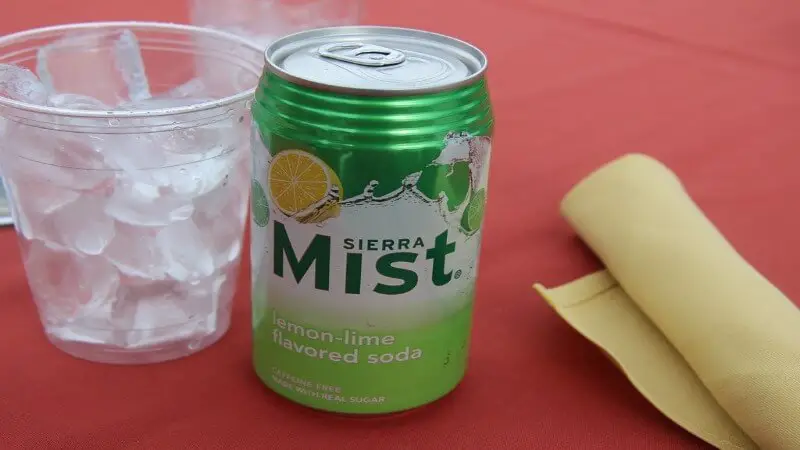
Sierra Mist, the lemon-lime soft drink that PepsiCo sold for over two decades, did not contain caffeine. The beverage was marketed as a caffeine-free alternative to colas and energy drinks from its launch in 1999 until its discontinuation in 2023. For those who enjoyed Sierra Mist specifically because it lacked caffeine, the good news is straightforward: its successor, Starry, carries forward that same caffeine-free formula philosophy.
This question remains relevant in 2026 because Sierra Mist built a loyal consumer base over its 24-year run, and many shoppers still search for it by name. Understanding what Sierra Mist contained, why PepsiCo retired it, and how its replacement stacks up against competing lemon-lime sodas requires a closer look at the brand history, ingredient profiles, and the broader caffeine landscape in carbonated beverages.
Sierra Mist Caffeine Content: The Direct Answer
Sierra Mist contained zero milligrams of caffeine per serving. This was true across every variant PepsiCo produced under the Sierra Mist name, including Sierra Mist Free (later renamed Sierra Mist Natural), the cranberry splash seasonal edition, and the standard formula that occupied grocery shelves for most of the brand’s lifespan. A 12-ounce can of Sierra Mist delivered approximately 140 calories, 39 grams of sugar, and 35 milligrams of sodium, but absolutely no caffeine.
The ingredient list for the standard Sierra Mist formula consisted of carbonated water, high fructose corn syrup, citric acid, natural flavor, potassium citrate, and potassium benzoate (a preservative). Notably absent from that list is any caffeine source, whether synthetic caffeine, guarana extract, or any other stimulant compound. PepsiCo never deviated from this caffeine-free positioning throughout the entire Sierra Mist product line.
For context, a standard 12-ounce can of Pepsi contains roughly 38 milligrams of caffeine, while Mountain Dew delivers about 54 milligrams per 12-ounce serving. Sierra Mist occupied a fundamentally different category within the PepsiCo portfolio. It served consumers who wanted a carbonated soft drink without the stimulant effect, making it a popular choice for evening consumption, for children, and for individuals who avoid caffeine for medical or personal reasons.
The Sierra Mist to Starry Transition
In January 2023, PepsiCo officially retired the Sierra Mist brand and replaced it with Starry, a new lemon-lime soda designed to compete more aggressively with Coca-Cola‘s Sprite. The decision was not impulsive. Sierra Mist had struggled to gain meaningful market share against Sprite for years, and PepsiCo executives concluded that a complete rebrand, rather than incremental reformulation, offered the best path forward.
Starry launched with a reformulated recipe that PepsiCo described as crisper and more refreshing than its predecessor. The branding targeted a younger demographic with bolder visual identity, a bright green color scheme, and marketing campaigns built around social media engagement. The company positioned Starry as a “born-on-social” brand, acknowledging that the lemon-lime soda category needed a fresh identity to resonate with Gen Z consumers.
The critical point for caffeine-conscious consumers is that Starry, like Sierra Mist before it, contains zero caffeine. A 12-ounce can of Starry delivers approximately 140 calories and 38 grams of sugar in its regular version, with a zero-sugar variant also available. The ingredient profile remains rooted in carbonated water, high fructose corn syrup, citric acid, natural flavors, and potassium benzoate. PepsiCo had no reason to introduce caffeine into a product category where caffeine absence is a defining characteristic.
Starry also arrived in two versions from launch: Starry (regular) and Starry Zero Sugar. Both versions maintain the caffeine-free status. This mirrors the broader industry trend of offering sugar-free alternatives without altering the caffeine profile, recognizing that consumers who choose lemon-lime sodas often do so precisely because these drinks sit outside the stimulant category.
PepsiCo’s decision to replace Sierra Mist rather than reformulate it speaks to the competitive dynamics of the lemon-lime soda market. The company had already attempted multiple reinventions of the brand. Sierra Mist became “Mist Twst” briefly in 2016 before reverting to the Sierra Mist name in 2018. None of these efforts closed the gap with Sprite, which has dominated the lemon-lime category for decades. Starry represented a clean break, a chance to build equity in a new name rather than continuing to rehabilitate an underperforming one. For more on how PepsiCo’s mission and vision guide these brand decisions, the company’s strategic framework reveals a consistent emphasis on bold portfolio moves.
How Sierra Mist and Starry Compare with Sprite and 7Up
The lemon-lime soda segment is a three-brand race in the United States, with Sprite (Coca-Cola), Starry (PepsiCo), and 7Up (Keurig Dr Pepper) occupying virtually all of the market share. All three products share the same caffeine-free status, which distinguishes them collectively from cola-based soft drinks.
From a nutritional standpoint, the three sodas are remarkably similar. A 12-ounce can of Sprite contains approximately 140 calories and 38 grams of sugar with zero caffeine. A 12-ounce can of 7Up delivers roughly 140 calories and 38 grams of sugar, also with zero caffeine. Starry matches these figures almost exactly. The caloric and sugar differences between the three products are negligible and fall well within normal variation between production batches.
Where the brands diverge is in their ingredient sourcing and flavor chemistry. Sprite uses sodium citrate as a buffer, while Starry relies on potassium citrate. 7Up includes calcium disodium EDTA as a preservative to protect flavor, a compound absent from both Sprite and Starry. These differences affect the subtle flavor profile of each drink but have no bearing on caffeine content. All three products are formulated without caffeine and have been since their respective launches.
The competitive dynamics between Sprite and 7Up shaped the environment into which Starry launched. Sprite has held the dominant position in the lemon-lime category since the 1990s, with 7Up maintaining a strong but secondary presence. Sierra Mist never achieved the market penetration of either competitor, which is precisely why PepsiCo chose to start fresh. Starry’s early performance suggests the strategy has gained some traction, though definitive market share data for 2026 will not be available until later this year.
All three brands also offer diet or zero-sugar variants. Sprite Zero Sugar, Starry Zero Sugar, and Diet 7Up all maintain caffeine-free formulas. This consistency across the category reinforces the point that caffeine absence is not a differentiator among lemon-lime sodas. It is a baseline requirement, a characteristic so fundamental to the category that no major manufacturer has attempted to challenge it.
Why Lemon-Lime Sodas Skip Caffeine
The absence of caffeine from lemon-lime sodas is not a coincidence or a marketing gimmick. It reflects a combination of historical precedent, flavor chemistry, consumer expectations, and strategic positioning that has remained consistent for over a century.
Caffeine was originally introduced to cola-based soft drinks because of its connection to the kola nut, one of the original flavoring agents in cola recipes dating back to the late 1800s. The kola nut naturally contains caffeine, and early cola formulations incorporated it as both a flavoring component and a mild stimulant. As cola recipes evolved and natural kola nut extract became less central to the flavor profile, synthetic caffeine was added to maintain the taste and effect that consumers had come to expect. Caffeine contributes a subtle bitterness to cola that many consumers associate with the category.
Lemon-lime sodas emerged from a different tradition entirely. 7Up, introduced in 1929, was originally marketed as “Bib-Label Lithiated Lemon-Lime Soda” and contained lithium citrate rather than caffeine. The product was positioned as a mood-stabilizing, soothing beverage, a stark contrast to the stimulant profile of colas. When lithium citrate was removed from the formula in 1948 following FDA guidance, 7Up leaned further into its identity as a clean, simple, caffeine-free alternative to colas. Sprite followed in 1961 with the same caffeine-free approach, and every subsequent lemon-lime soda, including Sierra Mist and Starry, has adhered to this convention.
From a flavor chemistry perspective, caffeine introduces a bitter note that complements the complex flavor profile of cola but clashes with the bright, tart character of lemon-lime. The citric acid and natural citrus flavors in lemon-lime sodas create a sharp, clean taste that caffeine’s bitterness would muddy. Beverage formulators have understood this for decades, and no major manufacturer has found a compelling reason to challenge the principle.
Consumer expectations also play a significant role. Over the past several decades, lemon-lime sodas have established themselves as the default caffeine-free option in the soft drink aisle. Parents give them to children. People drink them in the evening without concern about sleep disruption. Restaurants offer them as a mild, inoffensive option for guests who decline alcohol but want something more interesting than water. Introducing caffeine to a lemon-lime soda would undermine this established role and confuse consumers who have relied on the category’s caffeine-free status without checking labels.
There is also a strategic dimension. PepsiCo, Coca-Cola, and Keurig Dr Pepper all maintain caffeinated products in their portfolios. Pepsi, Coca-Cola Classic, and Dr Pepper serve the stimulant-seeking consumer. Mountain Dew and its competitors push caffeine content even higher. By keeping lemon-lime sodas caffeine-free, these companies ensure their portfolios cover both sides of the market. A caffeinated lemon-lime soda would cannibalize existing products rather than expand the addressable market.
Caffeine-Free Alternatives Beyond Lemon-Lime
Consumers who appreciated Sierra Mist’s caffeine-free status have options beyond the lemon-lime category. Understanding the broader landscape of caffeine-free soft drinks provides useful context for making informed beverage choices.
Root beer is almost universally caffeine-free. Brands such as A&W, Mug, and Barq’s (with the exception of the regular Barq’s formula, which does contain a small amount of caffeine) offer root beer without stimulants. Cream sodas, ginger ales, and most fruit-flavored sodas, including Fanta, Crush, and Sunkist (though Sunkist Orange is a notable exception, containing about 19 milligrams of caffeine per 12-ounce can), also fall into the caffeine-free category.
For those who prefer to stay within the PepsiCo ecosystem, several options exist alongside Starry. Mug Root Beer contains no caffeine. Neither does the Sierra Mist successor, Starry, as discussed. Caffeine-Free Pepsi and Caffeine-Free Diet Pepsi offer the cola taste without the stimulant, though these products can be harder to find in some retail markets.
Sparkling water brands such as Bubly (also a PepsiCo product), LaCroix, and Topo Chico provide carbonation and flavor without caffeine, sugar, or calories. These products have grown rapidly over the past decade and now occupy significant shelf space that once belonged exclusively to traditional soft drinks. For consumers whose primary motivation for drinking Sierra Mist was avoiding caffeine rather than enjoying a sweet lemon-lime flavor, sparkling waters represent a compelling alternative.
Final Assessment
Sierra Mist never contained caffeine during its entire production run from 1999 to 2023. Its replacement, Starry, continues this caffeine-free tradition. Both products align with the broader lemon-lime soda category, where caffeine absence is a universal standard maintained by every major manufacturer.
The transition from Sierra Mist to Starry did not alter the caffeine equation. PepsiCo reformulated the taste, redesigned the branding, and repositioned the product for a younger audience, but the company preserved the caffeine-free status that defines lemon-lime sodas as a category. Whether a consumer reaches for Starry, Sprite, or 7Up, the caffeine content will be the same: zero milligrams.
For anyone still searching grocery store shelves for Sierra Mist in 2026, the product no longer exists. Starry is the direct successor within PepsiCo’s portfolio, and it delivers a similar lemon-lime flavor experience without caffeine. The name changed. The branding changed. The fundamental promise of a caffeine-free lemon-lime soda did not.