
Frontier Airlines Mission Statement Analysis (2026)
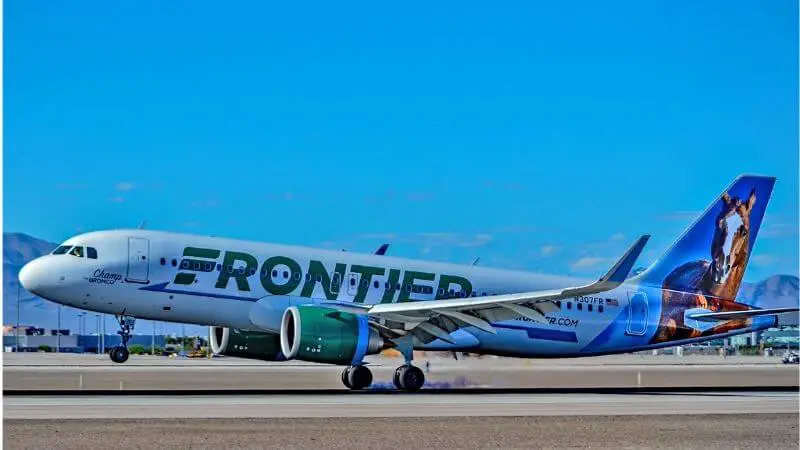
Frontier Airlines has carved out a distinctive position in the American aviation industry as an ultra-low-cost carrier (ULCC) headquartered in Denver, Colorado. Founded in 1994, the airline has undergone significant transformations over the decades, including a bankruptcy filing and subsequent relaunch under new ownership. Today, Frontier operates an extensive domestic and international route network, serving more than 100 destinations across the United States, Mexico, the Caribbean, and Central America. The airline is immediately recognizable by its fleet of Airbus aircraft, each adorned with images of animals on the tail fins, a branding choice that has become synonymous with the carrier’s identity.
In the competitive landscape of American aviation, Frontier occupies the ULCC segment alongside carriers such as Spirit Airlines and Allegiant Air. This positioning places the airline in direct contrast to legacy carriers like Delta Air Lines and American Airlines, as well as the hybrid low-cost model employed by Southwest Airlines. Understanding Frontier Airlines’ mission and vision statements provides critical insight into how the company defines its strategic objectives, differentiates itself from competitors, and communicates its value proposition to customers, employees, and shareholders.
This analysis examines Frontier Airlines’ mission statement, vision statement, and core values in detail. Each component is evaluated for clarity, strategic alignment, and effectiveness in guiding the organization. The analysis also considers how these guiding principles compare to those of other airlines operating in both the ULCC and broader commercial aviation sectors.
Frontier Airlines Mission Statement
Frontier Airlines articulates its mission with a statement that centers on affordability and accessibility. The airline’s mission statement is:
“To provide affordable travel across America and beyond, enabling more people to fly more often.”
This mission statement is concise, direct, and closely tied to the airline’s ultra-low-cost business model. It identifies two core objectives: making air travel affordable and expanding the pool of consumers who can access air transportation. The statement does not attempt to address service quality, operational excellence, or employee relations. Instead, it focuses narrowly on the economic dimension of air travel, which is consistent with the ULCC philosophy of stripping away bundled services to offer the lowest possible base fare.
Analysis of the Mission Statement
The mission statement succeeds in several important respects. First, it establishes a clear and measurable objective: affordability. Every strategic decision the airline makes, from fleet selection to route planning to ancillary revenue generation, can be evaluated against this standard. When Frontier chooses to operate a single aircraft type (the Airbus A320 family), it does so because fleet commonality reduces maintenance and training costs, which in turn supports the mission of affordable travel. When the airline charges separately for seat selection, carry-on bags, and beverages, these unbundling decisions are likewise consistent with the stated mission of keeping base fares as low as possible.
Second, the phrase “enabling more people to fly more often” introduces a democratization theme that elevates the mission beyond simple cost-cutting. It frames Frontier not merely as a discount airline but as an enabler of access. This language positions the airline as serving a social function by bringing air travel within reach of consumers who might otherwise rely on ground transportation or forgo travel entirely. The emphasis on frequency (“more often”) also suggests that Frontier views its role as stimulating demand rather than merely capturing existing market share from competitors.
However, the mission statement also has notable limitations. It makes no reference to safety, reliability, customer experience, or environmental responsibility. While brevity is a virtue in mission statements, the absence of any qualitative dimension leaves the statement somewhat one-dimensional. A consumer reading this mission might reasonably conclude that Frontier is exclusively focused on price, with little regard for the overall travel experience. In a competitive environment where even budget carriers are increasingly expected to demonstrate environmental consciousness and baseline service standards, this omission may become a strategic liability.
The geographic scope indicated by “across America and beyond” is appropriately broad. It acknowledges Frontier’s domestic foundation while signaling international ambitions. This language provides strategic flexibility, allowing the airline to expand into new markets without outgrowing its stated mission. Compared to more geographically restrictive mission statements, this phrasing gives Frontier room to evolve.
Frontier Airlines Vision Statement
Frontier Airlines’ vision statement articulates a forward-looking aspiration for the company’s trajectory in the aviation industry. The vision statement is:
“To be the most successful ultra-low-cost carrier in the Americas, delivering low fares done right.”
This vision statement establishes a clear competitive benchmark: dominance within the ULCC segment. Rather than aspiring to become the largest airline overall or the most profitable carrier in all categories, Frontier defines success within a specific niche. The phrase “low fares done right” is particularly significant, as it implicitly acknowledges criticisms that have been leveled against ultra-low-cost carriers regarding hidden fees, poor customer service, and unreliable operations.
Analysis of the Vision Statement
The vision statement demonstrates several strategic strengths. By specifying the ULCC category, Frontier avoids the trap of defining itself against carriers with fundamentally different business models. The airline is not competing with Delta Air Lines on premium cabin service or with Southwest Airlines on brand loyalty. Instead, it is competing within a clearly defined segment where cost structure and fare levels are the primary determinants of success. This focus provides organizational clarity and helps align resources toward a coherent strategic objective.
The geographic qualifier “in the Americas” is more specific than the mission statement’s “across America and beyond.” This specificity suggests that Frontier’s long-term vision is hemispheric rather than global. The airline does not appear to harbor ambitions of competing on transatlantic or transpacific routes, which would require different aircraft types, regulatory approvals, and operational capabilities. By constraining its geographic vision, Frontier signals a commitment to depth of coverage within its chosen markets rather than breadth of global reach.
The phrase “low fares done right” is the most intriguing element of the vision statement. It functions as both a promise and a rebuttal. The promise is that Frontier will deliver low fares in a manner that meets or exceeds customer expectations. The rebuttal is aimed at the perception, widespread among travelers and industry observers, that ultra-low-cost carriers deliver low fares accompanied by a degraded experience. By claiming to do low fares “right,” Frontier is asserting that affordability and acceptability are not mutually exclusive.
This is an ambitious claim, and it invites scrutiny. Customer satisfaction surveys, on-time performance data, and complaint records from the Department of Transportation all provide empirical measures against which this aspiration can be tested. If Frontier consistently underperforms on these metrics relative to its ULCC peers, the vision statement risks becoming aspirational to the point of incredulity. Conversely, if the airline can demonstrate measurable improvement in customer experience while maintaining its cost advantage, the vision statement becomes a powerful differentiator.
One limitation of the vision statement is its lack of a temporal dimension. There is no indication of when Frontier expects to achieve this vision or what milestones would mark progress toward it. Effective vision statements often incorporate a sense of urgency or a time horizon that galvanizes organizational effort. Without such a framework, the vision risks becoming a permanent aspiration rather than a driving force for strategic action.
Core Values of Frontier Airlines
Frontier Airlines operates according to a set of core values that inform its corporate culture, hiring practices, and operational decisions. These values provide the behavioral framework through which the mission and vision are executed on a daily basis. The airline’s core values include:
Safety First: Frontier identifies safety as its paramount concern. This value is standard across the aviation industry and reflects both regulatory requirements and genuine organizational commitment. Every commercial airline lists safety as a core value, but the emphasis varies in practice. For Frontier, this value is essential to counterbalancing the cost-focused nature of its business model. Stakeholders need assurance that the pursuit of low costs does not extend to maintenance, training, or operational safety.
Low Costs, Low Fares: This value explicitly links operational efficiency to customer benefit. It asserts that cost discipline is not merely an internal financial objective but a means of delivering value to travelers. The phrasing reinforces the connection between Frontier’s business model and its customer promise. By framing cost management as a value rather than simply a strategy, the airline embeds frugality into its organizational identity.
Customer Focus: Frontier expresses commitment to understanding and meeting customer needs. In the ULCC context, customer focus takes on a particular meaning. It does not necessarily mean providing complimentary amenities or spacious seating. Rather, it means understanding what budget-conscious travelers prioritize, which is primarily low fares and reliable transportation from point A to point B, and delivering on those specific expectations. This value acknowledges that different customer segments have different definitions of good service.
Respect and Integrity: This value addresses interpersonal and ethical dimensions of the airline’s operations. It applies to interactions with customers, employees, business partners, and communities. In an industry that frequently generates consumer complaints, particularly within the ULCC segment, a stated commitment to respect and integrity sets a behavioral standard against which the organization can be held accountable.
Positive Team Spirit: Frontier emphasizes collaboration and a constructive workplace culture. This value is particularly important in the airline industry, where operational success depends on coordination among pilots, flight attendants, ground crew, dispatchers, and administrative staff. A positive team environment contributes to employee retention, which in turn reduces training costs and supports the airline’s low-cost structure.
Taken together, these core values create a reasonably comprehensive framework for organizational behavior. They address safety, economics, customer relations, ethics, and workplace culture. However, they do not explicitly address environmental sustainability or community engagement, which are increasingly important dimensions of corporate responsibility in the aviation sector. As environmental regulations tighten and consumer expectations evolve, Frontier may find it necessary to expand its stated values to include ecological stewardship.
Strengths of Frontier Airlines’ Mission and Vision
Strengths
Clarity of Purpose: Perhaps the greatest strength of Frontier’s mission and vision statements is their clarity. There is no ambiguity about what Frontier is trying to accomplish or how it defines success. The airline exists to provide affordable air travel, and it aspires to be the best ultra-low-cost carrier in the Americas. This clarity provides a stable foundation for strategic planning, resource allocation, and performance measurement. Every employee, from the CEO to a gate agent, can understand and articulate what the airline is trying to achieve.
Strategic Consistency: The mission, vision, and core values are internally consistent. There are no contradictions between the airline’s stated purpose and its aspirations. The mission emphasizes affordability, the vision emphasizes ULCC leadership, and the core values include low costs as an organizational principle. This consistency reduces the risk of strategic confusion and ensures that different parts of the organization are pulling in the same direction.
Market Differentiation: By explicitly identifying as an ultra-low-cost carrier, Frontier avoids the identity crisis that afflicts airlines attempting to serve multiple market segments simultaneously. The airline does not pretend to offer a premium product, and it does not apologize for its unbundled pricing model. This honesty, while sometimes uncomfortable for consumers accustomed to all-inclusive pricing, provides a clear basis for customer expectations. Travelers who choose Frontier know what they are getting, and the mission and vision statements reinforce this transparency.
Democratization Theme: The mission statement’s emphasis on enabling “more people to fly more often” taps into a powerful narrative about economic inclusion. Air travel has historically been associated with affluence, and airlines that can credibly claim to make flying accessible to broader populations occupy a morally resonant position. This democratization theme can serve as a source of employee pride and public goodwill, provided the airline delivers on its promise of genuinely affordable fares.
Competitive Self-Awareness: The vision statement’s focus on being the best ULCC rather than the best airline overall demonstrates a sophisticated understanding of competitive positioning. Frontier recognizes that it operates in a specific segment and defines success accordingly. This self-awareness prevents the organization from overextending its resources in pursuit of unrealistic objectives and keeps strategic attention focused on the competitive dynamics that matter most to the airline’s survival and growth.
Weaknesses
Narrow Scope: The mission and vision statements are almost exclusively focused on price. While affordability is undeniably central to Frontier’s value proposition, a mission statement that ignores service quality, reliability, and innovation creates a one-dimensional organizational identity. Competitors like Southwest Airlines have demonstrated that it is possible to combine low fares with a strong service culture, and Southwest’s mission statement reflects this broader ambition. Frontier’s narrow focus on price may limit its ability to attract customers who value affordability but also expect a baseline standard of service.
Absence of Environmental Commitment: In an era of growing concern about aviation’s contribution to carbon emissions, the complete absence of environmental language in Frontier’s mission, vision, and core values is a significant gap. Ironically, Frontier has invested in fuel-efficient aircraft and has promoted itself as “America’s Greenest Airline” based on its fuel efficiency per passenger mile. Yet this environmental positioning is not reflected in the airline’s foundational statements. This disconnect between marketing claims and mission architecture suggests that sustainability has not been fully integrated into Frontier’s strategic identity.
Limited Aspirational Quality: Effective vision statements inspire and motivate. They paint a picture of a future state that is compelling enough to drive organizational effort. Frontier’s vision of being the most successful ULCC is competitively oriented but lacks emotional resonance. It tells stakeholders what the airline wants to achieve in market terms but does not articulate a broader purpose that might inspire discretionary effort from employees or loyalty from customers. Compare this to mission statements from airlines that speak of connecting people, enriching lives, or making the world more accessible, and Frontier’s vision feels transactional.
Customer Experience Gap: The phrase “low fares done right” in the vision statement is promising, but the mission statement and core values do not provide enough detail about what “done right” actually means. Without specific commitments to on-time performance, complaint resolution, or service standards, this phrase risks being perceived as marketing language rather than a genuine operational commitment. Customer review aggregators and government complaint data suggest that Frontier, like most ULCCs, faces persistent challenges with customer satisfaction. The gap between the vision’s promise and the customer’s experience represents a credibility risk.
No Innovation Dimension: The mission and vision statements make no reference to innovation, technology, or operational excellence. In an industry undergoing rapid technological transformation, from digital booking platforms to biometric boarding to sustainable aviation fuels, the absence of an innovation orientation is noteworthy. Airlines that embed innovation into their guiding principles signal to employees, investors, and partners that they are committed to continuous improvement. Frontier’s statements, by contrast, suggest an organization focused on maintaining its current model rather than evolving it.
Industry Context and Competitive Comparison
To fully appreciate Frontier Airlines’ mission and vision statements, it is necessary to situate them within the broader context of the American aviation industry. The domestic airline market is typically divided into three tiers: legacy carriers, low-cost carriers, and ultra-low-cost carriers. Each tier operates with a distinct business model, cost structure, and customer value proposition, and the mission statements of airlines within each tier tend to reflect these differences.
Legacy carriers such as Delta Air Lines and American Airlines typically craft mission statements that emphasize premium service, global connectivity, and operational excellence. These statements reflect the comprehensive nature of the legacy business model, which includes multiple cabin classes, extensive route networks, loyalty programs, and alliance partnerships. Delta’s mission, for instance, focuses on making every customer feel valued and delivering a world-class travel experience. This language would be incongruent with Frontier’s business model, which deliberately strips away many of the services that legacy carriers tout.
Southwest Airlines occupies the low-cost carrier space and has long been regarded as the gold standard for combining affordability with customer satisfaction. Southwest’s mission emphasizes warmth, friendliness, and individual pride, reflecting a corporate culture that prioritizes employee engagement as a driver of customer experience. Frontier’s mission and vision, by contrast, are more clinically focused on cost and market position. This difference highlights the philosophical divide between low-cost carriers, which typically include some level of service commitment in their guiding principles, and ultra-low-cost carriers, which tend to define value primarily in economic terms.
Spirit Airlines, Frontier’s most direct competitor in the ULCC space, provides perhaps the most instructive comparison. Spirit has historically positioned itself with mission language that emphasizes value and savings. The two airlines compete for many of the same customers and operate with similar unbundled pricing models. The failed merger attempt between Frontier and Spirit in 2022 underscored the competitive overlap between the two carriers. In terms of mission and vision architecture, both airlines prioritize affordability, but Frontier’s “low fares done right” language represents an attempt to differentiate by promising a higher standard of execution within the ULCC model.
The competitive dynamics of the ULCC segment have intensified in recent years. Legacy carriers have introduced basic economy fares that compete directly with ULCC pricing on many routes. Meanwhile, consumer expectations have risen even for budget travel, driven by the transparency of online reviews and social media. In this environment, a mission statement that focuses exclusively on low fares may not be sufficient to build the brand loyalty and customer trust that sustain long-term profitability. Frontier’s mission and vision statements will need to evolve alongside the competitive landscape.
The airline industry’s post-pandemic recovery has also reshaped the strategic context in which these statements operate. Demand for air travel has rebounded strongly, but airlines face ongoing challenges related to labor shortages, fuel price volatility, aircraft delivery delays, and infrastructure constraints. These operational realities test the limits of the ULCC model and may require Frontier to broaden its strategic focus beyond pure cost minimization. A mission statement that acknowledges operational resilience, workforce investment, or service reliability would better reflect the multifaceted challenges of running an airline in the current environment.
Frontier’s environmental positioning also deserves attention in the industry context. The airline operates one of the youngest and most fuel-efficient fleets in the United States, consisting primarily of Airbus A320neo family aircraft equipped with fuel-saving engines. On a per-passenger-mile basis, Frontier’s carbon footprint is among the lowest in the industry, owing to its high-density seating configurations and efficient aircraft utilization. This environmental advantage is a genuine competitive differentiator, but it is not reflected in the airline’s mission or vision statements. Integrating sustainability into these foundational documents would strengthen Frontier’s positioning at a time when environmental, social, and governance (ESG) considerations are increasingly influencing investor decisions and consumer preferences.
The ULCC business model itself continues to evolve. Ancillary revenue, which includes charges for baggage, seat selection, priority boarding, and other optional services, has become an increasingly important component of ULCC economics. For Frontier, ancillary revenue represents a substantial portion of total revenue per passenger. This reliance on ancillary fees has implications for the mission statement’s promise of affordable travel. While base fares may indeed be low, the total cost of travel can escalate significantly when ancillary charges are added. Critics argue that this pricing structure is misleading, while proponents contend that it gives consumers the freedom to pay only for the services they value. Frontier’s mission statement does not address this tension directly, which leaves the airline vulnerable to accusations of inconsistency between its stated purpose and its pricing practices.
Final Assessment
Frontier Airlines’ mission and vision statements are functional, focused, and strategically aligned with the airline’s ultra-low-cost business model. They provide clear direction for the organization and communicate an unambiguous value proposition to external stakeholders. The mission statement’s emphasis on affordability and accessibility is authentic to Frontier’s market position, and the vision statement’s aspiration to be the leading ULCC in the Americas provides a meaningful competitive benchmark. The core values, while not exhaustive, address the most critical dimensions of airline operations, including safety, cost discipline, customer focus, and organizational culture.
However, these guiding statements also exhibit significant limitations that may constrain Frontier’s strategic development over time. The near-exclusive focus on price leaves important dimensions of airline performance unaddressed, including service quality, innovation, and environmental sustainability. The vision statement’s promise of “low fares done right” introduces an important qualitative aspiration, but this concept is not sufficiently developed in the mission statement or core values to function as a credible commitment. The absence of environmental language is particularly notable given Frontier’s genuine advantages in fuel efficiency and fleet modernity.
For Frontier to strengthen its mission and vision architecture, the airline should consider several enhancements. First, incorporating a brief reference to service quality or customer experience would broaden the mission beyond pure economics without diluting its cost focus. Second, adding environmental sustainability to the core values would align the airline’s foundational documents with its marketing claims and fleet investments. Third, introducing a temporal or aspirational element to the vision statement would provide greater urgency and motivational power. Fourth, developing the “low fares done right” concept into a set of specific, measurable commitments would transform it from a slogan into a strategic framework.
In the context of the broader aviation industry, Frontier’s statements are competitive within the ULCC segment but less compelling when compared to the mission and vision architectures of carriers like Southwest Airlines or Delta Air Lines. These airlines have demonstrated that it is possible to craft guiding principles that are both strategically focused and inspirationally rich. Frontier does not need to emulate the language of legacy carriers, but it could benefit from a more multidimensional articulation of its purpose and aspirations.
Ultimately, the true test of any mission or vision statement is whether it drives organizational behavior and delivers results. Frontier Airlines has built a successful business on the foundation of low-cost air travel, and its guiding statements accurately reflect that foundation. As the airline navigates an increasingly complex competitive landscape, characterized by evolving consumer expectations, environmental pressures, and technological change, these statements will need to evolve as well. The airline’s ability to broaden its strategic narrative without abandoning its cost discipline will determine whether Frontier can sustain its growth trajectory and fulfill its aspiration to be the most successful ultra-low-cost carrier in the Americas.