
Kohl’s Mission Statement Analysis (2026)
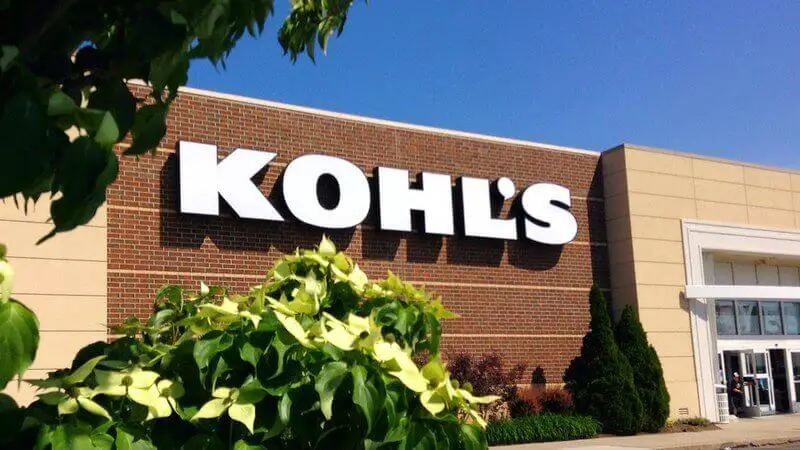
Kohl’s Corporation occupies a peculiar position in American retail. It is neither a full-line department store nor a discount chain, but something deliberately in between — a mid-tier retailer that has spent decades trying to make “affordable aspiration” a workable identity. With roughly 1,100 stores across 49 states and annual revenues that have fluctuated between $16 billion and $19 billion in recent years, Kohl’s remains a significant player in brick-and-mortar retail even as the broader department store category contracts around it.
Understanding how Kohl’s defines its purpose requires examining both its mission and vision statements — two distinct declarations that, taken together, reveal the strategic tensions the company has navigated through activist investor pressure, pandemic disruption, and the ongoing reinvention of its store experience through partnerships like Sephora at Kohl’s. This analysis dissects both statements, identifies their structural strengths and weaknesses, and evaluates whether they provide adequate strategic direction for a company facing existential questions about the future of mid-tier retail.
Kohl’s Mission Statement
“To be the most trusted retailer of choice for the active and casual lifestyle.”
This mission statement underwent a notable shift in recent years. Kohl’s previously positioned itself with broader language about inspiring and empowering families. The current formulation is more targeted, reflecting a deliberate strategic pivot toward active and casual categories — a bet that accelerated during and after the pandemic as consumer wardrobes shifted permanently away from formal attire. The statement attempts to do two things simultaneously: establish a trust-based relationship with consumers and carve out a specific lifestyle niche within the crowded retail landscape.
Strengths of Kohl’s Mission Statement
The mission statement’s most significant strength is its category specificity. By anchoring itself to “the active and casual lifestyle,” Kohl’s draws a boundary around its competitive territory. This is not a retailer trying to be everything to everyone. It is a retailer that has identified the fastest-growing segment of the apparel market — athleisure and casual wear — and declared that segment as its operational center of gravity. That declaration has real strategic consequences. It justifies the expansion of brands like Nike, Under Armour, Eddie Bauer, and Cole Haan within Kohl’s assortment. It explains why the company has deprioritized categories like men’s tailored clothing and formal women’s wear. The mission statement, in other words, is not decorative. It maps directly to merchandising decisions that are visible on the sales floor.
The phrase “most trusted retailer” also carries weight. Trust is a specific and measurable attribute in retail. It implies pricing transparency, consistent quality, reliable return policies, and honest marketing. Kohl’s has historically performed well on these dimensions — its Kohl’s Cash loyalty program, liberal return policy, and frequent promotional cycles have created a customer base that believes it is getting fair value. By placing trust at the center of the mission, the company signals that it intends to compete on relationship quality rather than on price alone, distinguishing itself from pure discounters like TJX Companies or Ross Stores.
The phrase “retailer of choice” introduces an element of competitive ambition without resorting to grandiosity. It acknowledges that consumers have options and positions Kohl’s as the preferred option within its category. This framing is realistic. It does not claim market dominance or revolutionary innovation. It claims preference — a more defensible and more honest aspiration for a mid-tier retailer.
Weaknesses of Kohl’s Mission Statement
The mission statement’s primary weakness is its silence on the customer. It describes what Kohl’s wants to be but says nothing about whom it serves. The previous iteration of the company’s mission language referenced “families,” providing at least a demographic anchor. The current version offers none. A first-time reader of this mission statement would have no idea whether Kohl’s targets suburban parents, young professionals, budget-conscious seniors, or college students. In practice, Kohl’s core customer skews female, middle-income, and suburban — a profile that is both specific and strategically important. The mission statement’s failure to acknowledge this audience is a missed opportunity to create alignment between corporate purpose and customer identity.
The “active and casual lifestyle” framing, while strategically sound, also introduces a limitation. It potentially marginalizes the beauty, home, and accessories categories that Kohl’s has invested heavily in expanding. The Sephora at Kohl’s partnership, which now operates in hundreds of locations, is arguably the most transformative initiative in the company’s recent history. Yet the mission statement’s lifestyle language does not encompass beauty in any obvious way. Similarly, Kohl’s home goods department — which competes with the likes of Target and HomeGoods — sits outside the “active and casual lifestyle” framework. A mission statement that narrows the company’s identity to apparel categories risks creating strategic incoherence as the company diversifies its revenue streams.
There is also an absence of any language related to digital commerce. For a retailer that generates a meaningful and growing share of revenue through its website and app, the exclusive focus on being a “retailer” — with its implicit brick-and-mortar connotation — feels incomplete. Competitors like Nordstrom and Macy’s have integrated omnichannel language into their corporate positioning. Kohl’s mission statement reads as if it were written for a company that operates only physical stores.
Kohl’s Vision Statement
“To inspire and empower families to lead fulfilled lives.”
The vision statement occupies a markedly different register than the mission statement. Where the mission is specific and category-focused, the vision is broad and aspirational. It invokes family, fulfillment, inspiration, and empowerment — themes that extend well beyond retail operations into the territory of lifestyle philosophy. This contrast between the two statements is worth examining carefully, as it reveals something about how Kohl’s conceptualizes the relationship between its day-to-day operations and its long-term purpose.
Strengths of Kohl’s Vision Statement
The vision statement’s most notable strength is its identification of a specific audience: families. This is the demographic anchor that the mission statement lacks. By centering families, the vision statement grounds Kohl’s aspirational language in a recognizable consumer segment. It also aligns with the company’s actual customer base and store format. Kohl’s stores are designed for family shopping — they carry men’s, women’s, and children’s apparel under one roof, alongside home goods and accessories. The family focus is not aspirational fiction; it is an accurate description of who walks through Kohl’s doors.
The pairing of “inspire” and “empower” is also well-constructed. These are distinct concepts that complement each other. Inspiration is emotional and aspirational — it suggests that Kohl’s products and experiences should elevate the customer’s sense of possibility. Empowerment is practical and functional — it suggests that Kohl’s should provide the tools, products, and value that enable families to act on that inspiration. Together, they describe a retailer that wants to be both emotionally resonant and practically useful. This dual positioning is ambitious but not unreasonable for a company that sells everything from Nike running shoes to kitchen appliances.
The phrase “fulfilled lives” is deliberately open-ended, and that openness serves a strategic purpose. It allows Kohl’s to expand into new categories and experiences without contradicting its stated vision. Whether the company is selling athleisure wear, beauty products through Sephora, or home décor, all of these activities can plausibly contribute to “fulfilled lives.” The vision statement, unlike the mission statement, does not box the company into a single product category.
Weaknesses of Kohl’s Vision Statement
The most significant weakness is the gap between aspiration and mechanism. “Inspire and empower families to lead fulfilled lives” is a statement that could be issued by a healthcare company, an educational institution, a nonprofit organization, or a financial services firm. It contains no language that ties it specifically to retail, to Kohl’s competitive positioning, or to the company’s actual capabilities. A vision statement should describe a future state that is uniquely achievable by the organization that issues it. Kohl’s vision statement fails this test. It is generic in a way that undermines its utility as a strategic guide.
The word “fulfilled” is particularly problematic. Fulfillment is a profound human aspiration that involves purpose, meaning, relationships, health, and personal growth. A mid-tier retailer claiming to be a vehicle for human fulfillment risks appearing either naïve or disingenuous. There is a difference between a company that helps families dress well and furnish their homes affordably — a genuinely valuable service — and a company that claims to be a pathway to fulfilled lives. The former is honest and compelling. The latter overreaches.
The vision statement also creates a tension with the mission statement that is difficult to resolve. The mission positions Kohl’s as a retailer focused on the “active and casual lifestyle” — a specific niche with clear boundaries. The vision positions Kohl’s as an enabler of “fulfilled lives” — a universal aspiration with no boundaries at all. These two statements pull in opposite directions. One narrows; the other expands infinitely. A well-aligned mission and vision should create strategic coherence, with the mission describing what the company does and the vision describing where that work leads. Kohl’s statements, read together, create strategic ambiguity rather than strategic clarity.
Sephora at Kohl’s: The Partnership That Redefined the Store
No analysis of Kohl’s strategic direction would be complete without examining the Sephora at Kohl’s partnership, which has been the single most consequential operational decision the company has made in the past decade. Announced in 2021 and expanded aggressively since, the initiative has placed Sephora shop-in-shop beauty departments in hundreds of Kohl’s locations, with the company targeting at least 850 stores. The partnership represents a fundamental rethinking of what a Kohl’s store is and what kind of customer it attracts.
From a mission statement perspective, the Sephora partnership exposes the limitations of “active and casual lifestyle” as a defining framework. Prestige beauty is neither active nor casual. It is aspirational, trend-driven, and experiential. A customer walking into Sephora at Kohl’s to test a new fragrance or consult with a beauty advisor is not engaged in an “active and casual” shopping experience. She is engaged in a prestige retail experience that happens to be located inside a mid-tier department store. The mission statement does not account for this reality.
Yet the Sephora partnership aligns well with the vision statement’s broader language about inspiring families. The beauty category is fundamentally about inspiration — about self-expression, confidence, and personal identity. If Kohl’s vision is to inspire and empower, Sephora provides a tangible mechanism for doing so in a category that carries high emotional engagement and strong brand loyalty. The partnership effectively bridges the gap between the vision statement’s aspirational language and the customer’s in-store experience.
The strategic logic of the partnership extends beyond merchandising. Sephora at Kohl’s serves as a customer acquisition tool, drawing younger and more affluent shoppers into stores that have historically skewed older and more value-oriented. Early data suggested that Sephora-equipped stores saw meaningful traffic increases, particularly among customers under 35. This demographic shift, if sustained, addresses one of Kohl’s most pressing long-term vulnerabilities: the aging of its core customer base. In this sense, the Sephora partnership is not merely a category expansion. It is a demographic intervention designed to extend the company’s relevance into the next generation of consumers.
Value Positioning in an Inflationary Environment
Kohl’s mission statement claim to be the “most trusted retailer” takes on heightened significance in an economic environment characterized by persistent inflation and consumer price sensitivity. The company’s value proposition has always rested on a specific model: national brands at promotional prices, enhanced by a loyalty ecosystem of Kohl’s Cash, coupons, and credit card rewards. This model creates a perception of value that is not purely price-based — it is experiential. Kohl’s shoppers do not simply buy products at a discount. They participate in a gamified savings process that makes them feel like savvy consumers.
This value architecture is both a strength and a vulnerability. The strength lies in customer loyalty. Kohl’s most engaged shoppers — those who stack Kohl’s Cash with percentage-off coupons and credit card rewards — are deeply embedded in the company’s ecosystem. They understand the system, they derive satisfaction from it, and they are reluctant to abandon it. The vulnerability lies in margin pressure. The promotional model requires Kohl’s to maintain artificially high list prices that are then discounted, creating a pricing structure that sophisticated consumers increasingly recognize as opaque. Off-price competitors like TJX Companies and Burlington offer a simpler value proposition: brand-name merchandise at permanently low prices, no coupons required.
The “most trusted” language in the mission statement implicitly addresses this challenge. Trust, in a retail context, means that the customer believes the value exchange is fair. For Kohl’s, maintaining that trust requires ensuring that its promotional pricing genuinely delivers savings relative to comparable alternatives — not merely relative to its own inflated list prices. As regulatory scrutiny of promotional pricing practices has increased across the retail industry, this dimension of trust has become operationally consequential. The mission statement’s emphasis on trust is not merely aspirational. It is a commitment that carries legal and ethical implications the company must honor.
Activist Investors and the Battle for Kohl’s Strategic Soul
The period between 2021 and 2023 saw Kohl’s become a focal point of activist investor activity, with multiple groups — including Macellum Advisors, Engine Capital, and others — pushing for changes ranging from board seats to a full sale of the company. This episode is relevant to a mission and vision analysis because it exposed the degree to which Kohl’s corporate identity was contested. Activist investors did not merely disagree with management’s financial decisions. They disagreed with management’s fundamental conception of what Kohl’s should be.
Some activists argued that Kohl’s real estate portfolio — hundreds of freestanding stores with attached parking lots in suburban locations — was more valuable than its retail operations. This argument implicitly rejected both the mission and vision statements. If the highest-value use of Kohl’s assets is real estate monetization rather than retail operations, then being “the most trusted retailer of choice for the active and casual lifestyle” is beside the point. The activist battles forced Kohl’s leadership to defend not just their operational performance but their fundamental premise: that Kohl’s has a viable future as a retailer.
The company ultimately fended off the most aggressive activist proposals, but the experience left marks on both strategy and governance. Board composition changed. Cost-cutting intensified. The sense of urgency around the Sephora partnership and other traffic-driving initiatives increased. In retrospect, the activist period served as a stress test for Kohl’s mission and vision. The statements survived, but they were not strengthened. A company that had just endured an existential challenge to its reason for being might have used that experience to sharpen its purpose articulation. Instead, the mission and vision statements remained essentially unchanged — a missed opportunity to use crisis as a catalyst for clarity.
The Department Store Question: Category in Decline or Category in Transition?
Kohl’s mission and vision statements must be evaluated against the broader trajectory of the department store category, which has experienced two decades of structural decline. The list of casualties is extensive: Sears, J.C. Penney, Bon-Ton, Stage Stores, Lord & Taylor, and Barneys New York have all either closed entirely or been drastically reduced through bankruptcy. The remaining players — Macy’s, Nordstrom, Dillard’s, and Kohl’s — face the persistent question of whether they are managing a decline or navigating a transition.
Kohl’s occupies an unusual position within this conversation because it has never been a traditional department store. Its stores are smaller, its locations are suburban rather than mall-based, and its assortment has always been narrower and more value-oriented than that of a full-line department store. These structural differences have insulated Kohl’s from some of the forces that destroyed its peers. It was never dependent on mall traffic. It was never positioned at a price point that made it vulnerable to luxury market fluctuations. It was never carrying the overhead of downtown flagship stores. In many ways, Kohl’s is better positioned to survive the department store shakeout precisely because it was never fully a department store.
The mission statement’s focus on “active and casual lifestyle” is, in part, a response to this reality. By defining itself through a lifestyle category rather than through a retail format, Kohl’s attempts to sidestep the “department store” label and its associated baggage. The question is whether this repositioning is credible. When a customer walks into a Kohl’s store and sees departments for men’s clothing, women’s clothing, children’s clothing, shoes, accessories, beauty, and home goods, she is walking into a department store regardless of what the mission statement says. The gap between stated positioning and experienced reality is a persistent challenge that no mission statement can fully resolve.
The companies that have navigated the department store decline most successfully — Nordstrom with its service model, Dillard’s with its cost discipline — have done so by identifying a defensible competitive advantage and executing against it relentlessly. Kohl’s mission statement identifies trust and the active/casual lifestyle as its competitive advantages. Whether those advantages are sufficiently defensible to sustain the company through another decade of category evolution remains the central strategic question.
Omnichannel Integration and the Unspoken Digital Imperative
One of the most striking absences in both Kohl’s mission and vision statements is any reference to digital commerce, omnichannel integration, or technological capability. This is not a minor omission. E-commerce represents a substantial and growing portion of Kohl’s total revenue. The company has invested significantly in its digital platform, its mobile app, its buy-online-pickup-in-store capability, and its ship-from-store infrastructure. These investments are not peripheral to the business. They are central to its operating model and its competitive viability.
The absence of digital language in the mission and vision statements creates a disconnect between the company’s stated purpose and its operational reality. A “retailer of choice” in 2026 is, by definition, an omnichannel retailer. Consumer expectations no longer distinguish between physical and digital shopping experiences — they expect seamless integration across both. By framing its mission exclusively in terms that evoke physical retail (“retailer of choice” without digital context), Kohl’s inadvertently dates its purpose statement and misses the opportunity to signal its commitment to meeting customers wherever and however they choose to shop.
This is particularly significant given that Kohl’s stores have increasingly become fulfillment nodes for digital orders. The company’s partnership with Amazon to accept Amazon returns in Kohl’s stores — another traffic-driving initiative — further blurs the line between physical retail and digital commerce. The stores are no longer simply places where customers browse and buy merchandise. They are logistics hubs, service centers, and experiential destinations. A mission statement that does not acknowledge this transformation describes a company that no longer exists.
Comparative Context: How Peers Articulate Purpose
Evaluating Kohl’s mission and vision statements in isolation provides an incomplete picture. The statements gain additional meaning when compared with those of direct competitors. Macy’s has positioned itself around the concept of being a “bold” enterprise that delivers fashion, value, and quality to a diverse customer base, with explicit language about inclusivity. Nordstrom has long defined itself through customer service, with a mission that centers on providing the best possible service to every customer. J.C. Penney, in its post-bankruptcy incarnation, has attempted to reconnect with its value-oriented customer through language about celebrating and serving diverse communities.
Against this competitive set, Kohl’s mission statement is distinctive in its category specificity. None of its peers define themselves through a lifestyle category the way Kohl’s defines itself through “active and casual.” This specificity is simultaneously Kohl’s greatest differentiator and its greatest risk. If the active and casual trend proves durable — and considerable evidence suggests it will — Kohl’s will have positioned itself at the center of the market’s growth engine. If consumer preferences shift back toward more formal or more trend-driven fashion, the mission statement will have locked the company into a category that is losing relevance.
The vision statement, by contrast, is less distinctive. The language of inspiration, empowerment, and fulfillment is common across the retail industry and beyond. It does not differentiate Kohl’s from its competitors in any meaningful way. A reader encountering the vision statement without context would be unable to identify it as belonging to Kohl’s rather than to any number of other consumer-facing companies. For a company with a well-crafted mission and vision, this level of generic language represents a significant shortcoming.
Final Assessment
Kohl’s mission and vision statements present a study in contrasts. The mission statement is specific, strategically grounded, and directionally useful. It identifies a competitive category, establishes a trust-based value proposition, and provides a framework for merchandising and operational decisions. Its weaknesses — the absence of a defined customer, the exclusion of non-apparel categories, the lack of digital language — are significant but correctable. As a working document that guides day-to-day decision-making, the mission statement functions adequately if imperfectly.
The vision statement is considerably weaker. Its aspirational language is so broad that it provides no strategic direction and no competitive differentiation. It does not describe a future state that is uniquely Kohl’s. It does not connect to the specific capabilities, assets, or market position that the company possesses. It reads like a statement crafted to be inoffensive rather than one crafted to be useful. For a company that has endured activist investor challenges, pandemic disruption, and the ongoing decline of its retail category, a more pointed and more honest vision would serve better than one that aspires vaguely to fulfilled lives.
The most interesting strategic story at Kohl’s — the Sephora partnership, the Amazon returns alliance, the pivot toward active and casual categories, the defense against activist dismantling — is a story of a company fighting to redefine itself for a retail landscape that has changed fundamentally. That story deserves mission and vision statements that match its urgency and specificity. The mission statement comes closer to meeting that standard than the vision statement does, but neither fully captures the strategic complexity of what Kohl’s is attempting to accomplish. Until both statements are refined to reflect the omnichannel, category-diverse, demographically evolving company that Kohl’s has become, they will remain partial representations of a corporate identity that is more interesting than its official language suggests.