
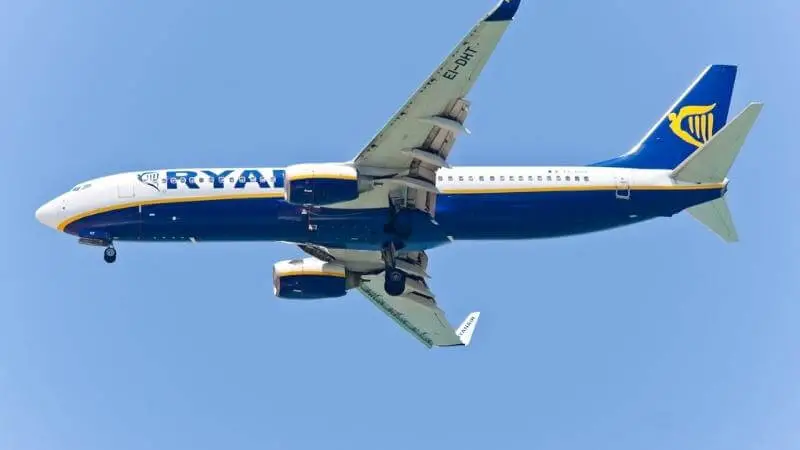
Ryanair Mission Statement Analysis (2026)
Ryanair Holdings plc stands as Europe’s largest airline group by passenger numbers, carrying over 180 million travelers annually across more than 2,400 daily flights. Founded in 1984 and headquartered in Dublin, Ireland, the carrier has fundamentally reshaped the European aviation landscape through its ultra-low-cost business model. Under the long-standing leadership of Group CEO Michael O’Leary, Ryanair has built a reputation for relentless cost discipline, operational efficiency, and a willingness to challenge established industry conventions. The airline’s mission and vision statements serve as the strategic foundation upon which this transformation has been built, and they warrant careful examination to understand both their strengths and their limitations.
This analysis examines Ryanair’s mission statement, vision statement, and core values in detail. It evaluates how each strategic declaration aligns with the company’s actual operations, competitive positioning, and long-term trajectory. For readers interested in how other airlines articulate their strategic direction, comparisons with British Airways, Southwest Airlines, Spirit Airlines, and Frontier Airlines provide additional context throughout.
Ryanair’s Mission Statement
Ryanair’s mission statement reads: “To offer low fares that generate increased passenger traffic while maintaining a continuous focus on cost-containment and operating efficiencies.”
This statement is notable for its directness and its lack of embellishment. Unlike many corporate mission statements that incorporate aspirational language about transforming lives or connecting communities, Ryanair’s declaration is essentially a concise description of its business model. It identifies three interconnected objectives: low fares, increased traffic, and cost discipline. Each element reinforces the others in a virtuous cycle that has defined the airline’s operations for decades.
Mission Statement Analysis
The mission statement can be broken down into three distinct components, each of which reveals something significant about Ryanair’s strategic priorities and operational philosophy.
Low Fares as the Central Value Proposition. The phrase “offer low fares” positions price as the airline’s primary competitive weapon. This is not merely a marketing claim but a structural commitment embedded in every aspect of the business. Ryanair achieves its fare advantage through a combination of factors: operating a single aircraft type (the Boeing 737 family), utilizing secondary airports with lower landing fees, maintaining high aircraft utilization rates, and generating substantial ancillary revenue from baggage fees, seat selection charges, and onboard sales. By placing low fares at the beginning of the mission statement, Ryanair signals that price leadership is not one priority among many but rather the foundational principle from which all other decisions flow.
Passenger Traffic Growth as a Measure of Success. The phrase “generate increased passenger traffic” reveals Ryanair’s volume-driven approach to profitability. The airline operates on thin margins per passenger but compensates through sheer scale. This emphasis on traffic growth has driven Ryanair’s aggressive route expansion across Europe, North Africa, and the Middle East. It also explains the company’s willingness to offer fares that sometimes fall below the cost of a bus ticket on comparable routes. The assumption embedded in this component is that market share gains, once achieved, create durable competitive advantages through network effects and brand recognition.
Cost Containment as an Operational Imperative. The closing phrase, “maintaining a continuous focus on cost-containment and operating efficiencies,” describes the mechanism that makes the first two objectives sustainable. Ryanair’s cost per available seat kilometer (CASK) consistently ranks among the lowest of any major European carrier. This is achieved through aggressive negotiation with suppliers, minimal ground handling times (historically targeting 25-minute turnarounds), high seat density configurations, and a corporate culture that scrutinizes every expenditure. The word “continuous” is particularly revealing, as it suggests that cost reduction is not a one-time initiative but an ongoing organizational discipline.
What the mission statement does not address is equally informative. There is no mention of customer experience, employee welfare, environmental responsibility, or community impact. This omission is consistent with Ryanair’s historical reputation as a carrier that prioritizes price above all other considerations. While the airline has made meaningful efforts in recent years to improve its customer service, including its “Always Getting Better” program launched in 2014, these initiatives do not appear in the mission statement itself. This creates a gap between the company’s evolving operational reality and its stated strategic purpose.
Compared to Southwest Airlines, which Ryanair originally modeled itself after, the mission statement is considerably narrower. Southwest’s mission incorporates warmth, friendliness, and employee pride alongside its commitment to affordability. Ryanair’s statement, by contrast, reads more like an investor summary than an inspirational declaration. This is not necessarily a weakness; clarity and honesty have their own strategic value. However, it does limit the statement’s ability to serve as a rallying point for employees or a source of emotional connection for customers.
Ryanair’s Vision Statement
Ryanair’s vision statement reads: “To firmly establish itself as Europe’s leading low-fares scheduled passenger airline through continued improvements and expanded offerings of its low-fares service.”
This vision statement articulates a clear geographic and competitive ambition: dominance of the European low-cost carrier segment. It builds upon the mission statement by adding a forward-looking dimension, describing not just what Ryanair does but what it aspires to become. The reference to “continued improvements and expanded offerings” suggests an awareness that static strategies become vulnerable over time and that the airline must evolve to maintain its position.
Vision Statement Analysis
The vision statement, while serviceable, presents several features and limitations that merit examination.
Geographic Specificity. By naming Europe explicitly, the vision statement provides a clear scope for the airline’s ambitions. This geographic focus is strategically sound given Ryanair’s operational infrastructure, regulatory expertise, and brand recognition across the continent. However, it also raises questions about long-term growth potential. As Ryanair approaches market saturation in certain European corridors, the vision statement offers no guidance on whether the airline might eventually pursue transatlantic routes, expand further into North Africa, or explore other growth vectors. A more forward-looking vision might address how the airline intends to navigate the boundaries of its current market.
Competitive Positioning. The phrase “Europe’s leading low-fares scheduled passenger airline” defines success in terms of competitive ranking rather than absolute performance metrics or customer outcomes. This framing is consistent with Ryanair’s combative corporate culture, which has historically defined itself in opposition to legacy carriers and rival low-cost operators alike. The inclusion of “scheduled” is a deliberate distinction from charter operators, positioning Ryanair within the mainstream aviation market rather than the leisure-travel niche.
Evolutionary Rather Than Revolutionary Ambition. The phrase “continued improvements and expanded offerings” suggests incremental progress rather than transformative change. This is arguably realistic for a company that has already achieved market leadership, but it lacks the inspirational quality that the most effective vision statements possess. There is no reference to innovation, technology, sustainability, or changing the way people travel. The vision describes a company that intends to do more of what it already does, rather than one that aspires to redefine its industry.
When compared to British Airways, whose brand positioning emphasizes premium service and global connectivity, Ryanair’s vision statement occupies a very different strategic space. British Airways aims to be a carrier of choice across all segments, while Ryanair explicitly anchors itself to the low-fare segment. This clarity of positioning is a competitive advantage in one sense, as it prevents strategic drift, but it also constrains the company’s ability to capture higher-margin customer segments as the market evolves.
It is worth noting that Ryanair has, in practice, expanded beyond pure ultra-low-cost operations. The Ryanair Group now includes Buzz (formerly Ryanair Sun), Lauda Europe, and Malta Air, each serving different market segments and regulatory environments. The vision statement does not reflect this multi-brand strategy, which represents a significant disconnect between the company’s stated vision and its actual corporate structure.
Core Values
Ryanair does not publish a formal list of core values in the manner of many contemporary corporations. However, the company’s operational behavior, public communications, and strategic decisions reveal a consistent set of implicit values that guide its conduct. These can be identified as follows.
Cost Leadership Above All. The most prominent value embedded in Ryanair’s culture is an unwavering commitment to cost minimization. This manifests in every operational decision, from aircraft procurement (Ryanair has historically negotiated some of the most favorable purchase terms in the industry) to staffing models, airport selection, and onboard service design. The airline’s ability to maintain unit costs significantly below those of competitors such as easyJet and Wizz Air is not merely a business strategy but a deeply held organizational belief that low costs create value for shareholders and passengers alike.
Operational Efficiency. Ryanair places extraordinary emphasis on operational metrics, including on-time performance, aircraft utilization, and turnaround speed. The airline’s fleet standardization around the Boeing 737 reduces maintenance complexity, training costs, and spare parts inventory. This focus on efficiency extends to the customer interface, where self-service check-in, digital boarding passes, and automated processes reduce the need for human intervention at every touchpoint.
Commercial Aggressiveness. Ryanair has historically embraced a confrontational approach to competition, regulation, and public relations. Michael O’Leary’s willingness to make provocative public statements, challenge regulatory decisions in court, and criticize competitors by name reflects a corporate culture that values directness and competitive intensity. While this approach has sometimes generated negative publicity, it has also kept the Ryanair brand continuously in the public eye and reinforced the company’s positioning as a disruptive force in European aviation.
Shareholder Value. Ryanair has consistently prioritized shareholder returns through a combination of profit growth, share buyback programs, and, more recently, dividend payments. The airline’s financial discipline and capital allocation strategies reflect a belief that the primary purpose of the corporation is to generate returns for its owners. This shareholder-centric philosophy influences decisions ranging from fleet investment to labor negotiations.
Adaptability. Despite its reputation for rigidity, Ryanair has demonstrated a capacity for strategic adaptation when circumstances demand it. The “Always Getting Better” customer experience program, the decision to allow allocated seating and connected flights, and the development of Ryanair Rooms (a hotel booking platform) all represent departures from the airline’s original ultra-low-cost orthodoxy. This willingness to evolve, while maintaining the core cost advantage, suggests an implicit value of pragmatic flexibility.
The absence of formally articulated values around sustainability, diversity, or community engagement is notable, though not unusual for an airline that has historically prioritized financial performance above reputational considerations. In recent years, Ryanair has begun to address environmental concerns more directly, investing in fuel-efficient Boeing 737-8200 “Gamechanger” aircraft and committing to reduced carbon emissions per passenger. Whether these initiatives will eventually be codified into a formal values framework remains to be seen.
Strengths
Ryanair’s mission and vision statements, along with its implicit core values, possess several notable strengths that have contributed to the airline’s sustained commercial success.
Clarity and Coherence. The mission and vision statements are unambiguous in their strategic intent. There is no confusion about what Ryanair is trying to achieve or how it intends to achieve it. This clarity translates into organizational alignment, as every employee, from pilots to ground staff to corporate executives, can understand the company’s priorities without interpretation. Many airlines suffer from mission statements that attempt to be all things to all people; Ryanair’s statements avoid this trap entirely.
Authentic Representation of the Business Model. Unlike many corporate statements that bear little resemblance to actual operations, Ryanair’s mission and vision accurately describe the company’s business model. The emphasis on low fares, traffic growth, and cost containment is not aspirational rhetoric but a factual summary of how the airline operates. This authenticity lends credibility to the statements and reduces the cynicism that often accompanies corporate communications. When Ryanair states that it focuses on cost containment, its CASK figures confirm it.
Strategic Differentiation. The statements clearly differentiate Ryanair from legacy carriers, hybrid airlines, and even other low-cost competitors. By defining itself exclusively around low fares and operational efficiency, Ryanair avoids the strategic ambiguity that plagues carriers attempting to compete simultaneously on price, service, and network breadth. This differentiation is a source of competitive advantage, as it enables focused investment and prevents the cost creep that has undermined other low-cost carriers over time. Spirit Airlines in the United States has pursued a similar ultra-low-cost positioning, though with different operational results.
Measurability. The objectives embedded in the mission statement are inherently measurable. Fare levels can be benchmarked against competitors, passenger traffic can be tracked quarterly, and cost-containment progress can be monitored through financial reporting. This measurability creates accountability and enables the company to assess whether it is living up to its stated purpose. Vision statements that reference vague concepts like “excellence” or “innovation” often lack this capacity for objective evaluation.
Durability. The mission and vision statements have remained largely consistent over time, providing a stable strategic anchor amid industry turbulence. While other airlines have repeatedly revised their strategic declarations in response to changing market conditions, Ryanair’s core positioning has remained fundamentally unchanged since the company adopted the low-cost model in the early 1990s. This consistency reinforces the company’s brand identity and provides long-term strategic continuity.
Weaknesses
Despite their operational effectiveness, Ryanair’s strategic statements exhibit several significant weaknesses that could limit their value as the airline navigates an increasingly complex operating environment.
Absence of Customer-Centric Language. The most conspicuous weakness of the mission statement is its complete omission of customer experience. The statement treats passengers as a volume metric (“increased passenger traffic”) rather than as individuals whose satisfaction and loyalty matter. This transactional framing is increasingly at odds with the expectations of modern travelers, who may prioritize low fares but also value reliability, digital convenience, and respectful service. The “Always Getting Better” program acknowledged this gap operationally, but the mission statement has not been updated to reflect this evolution.
No Employee Recognition. Ryanair employs over 20,000 people across multiple countries, yet its mission and vision statements make no reference to workforce development, employee satisfaction, or organizational culture. This omission has real consequences. Ryanair has faced recurring challenges with pilot recruitment and retention, cabin crew labor disputes, and public criticism of its employment practices. A mission statement that acknowledged the role of employees in delivering the company’s value proposition could serve as a foundation for improved labor relations and talent acquisition. Southwest Airlines, by contrast, places employees at the center of its mission, and this emphasis has contributed to consistently higher employee satisfaction and lower turnover rates.
Environmental Silence. In an era of growing regulatory pressure and public concern about aviation’s carbon footprint, the absence of any environmental commitment from Ryanair’s strategic statements is a notable vulnerability. The European Union’s Emissions Trading System, the Carbon Offsetting and Reduction Scheme for International Aviation (CORSIA), and emerging sustainable aviation fuel mandates will impose significant costs on carriers in the coming decade. Ryanair has taken practical steps to address its environmental impact, including ordering fuel-efficient aircraft and achieving relatively low emissions per passenger kilometer, but the strategic statements do not reflect these efforts or signal a long-term commitment to sustainability.
Limited Inspirational Quality. Effective mission and vision statements serve dual purposes: they guide strategic decision-making and they inspire stakeholder commitment. Ryanair’s statements excel at the former but fall short on the latter. There is nothing in either statement that would motivate an employee to go above and beyond, inspire a customer to become a brand advocate, or persuade a community to welcome a new Ryanair base. The purely functional language, while honest, lacks the emotional resonance that characterizes the most powerful corporate declarations.
Failure to Address Digital Transformation. The aviation industry is undergoing a profound digital transformation, with artificial intelligence, data analytics, and mobile technology reshaping everything from pricing to operations to customer engagement. Ryanair has been an active participant in this transformation, with one of the most downloaded airline apps in Europe and sophisticated revenue management systems. However, the mission and vision statements contain no reference to technology or digital innovation, leaving a gap between the company’s operational reality and its strategic framing.
Multi-Brand Strategy Not Reflected. As mentioned previously, the Ryanair Group now operates multiple airline brands across different markets. The vision statement’s reference to establishing itself as “Europe’s leading low-fares scheduled passenger airline” uses singular language that does not account for this more complex corporate structure. A revised vision statement might address how the group’s various brands collectively serve the broader strategic objective.
Industry Context
Ryanair’s mission and vision statements must be evaluated within the broader context of the European aviation industry, which has undergone dramatic structural changes since the company’s founding. The liberalization of European air travel in the 1990s created the regulatory environment that made Ryanair’s low-cost model viable. Subsequent decades have seen the rise and fall of numerous competitors, the consolidation of legacy carrier groups, and the emergence of new challenges ranging from fuel price volatility to pandemic-induced demand shocks.
The ultra-low-cost carrier segment in which Ryanair operates has become increasingly competitive. Wizz Air, based in Hungary, has expanded aggressively across Central and Eastern Europe, while easyJet maintains a strong presence in Western European markets. Frontier Airlines in the United States provides an instructive parallel, demonstrating both the opportunities and challenges of the ultra-low-cost model in a different regulatory and competitive environment. Each of these competitors articulates its strategic purpose somewhat differently, reflecting varying approaches to the balance between cost leadership and customer value.
The post-pandemic recovery has reshaped passenger expectations and competitive dynamics in ways that may test the durability of Ryanair’s strategic positioning. Leisure travel demand has recovered strongly, benefiting low-cost carriers, but business travel patterns have shifted in ways that affect route economics and pricing strategies. The acceleration of digital adoption during the pandemic has raised customer expectations for seamless mobile experiences, flexible booking options, and responsive customer service.
Environmental regulation represents perhaps the most significant external challenge to Ryanair’s strategic model. The European Green Deal and associated aviation regulations will progressively increase the cost of carbon-intensive operations. While Ryanair’s high load factors and fuel-efficient fleet give it a relative advantage in emissions per passenger, the absolute growth in flights implied by the mission statement’s emphasis on “increased passenger traffic” creates tension with decarbonization objectives. Airlines that proactively integrate environmental commitments into their strategic frameworks may find it easier to navigate this regulatory transition.
Labor market dynamics also present ongoing challenges. The pilot shortage affecting the global aviation industry has intensified competition for qualified flight crew, and Ryanair’s historically aggressive approach to labor relations has sometimes placed it at a disadvantage in recruitment. Several European countries have seen Ryanair cabin crew and pilots engage in industrial action, and the airline has been compelled to recognize trade unions in markets where it previously resisted doing so. A mission or values statement that acknowledged the importance of its workforce could support efforts to position Ryanair as an employer of choice in an increasingly competitive talent market.
Despite these challenges, Ryanair’s financial performance and market position suggest that its fundamental strategic approach remains sound. The airline has consistently generated industry-leading profit margins, maintained a strong balance sheet, and continued to grow its route network. The Boeing 737-8200, with its additional seats and improved fuel efficiency, positions Ryanair to maintain its cost advantage into the next decade. The question is not whether the current strategy works, but whether the strategic statements as currently articulated provide sufficient guidance for the challenges and opportunities that lie ahead.
It is also worth considering how Ryanair’s strategic declarations compare to those of airlines that have achieved similar scale through different philosophies. British Airways and other International Airlines Group carriers emphasize service quality and global connectivity. Southwest Airlines, which served as the original inspiration for Ryanair’s low-cost model, has maintained a distinctive culture-driven approach that integrates employee happiness, customer service, and low fares into a unified strategic narrative. The contrast between Southwest’s holistic mission and Ryanair’s purely operational one illustrates different theories about what drives long-term airline success.
Final Assessment
Ryanair’s mission and vision statements are, in many respects, a faithful reflection of the company they describe. They are lean, functional, and unadorned, much like the airline’s onboard experience. They communicate the essential elements of Ryanair’s competitive strategy with admirable clarity, and they have provided a consistent strategic anchor through decades of industry upheaval. For an analyst seeking to understand what Ryanair does and why, these statements are genuinely informative, which is more than can be said for many corporate mission declarations.
However, the statements also reveal the limitations of defining an organization solely through the lens of cost and volume. By omitting any reference to customers as people, employees as stakeholders, communities as partners, or the environment as a shared responsibility, Ryanair’s strategic declarations present an incomplete picture of a company that is, in practice, more nuanced than its mission statement suggests. The “Always Getting Better” program, the investment in digital capabilities, the fleet modernization for environmental efficiency, and the multi-brand group strategy all represent strategic dimensions that the current statements fail to capture.
The most effective mission and vision statements evolve alongside the organizations they represent. They retain their core strategic logic while incorporating new realities and emerging priorities. Ryanair would benefit from a strategic refresh that maintains its commitment to low fares and operational efficiency while acknowledging the broader ecosystem in which it operates. Such a revision need not abandon the company’s distinctive character. Ryanair can remain unapologetically focused on cost leadership while also recognizing that sustainable success in the modern aviation industry requires attention to environmental impact, workforce development, and customer experience.
In their current form, Ryanair’s mission and vision statements earn high marks for honesty, clarity, and strategic alignment, but lower marks for completeness, inspiration, and forward-looking ambition. They describe a company that knows exactly what it is today but offer limited guidance on what it aspires to become tomorrow. For Europe’s largest airline, operating in one of the world’s most dynamic and regulated industries, that gap between operational reality and strategic aspiration represents both a risk and an opportunity. The airline that has built its empire on doing more with less might consider whether its strategic declarations could also benefit from a bit more.