
Singapore Airlines Mission Statement Analysis (2026)
Singapore Airlines (SIA) has maintained its position as one of the most admired airlines in the world for over five decades. As Singapore’s flag carrier and a founding member of the Star Alliance network, the airline has built an extraordinary reputation for service excellence, operational reliability, and innovation. Its brand identity, anchored by the iconic Singapore Girl, has become synonymous with premium air travel across every cabin class. From its hub at Singapore Changi Airport, consistently ranked among the world’s finest airports, SIA operates an extensive global network that connects Asia to Europe, the Americas, Africa, and Oceania.
Understanding the mission and vision statements behind this level of sustained excellence is essential for students of business strategy, aviation management, and brand development. These corporate declarations reveal the principles that guide decision-making at SIA, shape its competitive positioning, and inform its approach to everything from fleet renewal to cabin crew training. This analysis provides a thorough examination of Singapore Airlines’ mission and vision statements, evaluates their core values, identifies strategic strengths and weaknesses, and places the airline within the broader context of the global aviation industry.
Singapore Airlines Mission Statement
Singapore Airlines articulates its mission with a clear emphasis on service quality and customer experience. The airline’s mission statement reads:
“Singapore Airlines is a global company dedicated to providing air transportation services of the highest quality and to maximising returns for the benefit of its shareholders and employees.”
This mission statement, while relatively concise, establishes two foundational pillars upon which the airline has built its entire corporate strategy. The first pillar is a commitment to service quality at the highest possible standard. The second is a clear articulation of fiduciary responsibility toward shareholders and employees. Together, these pillars define an organization that seeks to balance operational excellence with financial discipline, a combination that has proven remarkably effective in one of the most competitive and capital-intensive industries in the world.
Analysis of the Mission Statement
The mission statement of Singapore Airlines warrants careful examination across several dimensions, including its scope, specificity, stakeholder orientation, and strategic utility.
First, the phrase “air transportation services of the highest quality” is the defining element of SIA’s corporate identity. It does not merely promise good service or competitive service; it aspires to the highest quality. This aspirational language has served as a powerful internal benchmark, driving the airline to invest consistently in cabin product innovation, crew training, fleet modernization, and ground services. The result is an airline that has won Skytrax World Airline Awards more times than any other carrier and that routinely sets the standard for premium travel experiences globally.
Second, the identification as a “global company” is strategically significant. Singapore is a small city-state with a domestic population insufficient to sustain a major airline on local demand alone. By defining itself as a global company from the outset, SIA has oriented its entire business model around international connectivity. This global orientation has shaped its route network, its multilingual and multicultural crew recruitment, its marketing strategy, and its alliance partnerships within Star Alliance.
Third, the dual commitment to “shareholders and employees” reflects a balanced stakeholder approach. Many airline mission statements focus exclusively on customers, neglecting the financial realities of a capital-intensive business. SIA’s explicit mention of shareholder returns signals a commitment to profitability and fiscal responsibility that has historically differentiated it from state-owned carriers that operate with implicit government subsidies. The inclusion of employees acknowledges that service excellence is ultimately delivered by people, and that the airline’s workforce is a critical stakeholder in its success.
However, one notable omission from the mission statement is an explicit reference to customers. While “services of the highest quality” implicitly serves customers, the statement does not directly name them as a stakeholder group. This is an interesting strategic choice, particularly for an airline whose entire brand proposition revolves around the passenger experience. Compared to airlines such as Emirates, which place the customer more prominently in their corporate declarations, this omission is worth noting.
Additionally, the mission statement does not reference innovation, sustainability, or digital transformation, areas that have become increasingly central to airline strategy in the 2020s. While SIA has been a pioneer in all three domains, its mission statement does not explicitly signal these priorities. This may reflect the statement’s original drafting context, where such considerations were less prominent in corporate discourse.
Singapore Airlines Vision Statement
The vision statement of Singapore Airlines complements its mission by articulating a forward-looking aspiration:
“To be the world’s leading airline, delivering the most memorable travel experience, with the best service, the latest products, and the highest standards of safety.”
This vision statement is considerably more ambitious and detailed than the mission statement. It establishes a clear competitive objective, to be the world’s leading airline, and then defines the criteria by which that leadership should be measured: memorable experiences, superior service, cutting-edge products, and uncompromising safety.
Analysis of the Vision Statement
The vision statement of Singapore Airlines is noteworthy for its specificity and its alignment with the airline’s actual competitive behavior. Unlike many corporate vision statements that rely on vague aspirational language, SIA’s vision identifies concrete areas of differentiation.
The aspiration to be “the world’s leading airline” is audacious but credible. Singapore Airlines has consistently appeared at or near the top of global airline rankings published by Skytrax, TripAdvisor, Condé Nast Traveler, and Business Traveller. The airline has won the Skytrax “World’s Best Airline” award multiple times, and its Business Class and First Class products are regularly cited as industry benchmarks. This vision is not an empty aspiration; it is a statement of competitive intent that the airline has demonstrably pursued.
The phrase “most memorable travel experience” elevates the airline’s ambition beyond mere transportation. SIA does not simply seek to move passengers from point A to point B; it aims to create lasting impressions. This experiential focus is reflected in everything from the design of its cabin interiors to the presentation of its in-flight cuisine, developed in partnership with an International Culinary Panel of world-renowned chefs. The Singapore Girl, one of aviation’s most enduring brand icons, embodies this commitment to creating a distinctive and memorable passenger experience.
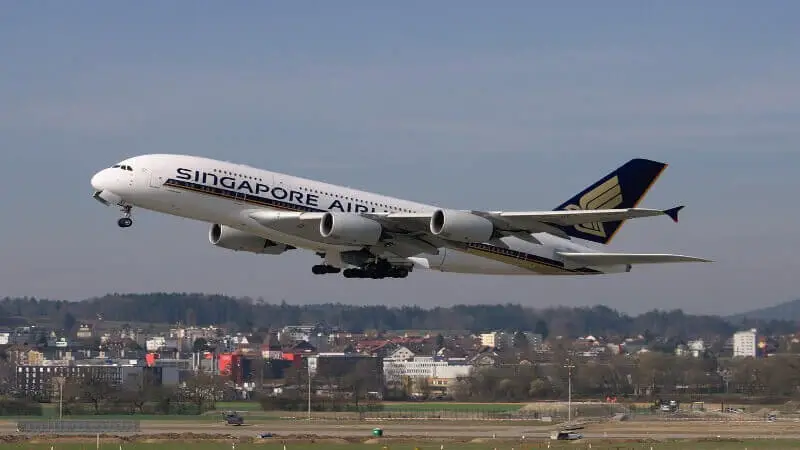
The reference to “the latest products” underscores SIA’s commitment to fleet and cabin product innovation. The airline has historically maintained one of the youngest fleets among major carriers, with an average aircraft age consistently below ten years. SIA was the launch customer for the Airbus A380 superjumbo and has been an early adopter of the Boeing 787 Dreamliner and the Airbus A350. Its cabin products, including the industry-first fully flat Business Class seat and the ultra-long-range flights operated by the A350-900ULR, demonstrate a willingness to invest in product leadership. This commitment to having the “latest” products also signals a recognition that passenger expectations evolve continuously, and that sustained leadership requires continuous investment.
The inclusion of “the highest standards of safety” as an explicit vision element is both responsible and strategically sound. While safety is a baseline expectation for all airlines, SIA’s decision to elevate it within its vision statement signals that safety is not merely a regulatory obligation but a core competitive attribute. The airline’s safety record has been exemplary, and its investment in pilot training, maintenance standards, and safety management systems reflects this stated commitment.
Compared to the vision statements of competitors such as Qatar Airways, SIA’s vision is more structured and more clearly tied to measurable outcomes. The specificity of the statement makes it a more effective strategic tool, providing clear criteria against which performance can be evaluated and guiding resource allocation decisions across the organization.
Core Values of Singapore Airlines
Singapore Airlines’ corporate culture is underpinned by a set of core values that inform the behavior of its employees, the design of its services, and the character of its brand. These values provide the philosophical foundation upon which the mission and vision statements rest.
Pursuit of Excellence: SIA’s most defining value is an unrelenting commitment to excellence in every aspect of its operations. This value manifests in the airline’s approach to cabin crew selection and training, which is among the most rigorous in the industry. The SIA Training Centre in Singapore is a world-class facility where cabin crew undergo months of intensive preparation covering service protocols, grooming standards, safety procedures, wine appreciation, and cultural sensitivity. This pursuit of excellence extends to engineering, ground operations, and corporate functions, creating an organization-wide culture of high performance.
Safety First: The airline places safety at the apex of its operational priorities. This is not merely a stated value but an embedded organizational principle that governs decision-making at every level. SIA’s safety management system incorporates proactive risk identification, continuous monitoring, and a culture that encourages reporting of safety concerns without fear of retribution. The airline’s investment in modern aircraft, which incorporate the latest safety technologies, further reinforces this commitment.
Customer Focus: Despite the absence of an explicit customer reference in the mission statement, customer centricity is deeply embedded in SIA’s organizational culture. The airline’s approach to customer service is distinguished by its attention to detail, personalization, and consistency. From the warm towel service in Economy Class to the bespoke dining experience in Suites, SIA designs its service delivery around the principle that every passenger interaction is an opportunity to exceed expectations.
Integrity: SIA operates with a strong commitment to ethical business practices, transparency, and corporate governance. As a publicly listed company on the Singapore Exchange (SGX), the airline adheres to rigorous standards of financial reporting and corporate disclosure. Its parent company, Singapore Airlines Group, also oversees Scoot, the low-cost subsidiary, maintaining governance standards across the broader corporate portfolio.
Teamwork and Respect for People: The airline emphasizes collaborative effort and mutual respect as essential ingredients of its service culture. With a workforce representing dozens of nationalities and cultural backgrounds, SIA has cultivated an inclusive organizational environment that leverages diversity as a strength. The airline’s respect for its employees is reflected in its training investments, career development opportunities, and the pride that SIA staff consistently express in their association with the brand.
Innovation: SIA has a longstanding tradition of innovation that predates its competitors in numerous areas. The airline was among the first to offer free drinks in Economy Class, personal entertainment screens in all classes, satellite-based in-flight connectivity, and the world’s longest commercial flights. This innovative spirit is sustained through dedicated investment in research and development, customer feedback mechanisms, and strategic partnerships with technology providers.
Strengths of the Mission and Vision Statements
Clarity of Purpose
One of the principal strengths of SIA’s mission and vision statements is their clarity. The mission statement unambiguously identifies the airline’s core business (air transportation services) and its primary strategic objectives (quality and returns). The vision statement further sharpens this focus by specifying the dimensions of leadership the airline seeks: experience, service, products, and safety. This clarity provides a strong foundation for strategic planning and organizational alignment, ensuring that employees at every level understand what the airline is trying to achieve.
Credible Ambition
Unlike some corporate vision statements that articulate ambitions far removed from organizational reality, SIA’s vision is both aspirational and credible. The airline’s track record of awards, its consistently high customer satisfaction ratings, and its financial performance all validate the claim to be “the world’s leading airline.” This credibility gives the vision statement practical force, making it a motivational tool rather than an empty slogan. Employees can see the connection between their daily work and the organization’s stated vision, which reinforces engagement and commitment.
Balanced Stakeholder Recognition
The mission statement’s dual recognition of shareholders and employees is a notable strength. In the aviation industry, where labor relations can be contentious and financial pressures intense, SIA’s explicit acknowledgment of both stakeholder groups signals a commitment to balance. This balanced approach has contributed to the airline’s ability to maintain service standards while delivering consistent financial returns, a combination that many competitors have struggled to achieve.
Product and Innovation Emphasis
The vision statement’s specific reference to “the latest products” is a distinctive strength that differentiates SIA’s corporate declarations from those of many competitors. This explicit commitment to product innovation has driven continuous investment in fleet renewal and cabin product development, keeping SIA at the forefront of passenger experience innovation. The airline’s decision to be the launch customer for the A380 and its early adoption of new-generation widebody aircraft demonstrate that this is not merely rhetorical but a genuinely operationalized principle.
Global Orientation
The self-identification as a “global company” within the mission statement is strategically astute. For an airline based in a nation of fewer than six million people, a global orientation is not merely desirable but existential. This framing has shaped SIA’s entire business model, encouraging the development of an extensive international network, multicultural brand identity, and partnerships that extend the airline’s reach far beyond what its home market could sustain independently.
Weaknesses of the Mission and Vision Statements
Absence of Customer Reference in the Mission
The most conspicuous weakness of the mission statement is its failure to explicitly name customers as a stakeholder group. For an airline that has built its entire brand identity around customer service excellence, this omission is surprising. While the commitment to “services of the highest quality” implicitly serves the customer, the statement names shareholders and employees but not the passengers who ultimately generate revenue and define the brand experience. Airlines such as Emirates and Qatar Airways tend to place the customer more centrally in their corporate declarations, making this a relative weakness for SIA.
Limited Sustainability Language
Neither the mission nor the vision statement contains any reference to environmental sustainability, carbon reduction, or ecological responsibility. In the current operating environment, where aviation’s environmental impact is subject to intense public scrutiny, regulatory action, and investor concern, this absence is a notable gap. SIA has undertaken significant sustainability initiatives, including fleet modernization to reduce fuel consumption, investment in sustainable aviation fuel (SAF), and participation in carbon offset programs. However, the absence of sustainability from its foundational corporate statements suggests that these efforts are not yet integrated into the airline’s core strategic identity. Carriers such as British Airways and its parent company, International Airlines Group, have begun incorporating sustainability commitments into their corporate declarations, setting a standard that SIA’s statements do not yet meet.
No Mention of Digital Transformation
The statements do not address digital transformation, data-driven personalization, or technological innovation beyond physical products. As the airline industry undergoes a fundamental digital transformation, encompassing mobile-first booking platforms, biometric processing, artificial intelligence-driven revenue management, and personalized digital experiences, the absence of any digital or technological dimension from SIA’s mission and vision is a gap. The airline has invested heavily in its digital capabilities, including the KrisFlyer loyalty program, the SingaporeAir mobile application, and digital customer service platforms, but these investments are not reflected in the foundational strategic statements.
Lack of Community and Social Responsibility
The mission and vision statements make no reference to the airline’s role within the broader Singaporean community or its social responsibilities. As the national flag carrier, SIA occupies a unique position in Singapore’s economic and cultural landscape. The airline serves as a global ambassador for Singapore, contributes significantly to the national economy through tourism and trade facilitation, and employs thousands of Singaporean citizens. The absence of any social or community dimension from the corporate statements fails to capture this important aspect of the airline’s identity and purpose.
Static Nature of the Statements
Both statements have a somewhat static quality that does not fully capture the dynamic and evolving nature of the aviation industry. In a sector shaped by rapid technological change, shifting geopolitical dynamics, evolving passenger expectations, and unprecedented disruptions such as global pandemics, corporate statements benefit from language that signals adaptability and resilience. SIA’s statements, while effective in establishing baseline commitments, do not convey a sense of organizational agility or an ability to evolve in response to changing circumstances.
Industry Context and Competitive Positioning
To fully appreciate the significance of Singapore Airlines’ mission and vision statements, it is necessary to consider them within the broader context of the global aviation industry and the airline’s competitive positioning.
The global airline industry is characterized by intense competition, thin profit margins, high capital requirements, and significant exposure to external shocks including fuel price volatility, economic cycles, geopolitical disruptions, and public health crises. Within this challenging environment, Singapore Airlines occupies a distinctive position as a premium full-service carrier based in a strategically located but geographically small home market.
SIA’s competitive landscape is defined by several groups of rivals. The Gulf carriers, including Emirates and Qatar Airways, have emerged as formidable competitors on key long-haul routes, leveraging geographic positioning, substantial state backing, and aggressive capacity expansion. These carriers have challenged SIA’s traditional dominance in the premium long-haul segment, particularly on routes connecting Asia with Europe and the Americas. European legacy carriers such as British Airways, Lufthansa, and Air France-KLM compete on overlapping routes, while Asian rivals including Cathay Pacific, ANA, and Japan Airlines contest market share across the Asia-Pacific region.
Within this competitive context, SIA’s mission and vision statements serve as important differentiating instruments. The explicit commitment to “services of the highest quality” and the vision to deliver “the most memorable travel experience” position SIA at the premium end of the market, distinguishing it from carriers that compete primarily on price or network coverage. This premium positioning has important implications for pricing strategy, route selection, fleet composition, and brand management.
The airline’s multi-brand strategy, operating Singapore Airlines as the premium carrier and Scoot as the low-cost subsidiary, represents a strategic response to the industry trend of market polarization between premium and budget segments. However, this dual-brand approach is not reflected in the mission and vision statements, which apply exclusively to the Singapore Airlines mainline brand. This raises questions about the extent to which the corporate statements serve as group-level strategic guides or are limited to the mainline carrier alone.
SIA’s membership in Star Alliance, the world’s largest airline alliance, extends its competitive reach through codeshare agreements, joint ventures, and reciprocal frequent flyer arrangements with partner airlines including United Airlines, Lufthansa, ANA, Air Canada, and Thai Airways. The alliance membership amplifies the airline’s global orientation as stated in the mission, enabling SIA to offer connectivity to destinations far beyond its own network. This alliance strategy is consistent with the “global company” self-identification in the mission statement, providing a practical mechanism for delivering on this stated ambition.
The role of Changi Airport as SIA’s hub is a critical enabler of its strategic positioning. Changi, consistently voted the world’s best airport, provides a passenger experience that complements SIA’s onboard service proposition. The seamless connection between a world-class airport and a world-class airline creates a comprehensive travel experience that reinforces the vision of delivering “the most memorable travel experience.” The Singaporean government’s continued investment in Changi, including the Jewel Changi Airport complex and the upcoming Terminal 5, signals a national commitment to maintaining the infrastructure that supports SIA’s competitive position.
From a financial perspective, SIA has demonstrated an ability to generate returns that validate its mission statement’s commitment to “maximising returns for the benefit of its shareholders.” While the airline, like all carriers, experienced severe financial impact during the COVID-19 pandemic, its recovery has been characterized by strong demand for premium travel, effective capacity management, and disciplined cost control. The airline’s financial resilience is supported by a strong balance sheet, prudent hedging strategies, and the backing of Temasek Holdings, Singapore’s sovereign wealth fund, which holds a majority stake.
The industry-wide shift toward sustainability presents both challenges and opportunities for SIA’s strategic positioning. As regulatory frameworks such as the European Union’s Emissions Trading System and the International Civil Aviation Organization’s CORSIA scheme impose increasing costs on carbon emissions, airlines that lead on sustainability may gain competitive advantages through regulatory compliance, brand differentiation, and investor relations. SIA’s current mission and vision statements do not address this dimension, which may necessitate revision as sustainability becomes an increasingly material factor in airline strategy and brand perception.
The rise of ultra-long-haul travel has created new competitive opportunities that align with SIA’s strategic positioning. The airline’s operation of the world’s longest commercial flight, from Singapore to New York JFK using the Airbus A350-900ULR, exemplifies its willingness to push boundaries and invest in product innovation. These ultra-long-haul routes, which bypass traditional hub connections, offer a premium product that commands higher yields and reinforces SIA’s positioning as a carrier that delivers the “latest products” as stated in its vision.
Final Assessment
Singapore Airlines’ mission and vision statements, when evaluated together, provide a coherent and largely effective strategic framework for one of the world’s most admired airlines. The mission statement establishes a clear commitment to service excellence and financial returns, while the vision statement articulates a more detailed and ambitious aspiration for global leadership across multiple dimensions of airline performance. Together, these statements have guided an organization that has consistently delivered on its promises, earning recognition as one of the finest airlines in the world.
The strengths of these statements are considerable. Their clarity, credibility, balanced stakeholder recognition, and explicit emphasis on product innovation distinguish them from the often generic corporate declarations found in the airline industry. The global orientation embedded in the mission statement has been particularly effective in shaping a business strategy appropriate for a small nation’s flag carrier competing on the world stage.
However, the statements are not without weaknesses. The absence of explicit references to customers in the mission statement, the lack of sustainability language in either statement, the omission of digital transformation as a strategic priority, and the failure to acknowledge the airline’s social and community responsibilities represent gaps that may become increasingly significant as the aviation industry evolves. These omissions do not diminish the airline’s actual performance in these areas, but they do suggest that the formal corporate statements have not kept pace with the broader evolution of stakeholder expectations and strategic priorities.
For Singapore Airlines to maintain the alignment between its corporate statements and its operational reality, a thoughtful revision of these declarations may be warranted. Incorporating explicit references to customer experience, environmental stewardship, digital innovation, and community engagement would bring the statements into closer alignment with the airline’s actual strategic behavior and with the expectations of contemporary stakeholders. Such a revision would not require abandoning the core commitments to quality and returns that have served the airline so well, but rather supplementing them with additional dimensions that reflect the complexity and dynamism of modern airline strategy.
In the final analysis, Singapore Airlines’ mission and vision statements have served the organization remarkably well, providing a strategic compass that has guided the airline to sustained excellence in one of the world’s most demanding industries. The airline’s ability to translate these stated commitments into tangible performance, from its award-winning cabin products to its financial resilience, speaks to an organizational culture that takes its corporate declarations seriously. While the statements would benefit from modernization in certain areas, their core message remains as relevant and powerful as ever: Singapore Airlines exists to deliver the highest quality air transportation services in the world, and it measures its success by the returns it generates for those who invest in and work for the airline.