
Southwest Airlines Mission Statement Analysis (2026)
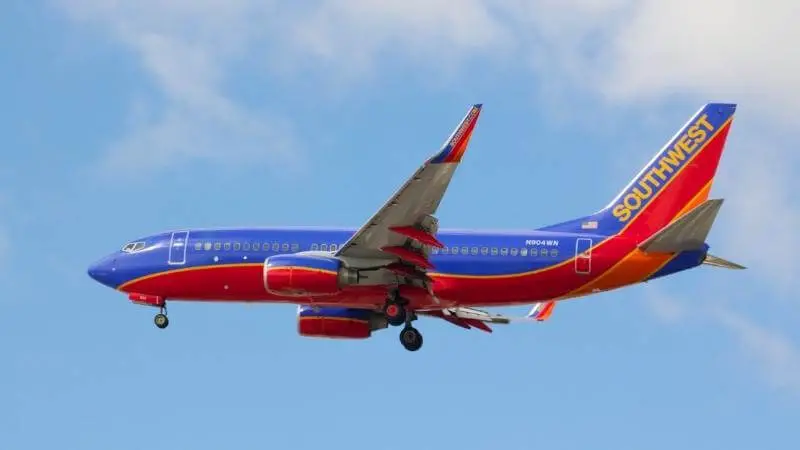
Southwest Airlines has occupied a singular position in American aviation since its founding in 1967 in Dallas, Texas. As the world’s largest low-cost carrier, the airline has built its identity around a deceptively simple proposition: make air travel affordable, reliable, and enjoyable for the average consumer. Under the legendary stewardship of co-founder Herb Kelleher, Southwest pioneered a business model that defied virtually every convention of the legacy airline industry, from its point-to-point routing to its single aircraft type strategy centered on the Boeing 737. The airline’s mission and vision statements serve as the codified expression of this philosophy, and they merit careful examination in the context of an industry that continues to evolve at a rapid pace.
This analysis provides a comprehensive evaluation of Southwest Airlines’ mission statement and vision statement, dissecting their core components, assessing their strategic implications, and identifying both strengths and weaknesses. The discussion also situates Southwest within the broader competitive landscape of the U.S. airline industry, drawing comparisons with carriers such as Delta Air Lines, United Airlines, American Airlines, and several ultra-low-cost competitors.
Southwest Airlines Mission Statement
Southwest Airlines articulates its mission statement as follows:
“The mission of Southwest Airlines is dedication to the highest quality of Customer Service delivered with a sense of warmth, friendliness, individual pride, and Company Spirit.”
This statement has remained remarkably consistent throughout the airline’s history, a reflection of the company’s belief that its founding principles remain as relevant today as they were when Herb Kelleher and Rollin King sketched the original route map on a cocktail napkin. The mission statement is notable for what it includes and, equally, for what it omits. It makes no mention of low fares, operational efficiency, or market share. Instead, it places the entirety of its emphasis on the human dimension of the business: the quality of service, the emotional tenor of customer interactions, and the internal culture that makes those interactions possible.
Mission Statement Analysis
The Southwest Airlines mission statement can be deconstructed into four distinct components, each of which reveals a deliberate strategic choice about how the airline defines its purpose and priorities.
Dedication to the highest quality of Customer Service: The opening clause establishes customer service not merely as a priority but as the airline’s fundamental reason for existence. The word “dedication” implies an ongoing, unwavering commitment rather than a seasonal initiative or a marketing slogan. The phrase “highest quality” sets an aspirational benchmark, suggesting that Southwest does not aim for adequacy but for excellence. It is worth noting that Southwest capitalizes “Customer Service” as a compound proper noun, a typographical choice that signals the elevated status of this concept within the organization’s hierarchy of values.
Warmth and friendliness: These two qualities describe the emotional character of the service experience Southwest seeks to deliver. In an industry frequently criticized for impersonal treatment and adversarial customer relations, the explicit commitment to warmth and friendliness serves as a differentiator. Southwest has historically reinforced this commitment through hiring practices that prioritize personality and attitude, often favoring candidates who demonstrate humor, empathy, and genuine enthusiasm for human interaction. The airline’s flight attendants are famously encouraged to inject personality into safety announcements and onboard communication, a practice that flows directly from this element of the mission.
Individual pride: This component shifts the focus from the customer to the employee, acknowledging that the quality of service is inextricably linked to the morale and self-regard of the people who deliver it. Southwest has long operated under the conviction that employees who feel valued and respected will, in turn, extend that same treatment to customers. The concept of “individual pride” suggests that each employee is expected to take personal ownership of the service experience, rather than viewing themselves as interchangeable units within a corporate machine. This aligns with Southwest’s well-documented employee-first culture, in which the company has historically prioritized employee satisfaction on the theory that satisfied employees produce satisfied customers, who in turn produce satisfied shareholders.
Company Spirit: The final element introduces a collective dimension to complement the individual one. “Company Spirit,” again capitalized as a proper noun, refers to the shared ethos and communal energy that define Southwest’s organizational culture. This is the element that transforms a collection of individual employees into a cohesive team with a shared identity. Southwest has cultivated this spirit through a variety of mechanisms, including celebratory corporate events, a tradition of internal recognition programs, and a leadership philosophy that emphasizes accessibility and humility. The legacy of Herb Kelleher, who was known for personally greeting employees, participating in company celebrations, and championing a work environment that blended professionalism with genuine fun, remains a powerful influence on how “Company Spirit” is understood and practiced within the organization.
Southwest Airlines Vision Statement
Southwest Airlines expresses its vision through the following statement:
“To be the world’s most loved, most efficient, and most profitable airline.”
This vision statement is considerably more concise than the mission statement, and it operates in a fundamentally different register. Where the mission statement is inward-facing and process-oriented, describing how Southwest intends to conduct its business, the vision statement is outward-facing and outcome-oriented, describing what Southwest aspires to become. The tripartite structure of the vision, built around the superlative “most,” establishes three parallel ambitions that the airline views as mutually reinforcing rather than mutually exclusive.
Vision Statement Analysis
Each of the three pillars in Southwest’s vision statement warrants individual examination, as they collectively define the airline’s long-term strategic trajectory.
Most loved: The aspiration to be “most loved” is a bold and unusual choice for a corporate vision statement. Most airlines aspire to be the largest, the most reliable, or the most innovative. Southwest’s decision to frame its primary aspiration in emotional terms reflects its deep conviction that brand loyalty is ultimately an emotional phenomenon. Customers do not merely choose Southwest because of its fares; they choose it because of how the airline makes them feel. This emotional dimension has been a cornerstone of Southwest’s brand identity for decades, and it is reflected in everything from the airline’s advertising campaigns to the tone of its social media presence. The word “loved” also implicitly extends beyond customers to encompass employees, communities, and other stakeholders, suggesting a holistic vision of corporate affection.
Most efficient: Efficiency is the operational foundation upon which Southwest’s entire business model rests. The airline’s commitment to a single aircraft type, the Boeing 737, dramatically simplifies maintenance, training, and fleet management. Its point-to-point routing model avoids the complexity and vulnerability of the hub-and-spoke systems employed by legacy carriers such as Delta, United, and American Airlines. Its famously rapid turnaround times, often achieving gate-to-gate cycles of 25 minutes or less, maximize aircraft utilization and minimize unproductive ground time. The vision statement’s emphasis on efficiency signals that these operational disciplines are not merely tactical advantages but core strategic commitments that Southwest intends to maintain and deepen over time.
Most profitable: The inclusion of profitability as a stated aspiration is notable for its directness. Many corporations prefer to frame their financial objectives in softer language, speaking of “shareholder value” or “sustainable growth.” Southwest’s unambiguous embrace of profitability as a core aspiration reflects a pragmatic understanding that financial performance is not antithetical to customer service and employee welfare but is, in fact, the prerequisite for sustaining them. Southwest maintained an extraordinary record of consecutive profitable years, a streak that extended for more than four decades before being interrupted by the extraordinary circumstances of the COVID-19 pandemic. The vision statement suggests that the airline views the restoration and extension of this record as a central organizational objective.
The sequential ordering of the three pillars is also significant. By placing “most loved” before “most efficient” and “most profitable,” Southwest implicitly establishes a causal hierarchy: emotional connection drives operational discipline, which in turn drives financial performance. This ordering is consistent with the airline’s long-standing belief that culture is the ultimate source of competitive advantage.
Core Values of Southwest Airlines
Southwest Airlines has articulated a set of core values that serve as the behavioral bridge between its mission and its vision. These values provide the practical guidelines that translate abstract aspirations into daily conduct. While the airline has expressed these values in various formulations over the years, several themes have remained constant and form the philosophical bedrock of the organization.
Warrior Spirit: This value captures the competitive intensity and resilience that have defined Southwest since its earliest days, when the airline fought protracted legal battles simply to secure the right to fly. The Warrior Spirit is about persistence in the face of adversity, a willingness to challenge the status quo, and the determination to compete vigorously in a demanding industry. It encourages employees to approach their work with energy, tenacity, and a refusal to accept mediocrity.
Servant’s Heart: This value reflects the airline’s deep commitment to service, both in the customer-facing sense and in the broader sense of caring for colleagues and communities. The concept of a Servant’s Heart encourages employees to approach their roles with humility and generosity, treating every interaction as an opportunity to make someone’s day better. This value is directly connected to the mission statement’s emphasis on warmth and friendliness, providing a motivational framework for the behaviors that Southwest expects its people to demonstrate.
Fun-LUVing Attitude: Perhaps the most distinctive of Southwest’s values, the Fun-LUVing Attitude is a direct inheritance from the Kelleher era. The airline’s stock ticker symbol, LUV, is a playful reference to its original home at Dallas Love Field, and it has become a symbol of the company’s belief that work should be enjoyable. This value encourages employees to bring humor, creativity, and genuine enjoyment to their work, and it gives them permission to express their personalities in ways that would be discouraged or prohibited at more buttoned-up organizations. The Fun-LUVing Attitude is what produces the singing flight attendants, the humorous gate announcements, and the spontaneous acts of kindness that have become part of Southwest’s brand folklore.
Work the Southwest Way: This value encompasses the operational disciplines and collaborative behaviors that enable the airline to function effectively. It includes a commitment to safety, a respect for established procedures, and a willingness to work across departmental boundaries. Working the Southwest Way means taking pride in doing things right, supporting colleagues without being asked, and maintaining the operational reliability that customers depend upon. This value recognizes that culture alone is insufficient; it must be paired with disciplined execution to produce meaningful results.
These core values collectively create a cultural ecosystem that is self-reinforcing. The Warrior Spirit provides the competitive drive, the Servant’s Heart provides the ethical compass, the Fun-LUVing Attitude provides the emotional energy, and Working the Southwest Way provides the operational framework. Together, they form a coherent value system that has proven remarkably durable across leadership transitions, economic cycles, and industry disruptions.
Strengths of the Mission and Vision Statements
Clarity of Purpose
Both the mission and vision statements benefit from a clarity that is uncommon in corporate communications. The mission statement identifies a single, unambiguous purpose: delivering exceptional customer service. The vision statement identifies three specific, measurable aspirations. Neither statement attempts to be all things to all people, and neither dilutes its message with qualifications, caveats, or corporate jargon. This clarity makes both statements accessible to every level of the organization, from the C-suite to the ramp agent, and it provides a reliable compass for decision-making in ambiguous situations.
Cultural Authenticity
One of the most significant strengths of Southwest’s mission and vision statements is that they are genuinely reflective of the organization’s actual culture and behavior. Many corporations adopt aspirational language in their mission statements that bears little resemblance to the daily experience of their employees or customers. Southwest’s statements, by contrast, describe a culture that is widely recognized and extensively documented by independent observers. The airline consistently ranks among the top carriers in customer satisfaction surveys, and its employee retention rates have historically exceeded industry averages. This alignment between stated values and lived experience lends the statements a credibility that purely aspirational declarations lack.
Employee-Centric Philosophy
The mission statement’s explicit references to “individual pride” and “Company Spirit” reflect an employee-centric philosophy that distinguishes Southwest from many of its competitors. By acknowledging that service quality is a function of employee engagement, the mission statement creates a logical foundation for the airline’s investments in employee welfare, training, and recognition. This is not merely a feel-good gesture; it is a strategic insight that has been validated by decades of operational performance. Airlines that treat their employees as costs to be minimized tend to deliver service experiences that reflect that philosophy. Southwest’s mission statement encodes a fundamentally different assumption about the relationship between employee satisfaction and business performance.
Balanced Vision
The vision statement’s tripartite structure achieves a balance that is difficult to find in corporate vision statements. By aspiring to be simultaneously loved, efficient, and profitable, Southwest acknowledges the interdependence of these objectives and resists the temptation to prioritize one at the expense of the others. This balanced approach provides strategic flexibility, as it allows the airline to calibrate its emphasis across the three dimensions in response to changing market conditions without abandoning any of them entirely.
Weaknesses of the Mission and Vision Statements
Absence of Specific Customer Value Propositions
The most conspicuous omission from Southwest’s mission statement is any reference to the specific value propositions that define the airline’s competitive identity. There is no mention of low fares, no bag fees, no change fees, open seating, or any of the other tangible benefits that customers associate with the Southwest brand. While the airline may argue that these are tactical expressions of a deeper commitment to customer service, the absence of any concrete value proposition from the mission statement creates a gap between the airline’s stated purpose and the practical reasons why customers choose to fly Southwest. A mission statement that referenced affordable, transparent, and hassle-free travel would more accurately capture the full scope of the airline’s identity. By comparison, carriers such as JetBlue have crafted mission statements that more explicitly connect their service philosophy to tangible customer benefits.
Limited Forward-Looking Orientation
The mission statement is fundamentally backward-looking in its orientation, describing a set of values and commitments that were established at the airline’s founding. While consistency is a virtue, the statement provides no indication of how Southwest intends to evolve in response to changing customer expectations, technological disruption, or competitive dynamics. The airline industry is undergoing significant transformation, driven by digital innovation, sustainability imperatives, and shifting consumer preferences. A mission statement that acknowledged these forces and articulated a commitment to adaptation and innovation would better position Southwest for the challenges ahead.
Lack of Sustainability and Social Responsibility
Neither the mission statement nor the vision statement makes any reference to environmental sustainability or broader social responsibility. In an era when corporate stakeholders increasingly expect companies to articulate their commitments to environmental stewardship, community engagement, and social equity, the absence of these themes from Southwest’s foundational statements is a notable gap. Other airlines, including Delta Air Lines and United Airlines, have made sustainability a more prominent element of their corporate messaging. Southwest does maintain active sustainability programs and publishes annual One Report disclosures, but the absence of these themes from the mission and vision statements suggests they are not yet integrated into the airline’s core identity in the way that customer service and operational efficiency are.
Vagueness of Emotional Language
While the vision statement’s aspiration to be “most loved” is emotionally resonant, it is also inherently subjective and difficult to measure. Unlike efficiency and profitability, which can be quantified through established metrics, “love” is an elusive concept that defies standardized assessment. This vagueness creates a risk that the aspiration functions more as a branding exercise than as a genuine strategic objective. Without clearly defined metrics for measuring stakeholder affection, the “most loved” aspiration may lack the operational specificity needed to drive meaningful organizational behavior.
Industry Context and Competitive Positioning
Southwest Airlines operates in a competitive landscape that has grown increasingly complex and stratified. The U.S. airline market is dominated by three legacy carriers, Delta Air Lines, United Airlines, and American Airlines, each of which operates a global hub-and-spoke network and competes aggressively for premium business travelers. At the opposite end of the spectrum, ultra-low-cost carriers such as Spirit Airlines and Frontier Airlines have adopted unbundled pricing models that strip the base fare to its minimum and charge separately for virtually every ancillary service. Southwest occupies a distinctive middle position, offering fares that are competitive with the ultra-low-cost carriers while providing a level of included amenities and service quality that more closely resembles the legacy carriers.
This positioning creates both opportunities and challenges for the alignment of Southwest’s mission and vision with its competitive strategy. The mission statement’s emphasis on customer service differentiates Southwest from the ultra-low-cost carriers, whose business models are premised on minimizing service costs rather than maximizing service quality. At the same time, the vision statement’s emphasis on efficiency differentiates Southwest from the legacy carriers, whose complex operations and extensive service offerings necessarily entail higher cost structures. In this sense, the mission and vision statements collectively articulate a competitive position that is coherent and defensible.
However, the competitive landscape is not static. The legacy carriers have invested heavily in improving their basic economy products, narrowing the service gap that once separated them from Southwest. JetBlue Airways, which occupies a similar middle-market position, has developed a brand identity that combines service quality with a more contemporary aesthetic sensibility. Ultra-low-cost carriers have expanded aggressively, exerting downward pressure on fares across the industry. In this context, Southwest’s mission and vision statements may need to evolve to articulate a more specific and contemporary competitive identity.
The airline’s recent strategic shifts further complicate the picture. Southwest has begun exploring changes to several of its most iconic policies, including its open seating model and its approach to ancillary revenue. These potential changes represent a significant departure from the operational philosophy that has defined the airline for decades, and they raise legitimate questions about whether the mission and vision statements, as currently formulated, adequately capture the airline’s evolving strategic direction. If Southwest moves toward assigned seating, introduces premium cabin options, or begins unbundling certain services, the gap between its stated mission and its operational reality could widen in ways that undermine the cultural authenticity that has been one of the statements’ greatest strengths.
The competitive dynamics of the low-cost segment also deserve careful consideration. Southwest’s cost advantage over the legacy carriers, once substantial, has narrowed over time as the airline has matured, its workforce has become more senior, and its operational complexity has increased. Meanwhile, carriers like Spirit and Frontier maintain significantly lower cost structures by operating with minimal service and maximum unbundling. The vision statement’s aspiration to be “most efficient” will require sustained innovation and discipline if Southwest is to maintain its cost competitiveness against these younger, leaner competitors while continuing to deliver the service quality described in its mission statement.
The point-to-point operating model, which has been central to Southwest’s efficiency advantage, also faces evolving challenges. As the airline has expanded into larger metropolitan airports and longer-haul routes, the simplicity of the original point-to-point model has become more difficult to maintain. The tension between network expansion and operational simplicity is one that the mission and vision statements do not explicitly address, but it is a tension that will shape the airline’s strategic choices for years to come.
Southwest’s single fleet type strategy, centered on the Boeing 737, remains a powerful source of operational efficiency. By operating only one aircraft type, the airline achieves economies of scale in maintenance, training, and spare parts that are unavailable to carriers operating mixed fleets. However, this strategy also creates a dependency on a single manufacturer and a single airframe, a risk that has been underscored by the operational disruptions associated with the Boeing 737 MAX grounding and subsequent production quality concerns. The vision statement’s emphasis on efficiency implicitly endorses the single fleet type approach, but it does not acknowledge the strategic risks that this concentration entails.
Final Assessment
Southwest Airlines’ mission and vision statements represent a coherent and authentic expression of the airline’s identity, culture, and strategic aspirations. The mission statement’s emphasis on customer service, employee engagement, and organizational spirit captures the essence of what has made Southwest a beloved and successful airline for more than half a century. The vision statement’s balanced aspiration to be loved, efficient, and profitable provides a clear and compelling strategic framework that acknowledges the interdependence of cultural, operational, and financial performance.
The statements’ greatest strength is their authenticity. Unlike many corporate mission and vision statements, which function primarily as marketing artifacts, Southwest’s statements genuinely reflect the organization’s culture and values. This alignment between rhetoric and reality has been a source of competitive advantage, enabling the airline to attract and retain employees who are genuinely committed to its service philosophy and to build customer loyalty that extends beyond transactional considerations.
At the same time, the statements exhibit several notable weaknesses. The absence of specific customer value propositions, the lack of forward-looking language, the omission of sustainability commitments, and the vagueness of certain aspirational elements all represent areas where the statements could be strengthened. These weaknesses are not fatal, but they do suggest that the statements may benefit from a thoughtful revision that preserves their core character while addressing the evolving expectations of customers, employees, investors, and communities.
The competitive context in which Southwest operates adds urgency to these considerations. As legacy carriers improve their economy products, as ultra-low-cost carriers expand their footprint, and as customer expectations continue to evolve, Southwest will need to articulate its competitive identity with greater specificity and contemporaneity. The mission and vision statements should serve as living documents that evolve in concert with the airline’s strategy, rather than as historical artifacts that anchor the organization to a fixed set of assumptions about the market.
Ultimately, the value of any mission or vision statement lies not in the elegance of its language but in the degree to which it guides and inspires organizational behavior. By this measure, Southwest Airlines’ statements have been remarkably effective. The challenge for the airline’s leadership is to preserve the cultural authenticity and strategic clarity that have made these statements powerful while ensuring that they remain relevant and responsive to the demands of a rapidly changing industry. If Southwest can achieve this balance, its mission and vision statements will continue to serve as the foundation for one of the most distinctive and durable brands in global aviation.