
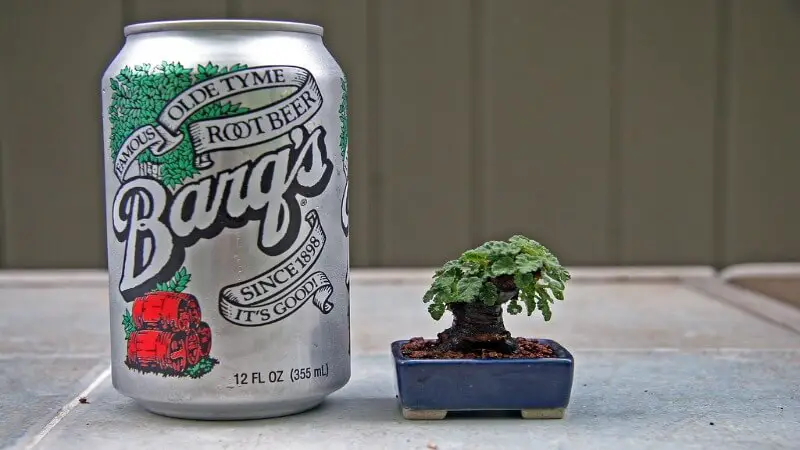
Does Barq’s Root Beer Have Caffeine? (2026)
Barq’s Root Beer occupies a peculiar position in the soft drink world. It is one of the few root beers on the market that contains caffeine, a fact that surprises many consumers who assume all root beer is caffeine-free by default. For anyone monitoring their caffeine intake or simply trying to make an informed choice at the soda fountain, the distinction matters.
This article breaks down exactly how much caffeine Barq’s contains, how the regular and diet versions differ, and how Barq’s stacks up against other root beer brands and popular soft drinks like Coca-Cola and Dr Pepper.
The Short Answer: Yes, Regular Barq’s Contains Caffeine
Regular Barq’s Root Beer contains approximately 22 milligrams of caffeine per 12-ounce serving. That figure places it well below most colas and energy drinks, but it is not zero. For a beverage category that consumers widely regard as caffeine-free, even a modest amount warrants attention.
The 22 mg figure comes directly from The Coca-Cola Company, which has owned the Barq’s brand since 1995. It is consistent across standard cans, bottles, and fountain servings of the same volume. Larger servings, such as a 20-ounce bottle, contain proportionally more caffeine — roughly 36 mg in that case.
To put that number in perspective, a 12-ounce can of Coca-Cola Classic contains about 34 mg of caffeine, and a typical 8-ounce cup of brewed coffee contains between 80 and 100 mg. Barq’s delivers a fraction of what most caffeinated beverages provide, but it is enough to affect individuals who are highly sensitive to the stimulant or who need to avoid it for medical reasons.
There is one important geographic caveat. Barq’s Root Beer sold in certain markets — most notably in the state of Utah — has historically been produced without caffeine. Local bottling variations can exist, so checking the label on any specific can or bottle remains the most reliable approach.
Regular Barq’s vs. Diet Barq’s: A Critical Distinction
One of the most common points of confusion surrounding this brand involves the difference between its two primary variants. Regular Barq’s Root Beer and Diet Barq’s Root Beer do not share the same caffeine profile.
Regular Barq’s Root Beer contains approximately 22 mg of caffeine per 12-ounce serving. It is sweetened with high fructose corn syrup and contains 160 calories per can.
Diet Barq’s Root Beer is caffeine-free. It uses aspartame as its sweetener and contains zero calories. The Coca-Cola Company explicitly labels it as having no caffeine.
This is not a subtle difference. Anyone who avoids caffeine entirely — whether due to pregnancy, a heart condition, anxiety sensitivity, or personal preference — should understand that reaching for a Diet Barq’s is the safe choice within this brand, while a regular Barq’s is not. The two products may share a name, but they differ on this fundamental point.
It is worth noting that this split is somewhat unusual in the soft drink industry. For most caffeinated sodas, the diet or zero-sugar version contains a similar amount of caffeine as the regular version. Diet Coke, for example, actually contains more caffeine than regular Coca-Cola. Barq’s bucks that pattern entirely by removing caffeine from its diet formulation.
How Barq’s Compares to Other Root Beers
The root beer category is, as a general rule, caffeine-free. Barq’s is the notable exception among widely distributed national brands. Here is how several popular root beers compare:
| Root Beer Brand | Caffeine per 12 oz |
|---|---|
| Barq’s Root Beer (Regular) | 22 mg |
| Barq’s Root Beer (Diet) | 0 mg |
| Dad’s Root Beer | 0 mg |
| A&W Root Beer | 0 mg |
| Mug Root Beer | 0 mg |
| IBC Root Beer | 0 mg |
| Stewart’s Root Beer | 0 mg |
The pattern is clear. Dad’s Root Beer, A&W, Mug, IBC, and Stewart’s all contain zero caffeine. Barq’s stands alone among the major brands in including it. Smaller craft root beer producers occasionally add caffeine to their formulations, but among the brands a typical consumer encounters at a grocery store or fast food restaurant, Barq’s is the outlier.
This distinction becomes practically relevant in fast food settings. McDonald’s, for instance, serves Barq’s as its default root beer at fountain machines. A customer ordering root beer at McDonald’s under the assumption that all root beer is caffeine-free would be incorrect. The same applies to any restaurant or convenience store that stocks the Coca-Cola family of products, as Barq’s is the root beer in that portfolio.
Why Barq’s Contains Caffeine in the First Place
The inclusion of caffeine in Barq’s is rooted in the brand’s history and identity. Barq’s was created by Edward Barq in 1898 in Biloxi, Mississippi. From its earliest days, the beverage was marketed with a bolder, sharper flavor profile than its competitors. The brand’s long-running slogan — “Barq’s has bite” — was not merely a marketing tagline. It reflected a genuine product difference.
Caffeine contributes a slight bitterness that complements the wintergreen, vanilla, and sarsaparilla notes found in root beer. In Barq’s formulation, that bitterness adds an edge that differentiates it from the smoother, sweeter profiles of A&W or Mug. Whether any individual consumer can actually taste 22 mg of caffeine in a 12-ounce serving is debatable, but the formulation choice is deliberate.
There is also a functional element. Caffeine is a mild stimulant, and its presence — even in small quantities — can subtly influence consumer preference. Studies have shown that caffeine can create a very low-level reinforcement effect, making a beverage marginally more appealing over time. The Coca-Cola Company, which has extensive experience formulating caffeinated products, would be well aware of this dynamic.
Regardless of the underlying reason, the result is a root beer that occupies its own lane. Barq’s is not trying to be A&W. It is a deliberately different product, and caffeine is part of what makes it so.
Barq’s Caffeine vs. Other Popular Soft Drinks
Understanding where Barq’s falls on the broader caffeine spectrum helps contextualize its 22 mg figure. The following comparison covers several well-known beverages:
| Beverage | Caffeine per 12 oz |
|---|---|
| Coffee (brewed, 12 oz) | 120–170 mg |
| Red Bull (12 oz equivalent) | ~114 mg |
| Mountain Dew | 54 mg |
| Dr Pepper | 41 mg |
| Diet Coke | 46 mg |
| Coca-Cola Classic | 34 mg |
| Pepsi | 38 mg |
| Barq’s Root Beer (Regular) | 22 mg |
| Cream Soda (most brands) | 0 mg |
| Sprite / 7UP | 0 mg |
Barq’s contains roughly two-thirds the caffeine of Coca-Cola and about half the caffeine of Dr Pepper. It delivers far less than Mountain Dew, and it is not in the same category as coffee or energy drinks. For most adults, 22 mg is a negligible amount. For children, pregnant individuals, or those with certain medical conditions, it is still a factor worth considering — particularly because the caffeine in Barq’s is unexpected.
That element of surprise is arguably the most important issue here. People who drink Coca-Cola or Dr Pepper generally know those beverages contain caffeine. People who order a root beer often do not expect it. The gap between expectation and reality is where problems can arise, especially for individuals who have been told to eliminate caffeine from their diet entirely.
Identifying Caffeine on the Barq’s Label
FDA regulations require that caffeine be listed as an ingredient on any product that contains it as an additive. On a can of regular Barq’s Root Beer, caffeine appears in the ingredient list. It is typically found near the end, after flavorings such as “sodium benzoate” and “citric acid.”
However, the front of the can does not prominently display a caffeine warning or callout. Unlike some energy drinks that advertise their caffeine content as a selling point, Barq’s does not draw attention to it. A consumer who does not read the fine print on the back of the can could easily miss it.
Diet Barq’s, by contrast, includes “CAFFEINE FREE” on its packaging — a clear and visible label. This makes the diet version straightforward to identify. The regular version requires a closer look at the ingredient list to confirm the presence of caffeine.
For anyone purchasing Barq’s from a fountain machine — at a fast food restaurant, movie theater, or convenience store — there is typically no ingredient list visible at all. In those settings, the consumer must rely on prior knowledge or ask a staff member. Most cream sodas, lemon-lime sodas, and other root beers at the same fountain will be caffeine-free, making Barq’s the quiet exception in the lineup.
Who Should Pay Attention to Barq’s Caffeine Content
For the average adult with no caffeine restrictions, 22 mg per serving is unlikely to produce any noticeable effect. It falls below the threshold where most people would experience increased alertness, and it is far too low to cause jitteriness or sleep disruption in isolation.
However, several groups should take note:
- Pregnant individuals: The American College of Obstetricians and Gynecologists recommends limiting caffeine to under 200 mg per day during pregnancy. While a single Barq’s would not approach that limit, it does contribute to the daily total — and many people consume caffeine from multiple sources throughout the day.
- Children: The American Academy of Pediatrics discourages caffeine consumption for children. A parent who gives a child a root beer expecting it to be caffeine-free should be aware that Barq’s does not fit that assumption.
- Individuals with heart conditions or anxiety disorders: Some physicians advise complete caffeine avoidance for patients with arrhythmias, panic disorder, or generalized anxiety. In those cases, even 22 mg matters.
- People taking certain medications: Some medications interact with caffeine, and patients on those medications may be told to avoid it entirely. Barq’s could be an overlooked source.
For all of these groups, the solution is straightforward: choose Diet Barq’s (which is caffeine-free) or select a different root beer brand such as Dad’s Root Beer, A&W, or Mug.
Final Assessment
Regular Barq’s Root Beer contains approximately 22 mg of caffeine per 12-ounce serving. Diet Barq’s Root Beer contains none. Among widely available root beer brands, Barq’s is the only major name that includes caffeine in its regular formulation.
The amount is modest by any standard — less than a cup of green tea and roughly a quarter of what a cup of coffee delivers. But its significance lies not in its quantity but in its unexpectedness. Root beer, as a category, is assumed to be caffeine-free. Barq’s breaks that assumption, and anyone who needs to avoid caffeine should be aware of it.
For consumers who enjoy Barq’s distinctive sharpness and do not have caffeine restrictions, the 22 mg is unlikely to be a concern. For everyone else, the label deserves a second look — or a switch to Diet Barq’s, which preserves much of the flavor without any caffeine at all.