
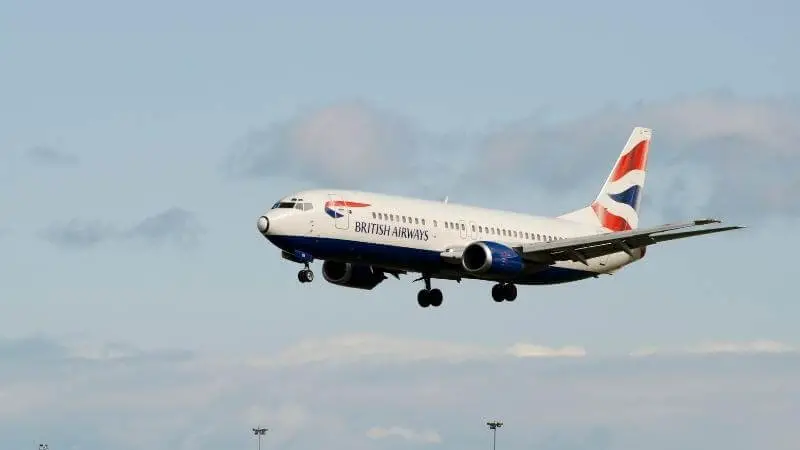
British Airways Mission Statement Analysis (2026)
British Airways occupies a singular position in global aviation. As the flag carrier of the United Kingdom and a founding member of the Oneworld alliance, the airline has shaped transatlantic travel for decades, carried the legacy of Concorde supersonic flight, and maintained its standing as one of the most recognized aviation brands in the world. Headquartered at London Heathrow, the busiest airport in Europe, British Airways operates an extensive network spanning more than 200 destinations across six continents. It is a subsidiary of International Airlines Group (IAG), the multinational conglomerate that also controls Iberia, Aer Lingus, and Vueling.
Yet brand heritage alone does not secure an airline’s future. British Airways operates in a fiercely competitive environment, squeezed between the relentless expansion of Gulf super-connectors such as Emirates and Qatar Airways, the aggressive pricing of low-cost carriers like Ryanair and easyJet, and the premium innovation of rivals such as Singapore Airlines and Virgin Atlantic. Understanding how British Airways articulates its strategic purpose through its mission and vision statements provides meaningful insight into how the airline intends to navigate this complex landscape.
This analysis examines the mission statement, vision statement, and core values of British Airways in detail. Each component is evaluated for clarity, strategic relevance, competitive differentiation, and practical alignment with the airline’s operations. The assessment also considers how these guiding statements compare with those of key industry competitors and whether they adequately address the challenges and opportunities that define modern aviation.
British Airways Mission Statement
The British Airways mission statement communicates the airline’s fundamental reason for existence and the value it seeks to deliver to its stakeholders. The airline has historically articulated its mission around the following principle:
“To be the undisputed premium airline in the UK, delivering exceptional customer experiences while connecting Britain to the world and the world to Britain.”
This mission statement establishes several important strategic commitments. First, it positions British Airways explicitly as a premium carrier rather than a mass-market operator. Second, it claims national primacy, asserting that no other UK-based airline should rival its status. Third, it frames the airline as a connective force, linking the United Kingdom with global destinations and, conversely, bringing international travelers to British shores. Each of these elements warrants careful examination.
Mission Statement Analysis
The mission statement’s emphasis on being “the undisputed premium airline” is both its greatest strength and a source of ongoing tension. British Airways has long cultivated an image of sophistication, quality, and quintessential Britishness. Its Club World business class, First Class suites, and Concorde Room lounges at Heathrow Terminal 5 are designed to reinforce this positioning. The airline’s investment in its premium cabins, dining partnerships with notable chefs, and bespoke amenity offerings all serve the mission’s premium aspiration.
However, the claim of being “undisputed” invites scrutiny. In the UK market, Virgin Atlantic has consistently challenged British Airways on transatlantic routes, often winning customer satisfaction awards and earning a reputation for innovation in premium economy and upper class service. The word “undisputed” therefore reads as aspirational rather than descriptive, which is not inherently problematic for a mission statement but does create a gap between stated ambition and market reality that the airline must continuously work to close.
The phrase “exceptional customer experiences” is a common declaration in the aviation industry. Nearly every major carrier, from Singapore Airlines to Emirates, makes similar claims about customer experience. What distinguishes British Airways is the implicit cultural dimension of its mission. The reference to “connecting Britain to the world and the world to Britain” is not merely a geographical statement. It positions the airline as a national institution, a commercial ambassador for the United Kingdom. This cultural dimension gives the mission statement a depth that purely service-oriented declarations lack.
From a strategic perspective, the mission statement aligns well with British Airways’ hub-and-spoke model centered on Heathrow. The airport’s position as a global gateway makes the airline’s connective role operationally credible. British Airways operates more flights out of Heathrow than any other carrier, and its slot portfolio at the airport represents one of its most valuable strategic assets. The mission statement effectively mirrors this operational reality.
One notable absence from the mission statement is any explicit reference to employees, shareholders, or sustainability. Modern corporate mission statements increasingly incorporate stakeholder breadth, acknowledging that an organization serves multiple constituencies. British Airways’ mission remains customer-facing and market-positioning in its orientation, which provides clarity but may also appear narrow when measured against evolving expectations of corporate responsibility.
British Airways Vision Statement
While the mission statement defines what British Airways does and for whom, its vision statement articulates the future state the airline aspires to achieve. British Airways has expressed its vision through the following declaration:
“To be the airline of choice for long-haul premium customers, recognized worldwide for delivering outstanding service, innovation, and value.”
This vision statement narrows the airline’s strategic focus in important ways. It explicitly prioritizes long-haul operations and premium customers, which reflects a deliberate choice to compete in the segments where margins are highest and brand differentiation matters most. It also introduces three evaluative criteria, namely service, innovation, and value, against which the airline’s progress can be measured.
Vision Statement Analysis
The vision statement’s focus on long-haul premium travel is strategically sound. British Airways’ most profitable routes have historically been its transatlantic services, particularly the London-New York corridor, which is widely regarded as the most lucrative airline route in the world. By anchoring its vision in long-haul premium service, the airline acknowledges where its competitive advantages are strongest: schedule frequency, Heathrow connectivity, a large fleet of wide-body aircraft, and established relationships with corporate travel buyers.
The aspiration to be “the airline of choice” introduces a customer-centric decision framework. This is a meaningful distinction from simply being the largest or most prestigious airline. It suggests that British Airways wants to win in the moment of purchase decision, which requires excellence not only in the flight experience itself but also in booking convenience, loyalty program value, schedule reliability, and post-travel service recovery. The Executive Club frequent flyer program, integrated within the broader Avios currency ecosystem, is a key instrument in pursuing this vision.
The inclusion of “innovation” in the vision statement is noteworthy. British Airways has a complicated relationship with innovation. On one hand, the airline was a pioneer of supersonic travel through its operation of Concorde from 1976 to 2003, and it has invested in digital transformation through initiatives such as biometric boarding, app-based travel management, and artificial intelligence-driven customer service tools. On the other hand, critics have pointed out that British Airways has at times lagged behind competitors in hard product innovation. Airlines such as Qatar Airways and Singapore Airlines have introduced new business class suites and first class products at a pace that British Airways has not always matched.
The reference to “value” is particularly interesting in the context of a premium airline. Value does not necessarily mean low price; rather, it implies that the quality of the experience should justify the fare paid. This is a critical distinction in an era when business travelers have more choices than ever. A corporate traveler comparing British Airways Club World with Virgin Atlantic Upper Class or Emirates Business Class is making a value judgment that encompasses seat comfort, lounge quality, catering, punctuality, and loyalty benefits. The vision statement’s inclusion of value signals that British Airways understands it must compete on the totality of the proposition, not on heritage alone.
A potential limitation of the vision statement is its silence on short-haul operations. British Airways operates an extensive European network, and its short-haul services have undergone significant transformation in recent years, adopting a more cost-conscious model that includes buy-on-board catering in economy class. The vision statement’s exclusive focus on long-haul premium travel leaves the short-haul operation without a clear aspirational framework, which may contribute to the perception that British Airways’ European services are an afterthought rather than an integral part of the brand experience.
Core Values of British Airways
British Airways’ strategic identity is further defined by a set of core values that guide organizational behavior, decision-making, and cultural norms. These values represent the principles the airline expects its employees to embody and its operations to reflect. The core values of British Airways can be understood through the following pillars:
Safety and Security. Above all other considerations, British Airways places the safety of its passengers and crew at the foundation of its value system. This is consistent with industry norms, as every reputable airline must prioritize safety as a non-negotiable commitment. British Airways maintains rigorous safety standards, invests in fleet modernization, and adheres to the regulatory frameworks established by the UK Civil Aviation Authority and the European Union Aviation Safety Agency. The airline’s safety record, while not without incident, reflects a sustained institutional commitment to this value.
Customer Focus. British Airways articulates a commitment to understanding and anticipating customer needs. This value manifests in initiatives such as the “Know Me” program, which uses customer data to personalize interactions, and in the airline’s investment in premium lounges, onboard service training, and digital customer service channels. The depth of this commitment has been tested during periods of operational disruption, including the widely reported IT failure of 2017 and the travel recovery challenges following the global disruptions of 2020 and 2021. How an airline responds to failure is often the truest test of its customer focus.
Integrity and Responsibility. British Airways espouses a commitment to conducting business ethically and responsibly. This includes compliance with anti-corruption regulations, data protection standards such as GDPR, and transparency in commercial practices. The airline’s parent company, IAG, publishes annual sustainability reports and has committed to achieving net-zero carbon emissions by 2050, a pledge that requires substantial investment in sustainable aviation fuel, fleet efficiency, and carbon offset programs.
Innovation and Excellence. As reflected in the vision statement, British Airways values innovation as a driver of competitive advantage. This value is expressed through fleet renewal programs, including the introduction of Airbus A350 aircraft featuring the Club Suite business class product, investments in digital infrastructure, and the adoption of new technologies in ground operations and in-flight entertainment. Excellence, as a companion value, sets the standard against which all innovations are measured: they must not merely be novel but must genuinely enhance the travel experience.
Teamwork and Respect. British Airways employs tens of thousands of people across its global operations, and the airline recognizes that the quality of the customer experience is directly dependent on the engagement and capability of its workforce. This value emphasizes collaboration across departments, respect for diverse perspectives, and investment in professional development. The airline’s relationship with its workforce has occasionally been contentious, with industrial disputes over pay and working conditions, but the stated value of teamwork reflects the aspiration, if not always the reality, of a harmonious organizational culture.
Strengths and Weaknesses of British Airways’ Strategic Statements
A thorough evaluation of British Airways’ mission statement, vision statement, and core values requires an honest assessment of both their strengths and their limitations. The following analysis considers each dimension in turn.
Strengths
Clear market positioning. The mission and vision statements leave no ambiguity about where British Airways intends to compete. The airline positions itself as a premium, long-haul-focused carrier with deep roots in the United Kingdom. This clarity is valuable both internally, as a guide for resource allocation and strategic investment, and externally, as a signal to customers, investors, and partners about what the airline stands for. In an industry where many carriers attempt to be all things to all people, British Airways’ willingness to define its competitive space is a meaningful advantage.
National identity as a differentiator. Few airlines leverage national identity as effectively as British Airways. The mission statement’s reference to “connecting Britain to the world” transforms the airline from a commercial enterprise into a national institution. This association provides intangible benefits, including brand recognition, customer loyalty among British travelers, and a degree of diplomatic goodwill that purely commercial brands cannot replicate. The airline’s role in national events, from carrying Olympic teams to operating repatriation flights, reinforces this identity.
Alignment with operational reality. The strategic statements are not detached from the airline’s actual operations. British Airways genuinely operates the largest long-haul network from the UK, holds the dominant position at Heathrow, and invests in premium products and services. This alignment between stated purpose and operational capability lends credibility to the mission and vision in ways that purely aspirational statements cannot achieve.
Multi-dimensional value framework. The core values cover a broad range of organizational concerns, from safety to innovation to workforce engagement. This breadth ensures that the values can serve as meaningful guides across different functions and levels of the organization. A cabin crew member, a network planner, and a finance executive can each find relevance in the value framework, which is essential for values that are intended to be lived rather than merely displayed.
Heritage as strategic capital. British Airways’ history, including its Concorde operations, its BOAC and BEA predecessors, and its role as a privatization success story, provides a reservoir of brand equity that the strategic statements can draw upon. The vision’s aspiration to be “recognized worldwide” is more credible for an airline with decades of global presence than it would be for a newer entrant.
Weaknesses
Insufficient differentiation from competitors. While the strategic statements are clear in their intent, they are not always distinctive in their language. Terms such as “exceptional customer experiences,” “outstanding service,” and “innovation” appear in the mission and vision statements of virtually every major airline. Emirates promises world-class service. Singapore Airlines emphasizes service excellence. Virgin Atlantic highlights customer experience. British Airways’ statements do not articulate what makes its version of these commitments unique, beyond the implied Britishness of its identity.
Limited stakeholder scope. The mission and vision statements are overwhelmingly customer-focused, with little explicit recognition of other stakeholder groups. Employees, shareholders, communities, and the environment receive minimal or no mention. In an era of stakeholder capitalism, where investors and regulators increasingly expect companies to articulate their responsibilities to all constituencies, this narrow focus may appear outdated. The core values partially address this gap, but the headline statements remain commercially oriented.
Sustainability gap. The absence of environmental sustainability from the mission and vision statements is a significant omission. Aviation is responsible for approximately two to three percent of global carbon dioxide emissions, and the industry faces growing regulatory and public pressure to decarbonize. IAG has made ambitious net-zero commitments, and British Airways has invested in sustainable aviation fuel and carbon offset programs. Yet these commitments are not reflected in the airline’s highest-level strategic statements, which suggests that sustainability has not yet been fully integrated into the airline’s core identity.
Short-haul ambiguity. As noted in the vision statement analysis, British Airways’ strategic declarations focus heavily on long-haul premium travel, leaving the short-haul operation without clear strategic framing. This is problematic because the airline’s European services represent a substantial portion of its flight volume and serve as essential feeder traffic for its long-haul network. The lack of strategic clarity for short-haul operations may contribute to inconsistent customer experiences on European routes, where British Airways competes directly with low-cost carriers such as Ryanair and easyJet on price while struggling to justify a premium positioning.
Gap between aspiration and execution. The claim to be “undisputed” and to deliver “outstanding” service creates a high bar that the airline does not always meet. Customer satisfaction surveys have periodically ranked British Airways below competitors in categories such as seat comfort, catering quality, and value for money. The airline’s decision to reduce complimentary catering on short-haul flights and to adopt denser seating configurations on some aircraft has been perceived by some customers as inconsistent with the premium positioning articulated in the mission statement. Strategic statements are only as powerful as the experiences that validate them.
Industry Context and Competitive Positioning
British Airways’ mission and vision statements must be understood within the broader context of a rapidly evolving aviation industry. Several structural forces shape the competitive environment in which these statements operate, and each has implications for their relevance and effectiveness.
The Gulf carrier challenge. The rise of Emirates, Qatar Airways, and Etihad Airways over the past two decades has fundamentally altered the competitive landscape for European legacy carriers. These airlines, supported by sovereign wealth and strategic geographic positioning, have invested heavily in premium products, network reach, and brand marketing. Emirates’ flagship Airbus A380 operations and Qatar Airways’ Qsuites business class product have set new benchmarks for premium travel. British Airways’ mission to be the “undisputed premium airline” must be evaluated against these competitors, who have in many respects redefined what premium air travel looks like.
Low-cost carrier pressure. On the other end of the spectrum, low-cost carriers continue to expand their market share in European short-haul travel. Ryanair is now the largest airline in Europe by passenger numbers, and its mission to provide the lowest fares stands in stark contrast to British Airways’ premium positioning. The low-cost model has permanently changed customer expectations about pricing, and British Airways’ adoption of buy-on-board catering and basic economy fares reflects the gravitational pull of this competitive reality, even as the mission statement maintains a premium narrative.
Digital transformation. The airline industry is undergoing a profound digital transformation that affects every aspect of the customer journey, from booking and check-in to in-flight entertainment and post-travel feedback. British Airways has invested in digital capabilities, including its mobile application, biometric processing at airports, and data-driven personalization. The vision statement’s reference to “innovation” is relevant here, but the statement does not specifically address the digital dimension of modern air travel, which is an increasingly important competitive differentiator.
Sustainability imperatives. The aviation industry faces mounting pressure to address its environmental impact. The European Union’s Emissions Trading System, the global CORSIA carbon offset scheme, and growing consumer awareness of flight-related emissions all create both challenges and opportunities. IAG has positioned itself as an industry leader in sustainability commitments, pledging to invest in sustainable aviation fuel and to achieve net-zero carbon emissions by 2050. British Airways’ strategic statements would benefit from explicitly incorporating these commitments, as sustainability is transitioning from a peripheral concern to a central element of airline strategy.
Post-pandemic travel recovery. The global disruptions of 2020 and 2021 fundamentally altered the aviation industry. Business travel volumes have recovered but have not returned to pre-disruption levels in all segments, as remote working and video conferencing have permanently reduced demand for some categories of corporate travel. Meanwhile, leisure travel has surged, with passengers prioritizing experiences and destinations. British Airways’ vision statement, with its focus on “long-haul premium customers,” must adapt to a reality in which the composition of the premium traveler base is shifting. Premium leisure travelers, often referred to as “bleisure” or high-end holiday travelers, represent a growing segment that the airline’s strategic statements do not explicitly address.
Alliance and partnership dynamics. British Airways’ membership in the Oneworld alliance and its joint business agreements with American Airlines, Finnair, and Iberia provide network reach and revenue benefits that enhance its competitive position. The mission statement’s aspiration to connect “Britain to the world and the world to Britain” is significantly enabled by these partnerships, which allow British Airways to offer seamless travel to destinations it does not serve directly. The strategic importance of alliances is likely to grow as airlines seek efficiency and scale without the capital intensity of fleet and route expansion.
Comparing British Airways’ strategic statements with those of its primary competitors reveals both commonalities and distinctions. Singapore Airlines, widely regarded as the global benchmark for premium service, articulates a vision centered on being “the world’s leading airline.” This is a broader and more ambitious claim than British Airways’ UK-focused positioning. Emirates emphasizes connecting people and cultures through its Dubai hub, leveraging geographic advantage as a core strategic asset. Virgin Atlantic, British Airways’ most direct competitor, differentiates through a brand personality that emphasizes style, disruption, and customer advocacy. Ryanair, operating in a fundamentally different competitive space, builds its mission around low fares and customer accessibility.
Against this competitive backdrop, British Airways’ strategic statements occupy a defensible but not unassailable position. The airline’s national identity, Heathrow hub dominance, and long-haul network provide genuine differentiation. However, the statements would benefit from greater specificity about what makes British Airways’ premium experience distinct, a clearer articulation of the airline’s sustainability commitments, and a more inclusive stakeholder perspective that reflects contemporary expectations of corporate purpose.
Final Assessment
British Airways’ mission statement, vision statement, and core values collectively present a coherent strategic identity that is grounded in premium positioning, national significance, and long-haul excellence. The strategic statements successfully communicate the airline’s aspirations and provide a framework for organizational decision-making that aligns with its operational strengths, particularly its dominant position at Heathrow, its extensive long-haul network, and its established brand reputation.
The mission statement’s emphasis on being “the undisputed premium airline” in the United Kingdom establishes a clear competitive ambition, while the vision statement’s focus on long-haul premium customers and the criteria of service, innovation, and value provide measurable dimensions against which progress can be assessed. The core values offer a comprehensive behavioral framework that spans safety, customer focus, integrity, innovation, and teamwork.
However, several areas warrant attention. The strategic statements rely on language that is common across the aviation industry and do not always articulate what makes British Airways’ proposition genuinely distinctive beyond its national identity. The absence of sustainability from the mission and vision statements is a meaningful gap that will become increasingly difficult to overlook as environmental accountability becomes a baseline expectation for all major corporations. The narrow stakeholder focus, while providing commercial clarity, may not satisfy the growing demand for corporate statements that acknowledge responsibilities to employees, communities, and the planet alongside those to customers.
The gap between the premium aspiration of the strategic statements and the reality of some customer-facing decisions, particularly on short-haul routes, represents a credibility risk. Mission and vision statements derive their power from the consistency between what an organization says and what it does. When customers experience a disconnect between the promise of “exceptional customer experiences” and the reality of a buy-on-board sandwich on a three-hour European flight, the strategic statements lose some of their force.
Looking ahead, British Airways would be well served by evolving its strategic statements to address several emerging realities. First, incorporating sustainability as a core element of the mission or vision would signal that environmental responsibility is not a peripheral initiative but a central component of the airline’s identity. Second, broadening the stakeholder perspective to include employees and communities would align the statements with contemporary expectations of corporate purpose. Third, articulating a clearer strategic framework for short-haul operations would provide coherence across the airline’s full network. Fourth, and perhaps most importantly, finding language that captures what makes British Airways genuinely distinctive, beyond generic promises of service and innovation, would strengthen the statements’ competitive differentiation.
British Airways remains one of the world’s most recognized and respected airlines, with a brand heritage that few competitors can match. Its strategic statements provide a solid foundation for continued success, but they must evolve to reflect the realities of a changing industry, shifting customer expectations, and the growing imperative for corporations to define their purpose in terms that extend beyond commercial performance. The airline that once dared to fly passengers at twice the speed of sound should not settle for strategic statements that merely match the conventions of its industry. The opportunity exists to craft a mission and vision as distinctive and ambitious as the airline’s own history demands.