
Does Mountain Dew Ice Have Caffeine? (2026)
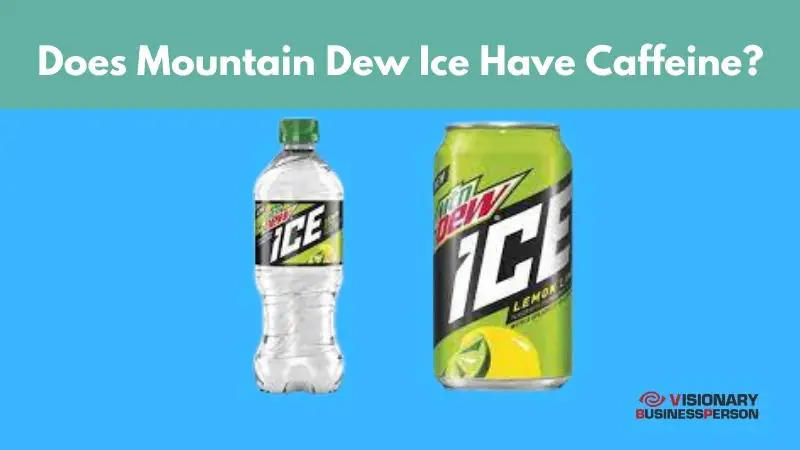
Mountain Dew Ice arrived on store shelves in early 2018 as PepsiCo‘s answer to the lemon-lime soda category long dominated by Sprite and 7UP. The drink stood out from the standard Mountain Dew lineup with its clear appearance and lighter citrus flavor profile. One question that surrounded it from launch was whether it carried the caffeine content that Mountain Dew is known for, or whether it followed the caffeine-free tradition of most lemon-lime sodas.
Mountain Dew Ice did contain caffeine. That single fact separated it from nearly every other clear lemon-lime soda on the market and defined much of its identity during its relatively short production run. This article covers the specific caffeine levels in Mountain Dew Ice, how it compared to other Mountain Dew products, the reasons behind its discontinuation, and what alternatives exist today for those who enjoyed it.
Caffeine Content in Mountain Dew Ice
A 12-ounce can of Mountain Dew Ice contained approximately 91 milligrams of caffeine. That figure placed it firmly in the moderate range for carbonated soft drinks, though it was notably high compared to other beverages in the lemon-lime category, most of which contain zero caffeine whatsoever.
To put 91 milligrams in practical terms, that is roughly equivalent to a standard cup of brewed coffee, which typically falls between 80 and 100 milligrams per eight-ounce serving. For a soft drink, this was a substantial amount. A person drinking a 20-ounce bottle of Mountain Dew Ice would have consumed approximately 152 milligrams of caffeine, which approaches the amount found in some energy drinks.
The caffeine in Mountain Dew Ice was not a surprise to anyone familiar with the Mountain Dew brand. PepsiCo has historically included caffeine in virtually all mainline Mountain Dew products, and Mountain Dew Ice was no exception despite its visual resemblance to caffeine-free competitors. The caffeine was listed on the nutrition label, though casual buyers who assumed a clear lemon-lime soda would be caffeine-free may not have noticed.
Mountain Dew Ice vs Other Mountain Dew Variants
Understanding where Mountain Dew Ice sat within the broader Mountain Dew product family helps illustrate how PepsiCo positioned it. The caffeine levels across Mountain Dew variants have always varied, sometimes significantly.
Original Mountain Dew contains about 54 milligrams of caffeine per 12-ounce serving. Mountain Dew Ice, at 91 milligrams per 12-ounce can, actually carried considerably more caffeine than the original formula. This was a detail that went largely unnoticed in mainstream coverage of the product at the time of its release.
Diet Mountain Dew contains approximately 54 milligrams per 12-ounce can, matching the original. Mountain Dew Code Red comes in at around 54 milligrams as well. Mountain Dew Voltage sits at roughly 55 milligrams. Mountain Dew Live Wire also falls in that same range. The consistency across these variants makes Mountain Dew Ice’s higher caffeine level all the more notable.
Mountain Dew Kickstart, a product line positioned between traditional soda and energy drinks, contains about 90 milligrams of caffeine per 16-ounce can. Mountain Dew Ice’s 91 milligrams in a smaller 12-ounce serving meant it was delivering caffeine at a higher concentration than even the Kickstart line, which was explicitly marketed around its energizing properties.
The only Mountain Dew variant that consistently surpassed Mountain Dew Ice in caffeine content was Mountain Dew Rise Energy, which launched after Ice was already discontinued and contains 180 milligrams per 16-ounce can. That product, however, is classified as an energy drink rather than a standard soda.
For comparison outside the Mountain Dew family, Sprite contains zero caffeine, as does 7UP. These are the beverages Mountain Dew Ice was most directly competing against on flavor profile, yet it offered an entirely different experience from a stimulant standpoint. Dr Pepper, another popular soft drink, contains about 41 milligrams per 12-ounce can, which is less than half of what Mountain Dew Ice delivered.
Why Mountain Dew Ice Was Discontinued
Mountain Dew Ice was discontinued in 2020, roughly two years after its national launch. PepsiCo did not issue a detailed public statement explaining the decision, which is standard practice for the company when trimming its product portfolio. However, several factors contributed to the product’s removal from the market.
The most straightforward explanation is that sales did not meet expectations. Mountain Dew Ice entered a lemon-lime soda market where Sprite and 7UP held deeply entrenched positions with decades of brand recognition. Convincing consumers to switch from a familiar caffeine-free lemon-lime soda to a caffeinated alternative proved difficult. The very attribute that made Mountain Dew Ice unique, its caffeine content, may have worked against it with consumers who chose lemon-lime sodas specifically because they wanted a caffeine-free option.
Timing also played a role. The product’s discontinuation coincided with the early stages of the COVID-19 pandemic, a period during which many beverage companies streamlined their product lines to focus on core offerings. PepsiCo, like other major manufacturers, reduced the number of SKUs it was producing to simplify supply chain operations during an unpredictable period. Products with lower sales volumes were the first to be cut, and Mountain Dew Ice fell into that category.
There was also the question of internal competition. Mountain Dew Ice occupied an awkward position within PepsiCo’s own portfolio. It competed not only against Sprite and 7UP (which PepsiCo did not own) but also against Sierra Mist (now Starry), PepsiCo’s own established lemon-lime soda. Having two lemon-lime offerings from the same parent company created cannibalization concerns, and Sierra Mist had stronger brand equity despite its own struggles in the category.
Consumer reception was mixed from the beginning. Reviews frequently noted that Mountain Dew Ice tasted less like a traditional Mountain Dew and more like a generic lemon-lime soda with a slight Mountain Dew aftertaste. That positioning left it in a no-man’s-land: not distinct enough from Sprite to attract lemon-lime loyalists, and not recognizable enough as a Mountain Dew product to retain the core Mountain Dew audience.
Alternatives to Mountain Dew Ice
Since Mountain Dew Ice is no longer available, those who enjoyed it or are interested in what it offered have several paths forward depending on which aspect of the product they valued most.
For the lemon-lime flavor with caffeine: This specific combination remains difficult to find in mainstream sodas. Most lemon-lime soft drinks, including Sprite, 7UP, Starry, and Sierra Mist (before its rebranding), are caffeine-free. One workaround is to drink original Mountain Dew, which offers caffeine and a citrus flavor, though it has a heavier, more syrupy taste and its signature yellow-green color rather than a clear appearance. Mountain Dew’s various flavor extensions (Spark, Thrashed Apple, Baja Blast) all contain caffeine but move further from the clean lemon-lime profile.
For a clear, light citrus soda without concern for caffeine: Sprite and 7UP remain the standard choices and are widely available everywhere. Starry, PepsiCo’s replacement for Sierra Mist launched in 2023, is another option with a slightly different flavor balance. All three are caffeine-free.
For caffeinated citrus beverages outside of traditional soda: Mountain Dew Energy (the canned energy drink line), Mountain Dew Kickstart, and various citrus-flavored energy drinks from brands like Celsius, Monster, and Red Bull offer citrus flavors with significant caffeine content. These products are not sodas in the traditional sense, but they fill the functional role of a caffeinated citrus drink.
For the novelty of a caffeinated clear soda: This remains a genuine gap in the market. No major soda brand currently produces a clear, lemon-lime flavored soft drink with caffeine. Mountain Dew Ice was essentially the only mass-market product to occupy that niche, and its discontinuation left it unfilled. Some smaller craft soda brands offer caffeinated lemon-lime options, but none with the distribution reach of a PepsiCo or Coca-Cola product.
Nutritional Context Beyond Caffeine
While caffeine was the defining characteristic that set Mountain Dew Ice apart, the rest of its nutritional profile was consistent with standard sugary soft drinks. A 12-ounce can contained approximately 150 calories and 41 grams of sugar. Those numbers were virtually identical to original Mountain Dew and in the same range as Sprite, 7UP, and most other non-diet sodas.
Mountain Dew Ice used high fructose corn syrup as its primary sweetener, which is standard for PepsiCo’s regular (non-diet) soda products sold in the United States. The ingredient list also included concentrated orange juice as a minor flavoring component, a detail shared with original Mountain Dew that many consumers are not aware of.
No diet or zero-sugar version of Mountain Dew Ice was ever released. Given the product’s short lifespan, PepsiCo never had the opportunity (or perhaps the commercial justification) to expand it into a broader sub-line with sugar-free variants. This limited its appeal to the growing segment of consumers seeking lower-calorie or sugar-free beverage options.
Final Assessment
Mountain Dew Ice did contain caffeine, and it contained a significant amount of it. At 91 milligrams per 12-ounce can, it delivered more caffeine than original Mountain Dew, more than Dr Pepper, and far more than its direct lemon-lime competitors, all of which contain none. That caffeine content was its most distinctive feature and the primary reason it generated curiosity among soda consumers.
The product was discontinued in 2020 after roughly two years on the market. It struggled to carve out a sustainable audience in a category where consumers had strong existing preferences and where caffeine content was more of a liability than an asset for many buyers. The lemon-lime soda market has historically rewarded simplicity and familiarity, and Mountain Dew Ice offered something that not enough consumers were looking for.
For anyone who consumed Mountain Dew Ice without realizing it contained caffeine, particularly those who are sensitive to stimulants, this is worth noting for future reference. The broader lesson applies to all beverages: checking the label is always worthwhile, as assumptions based on a drink’s color or flavor category do not always hold. Clear sodas are not automatically caffeine-free, and Mountain Dew Ice was the most prominent example of that principle.